



New Delhi: The ancient cells and chambers of Delhi’s Purana Qila that have been lying closed for centuries are now being opened and renovated for the India Biennale, a 108-day celebration of Indian art, architecture and design.
“Purana Qila will be the hub of the India Biennale. The lime and the material of that time is being used to restore them. And now they are becoming places for beautiful exhibitions,” said Vivek Aggarwal, Union culture secretary, at a media gathering at The Oberoi on Saturday. He added that some of the spaces at Purana Qila may once have housed soldiers and have already come alive with art.
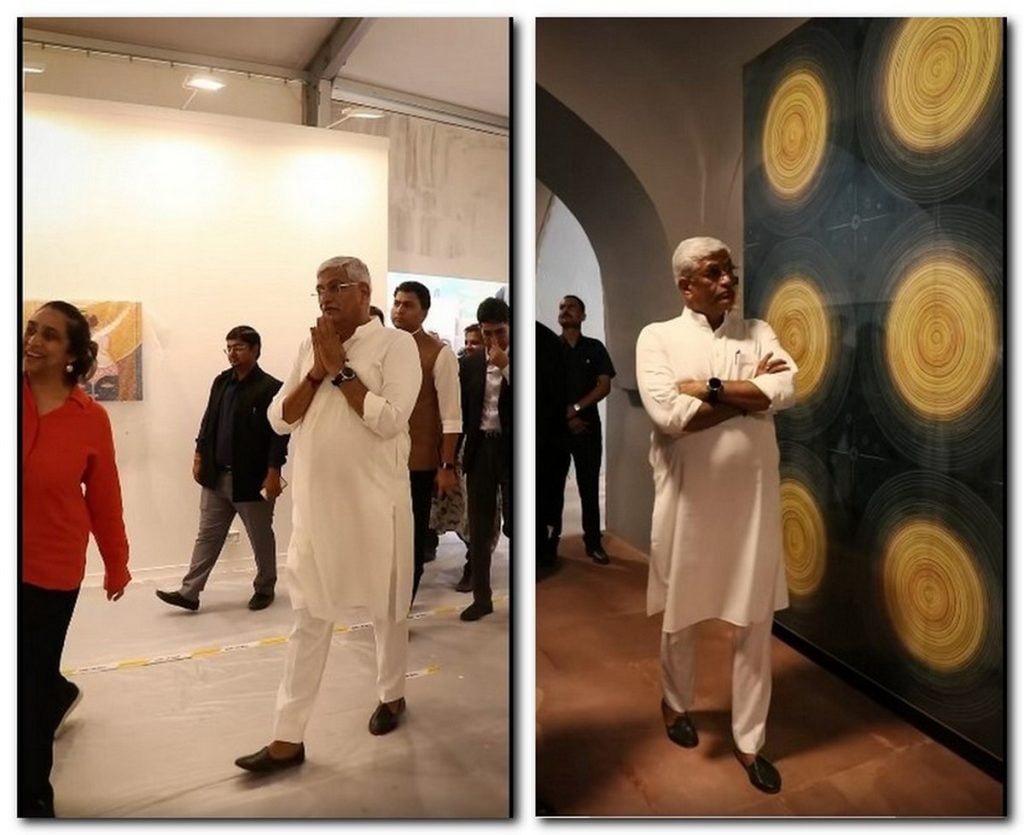
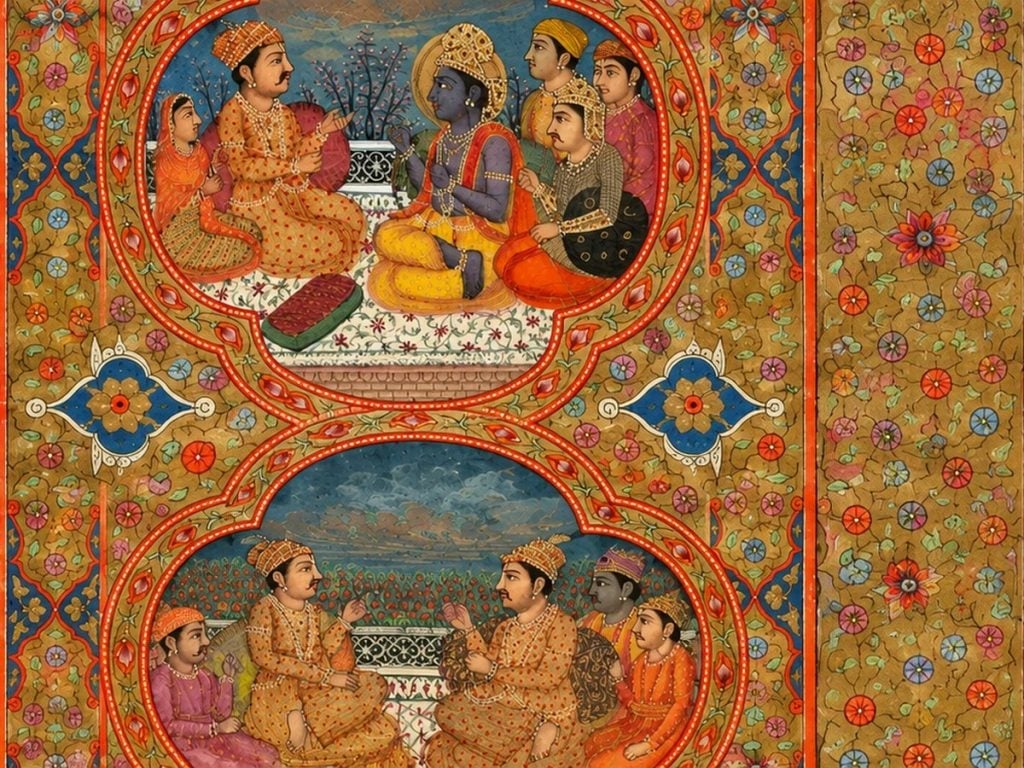
Last week, Union Culture Minister Gajendra Singh Shekhawat visited Purana Qila to inspect the preparations and shared a reel showing the spaces being readied for the Biennale. Some already look like galleries, with pristine white walls and artworks on display, including a large painting of Krishna with the gopis.
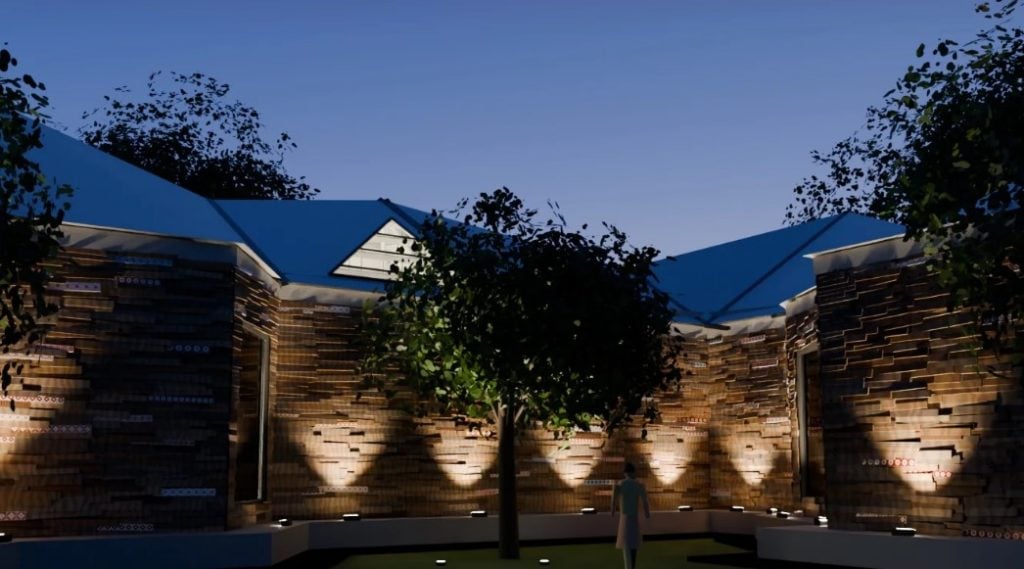
One of the more novel aspects of the Biennale is that old and new architecture are part of the offering—from the cells of Purana Qila itself to Jugaadopolis’s architectural installation The Palimpsest, which “celebrates the coexistence of the multiple layers of the city of Delhi”.
Anchored by the Ministry of Culture, the Biennale will open on 4 December and run until 21 March 2027. Its theme is Tat Tvam Asi (You Are That) – Reconnecting in an Age of Distraction. Rather than rely solely on government funding, the event will follow a public-private partnership (PPP) model.
While the inaugural edition took place in 2023 at the Red Fort, this edition is more ambitious in scope and scale. Envisioned as a national showcase of contemporary Indian art, architecture, and design, the Biennale will bring together artists, institutions, and 12 participating countries across 22 venues. Apart from Purana Qila, exhibitions will be held at Red Fort, the National Museum, Qutub Minar, Lodhi Garden, Lalit Kala Akademi, Humayun’s Tomb, Safdarjung Tomb, the National Gallery of Modern Art (NGMA) and the Indira Gandhi National Centre for the Arts (IGNCA), among others.
“It will be a real treat for people in Delhi, for people in India and for people all around the world,” said Aggarwal, adding that the idea behind the India Biennale is to create a sustainable platform that takes Indian contemporary art to a global audience while also serving as a “people’s movement”.
Also Read: Modi govt’s go-to sculptor made gods monumental. Now he’s going ‘experimental’
PPP model
The India Biennale is a joint production of the Culture Ministry, states, Union Territories, civic bodies, and major corporate houses.
On the public side, partners include the Delhi Metro Rail Corporation (DMRC), the New Delhi Municipal Council (NDMC), the Municipal Corporation of Delhi (MCD), and state institutions like the Bihar Museum. On the private side, corporate groups such as the Aditya Birla Group, Godrej, and Vedanta, and foundations like the Nita Mukesh Ambani Cultural Centre (NMACC) and the Kiran Nadar Museum of Art, will mount exhibitions.
The Culture Ministry’s role will be that of a catalyst, according to Aggarwal.
“We are trying to tie up with everybody to be a partner and also be part of the promotional campaign for this wonderful event that is happening,” he said. “Everybody is joining hands. It’s people with a desire to invest who are coming in. It’s the galleries, artists, even individual artists who are coming in and putting up shows.”
With so many venues and agencies involved, Shekhawat held a meeting on 16 November to review preparations and discuss coordination between departments. Delhi Chief Minister Rekha Gupta attended the meeting.
“For 108 days, Delhi’s historic monuments, museums, and cultural sites, including Purana Qila, will become a remarkable confluence of Indian heritage and creativity from around the world,” she posted on X.
दिल्ली की ऐतिहासिक धरोहरें अब देश-दुनिया की कला और संस्कृति के रंगों से सजेंगी। 4 दिसंबर 2026 से 21 मार्च 2027 तक हमारी दिल्ली में India Biennale 2026 के दूसरे संस्करण का भव्य आयोजन होने जा रहा है।
108 दिनों तक पुराना किला सहित दिल्ली के ऐतिहासिक स्मारक, संग्रहालय और सांस्कृतिक… pic.twitter.com/ku5x01oVKi
— Rekha Gupta (@gupta_rekha) November 16, 2026
Aggarwal said each day would bring a different celebration, and every part of India would get its moment in the limelight. The lineup includes an 18th-century Mahabharata scroll from DAG, Subodh Gupta’s installation Kingdom of Earth from NMACC, and a Bihar Museum exhibition on Chhath Puja. The Sangeet Natak Akademi will bring awardee artists, while Kalakshetra will present Bharatanatyam and Carnatic vocals.
“There will be classical music, there will be traditional art forms, there will be the folk art forms, there will be tribal art forms. They will all combine with the visual arts that will be there in these venues,” said Aggarwal.
He added that the Biennale would help project a modern India to the world and provide a global stage for contemporary Indian artists.
“The Prime Minister Narendra Modi is a great patron of the message that the Indian creative economy has lots and lots of potential to contribute to the growth of this wonderful nation,” he said.
Aggarwal pointed to the Kochi and Banaras biennales and the Serendipity Arts Festival in Goa as an indication of the arts scene gaining momentum in recent years.
“But there has to be one large national initiative as well. So this is that one large national initiative,” he said.
Also Read: A DAG booth at Art Mumbai takes on the colonial gaze. Who gets to tell the story?
‘People’s movement’
Making art more accessible is part of the charm. From Purana Qila to Qutub Minar, one pass will get visitors into all 22 Biennale venues. Indian and foreign visitors will pay the same price of Rs 100 for a day pass and Rs 3,000 for a season pass.
Out of the total earnings of the 108-day event, 50 per cent will go to the Biennale fund. The rest will go to the ASI, the NGMA and the National Museum, whose revenues will be clubbed with the Biennale’s.
“We are trying to create a financial model which is sustainable and not dependent on government grants. Overall expenditure can be a few tens of crores. It’s very difficult to put a figure to it because so much investment and resources are coming from various stakeholders,” said Aggarwal.
There will also be a Student Biennale, where 108 young artists will show their work over the course of the event.
Aggarwal said the Biennale would eventually become a “people’s movement”, held aloft by culture enthusiasts and artists.
“There would not be a need for an initiative to be taken by the government,” he said.
(Edited by Asavari Singh)