



In 2012, Gondhal actor Anuj Prabhu, 33, watched Heath Ledger’s iconic Oscar-winning Joker portrayal in an engineering hostel room. He discussed Christopher Nolan’s filmmaking with senior Aditya Jambhale, who would go on to direct Article 370 (2024).
“We would talk about how certain moments felt so impromptu and wonder whether Christopher Nolan had even planned them. We used to discuss that film so much,” he told ThePrint in a Zoom interview.
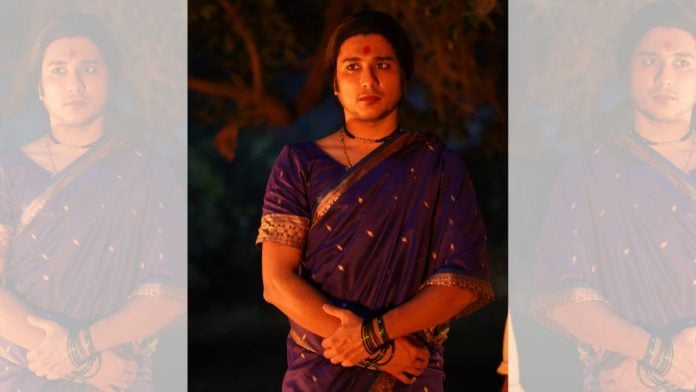
Thirteen years later, Jambhale’s notes and mentorship helped Prabhu play a sari-clad folk performer in Gondhal, India’s official Oscars submission this year, a film he hopes will take Marathi cinema to audiences far beyond Maharashtra.
Theatre school, and a TV break
Prabhu’s acting began on the college stage at the Goa College of Engineering, where he studied Electronics and Telecommunication and performed under Jambhale’s direction.
“Those two years I was with him, I learnt a lot of things from him. I came from a typical theatre background, and he broke all those myths for me,” he added.
In 2016, Prabhu moved to Mumbai to pursue a Master’s degree in Theatre Arts at the Academy of Theatre Arts. It was here that he met Nishad Bhoir, who plays Sarjera in Gondhal. The two eventually became roommates, and in 2018, barely a month and a half after completing his Master’s degree, Prabhu landed his first major acting break.
Zee Yuva was casting for Zindagi Not Out, a television show about a group of friends aspiring to represent India in cricket, and was looking for an entirely new cast.
“A friend from my batch in Academy of Theatre Arts knew a person who was doing casting for the show. And she said that all you classmates, whoever is interested, you all are new, you all can come and audition,” Prabhu recalled.
Looking back, he considers the transition from theatre school to television a matter of luck and destiny.
After Zindagi Not Out, Prabhu mainly performed theatre. That grounding in performance would come in handy when Prabhu took on the dual role in Gondhal.
Sahebrao is the former lover of Suman, played by Ishita Deshmukh, who watches her prepare to marry Ananda, played by Yogesh Sohoni. As the Gondhal ritual unfolds, Sahebrao appears as Murali, a saree-clad performer who sings and dances while pursuing his own plan to win Suman back.
A ritual he had never seen
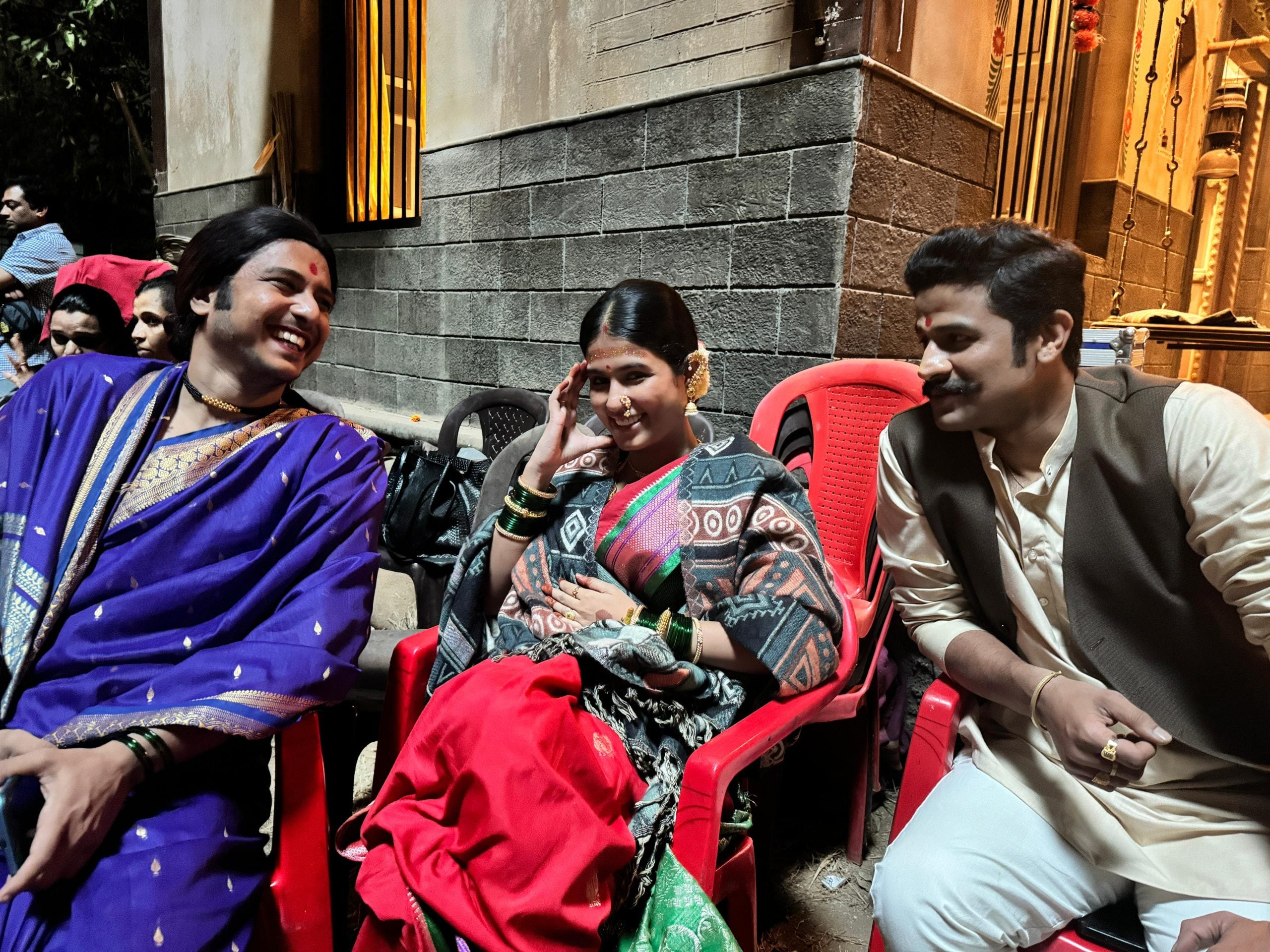
In Maharashtra, a Murali is traditionally a male performer who dresses in a sari and sings and dances during Gondhal, a ritual folk performance associated with the worship of deities. Prabhu underwent intensive preparation for a character he had never played before.
Born in Goa, he was unfamiliar with the ritual and had never witnessed an actual Gondhal. After he was cast, he met traditional Gondhal performers during a workshop.
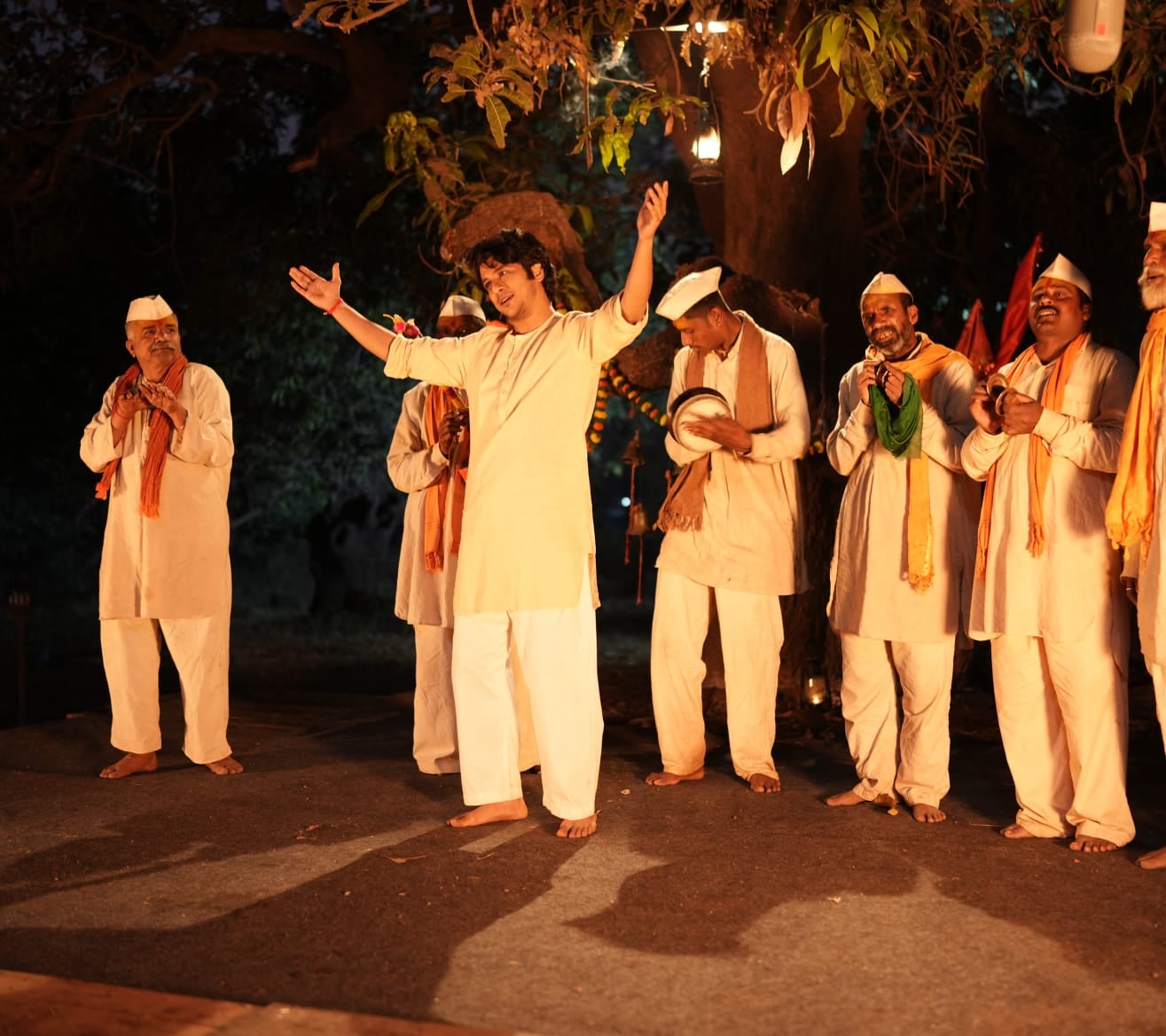
“I realized that this is not just what I had thought; this is not just about wearing a sari and dancing. It is about faith, about, you know, calling out God, calling out the deity, and so many things about it, wishing good luck to the newly wed and then also entertaining the village. So it’s like a responsibility,” he said.
Prabhu was initially confused about how to approach the character. Videos on YouTube showed women performing as Murali, leaving him wondering why director Santosh Davarkar wanted him to wear a sari and perform the role.
Davarkar explained that women were once discouraged from performing on stage, leading men to dress as women to sing and dance.
He experienced the ritual closely when the studio was filled with traditional Gondhal performers during the workshop.
“They used to go full throttle, so when I used to perform with them I started getting a hang of it, like this is what the world is, and then eventually when we started shooting and the way the set was there, and the whole thing was set up, it felt like we were actually in a Gondhal,” he said.
Long takes, fumbles, and production challenges
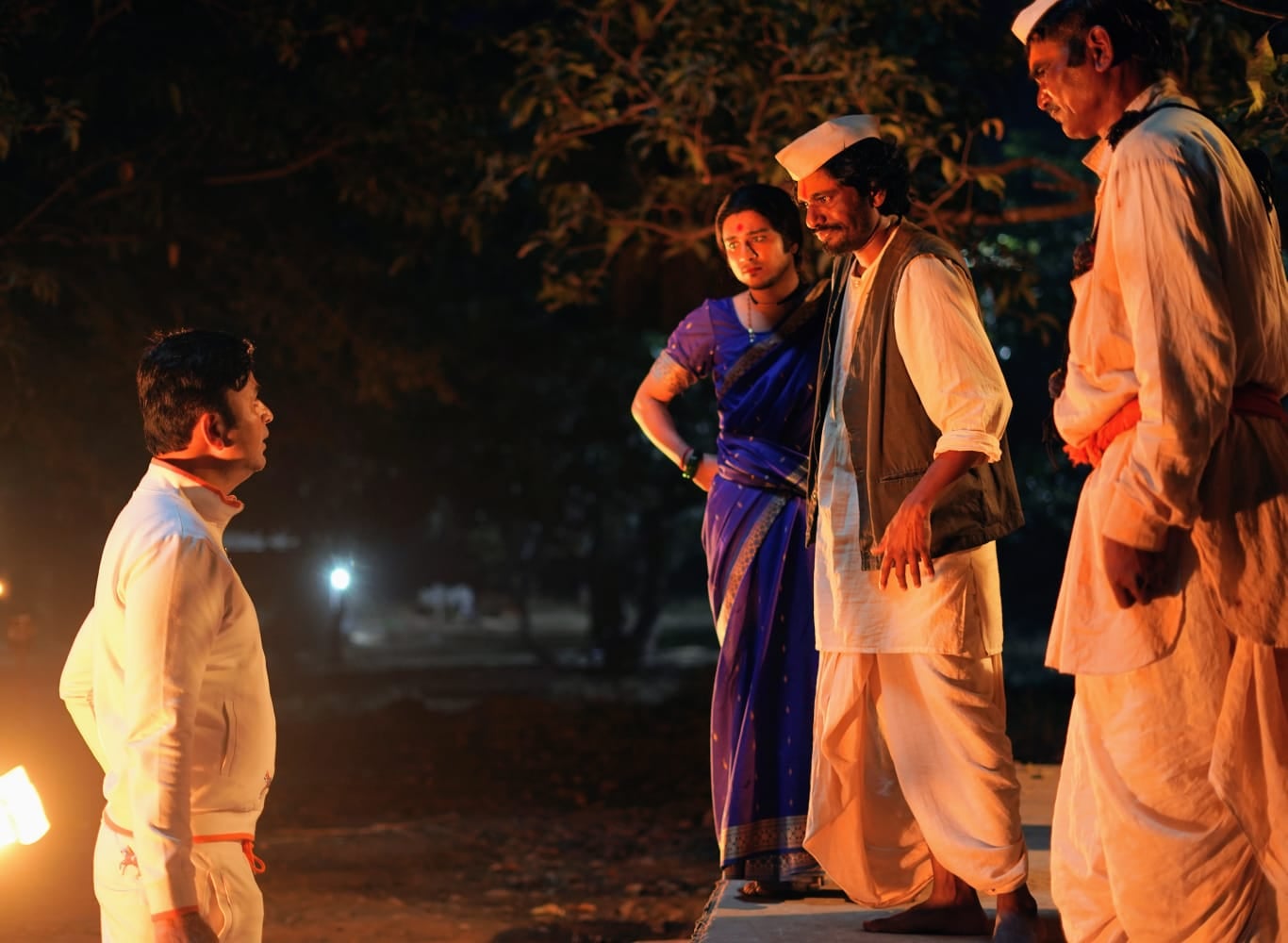
Beyond its ritualistic and cultural elements, Gondhal stands out for its long takes, including sequences lasting 25 and 13 minutes. Prabhu recalled getting nervous during one such take and fumbling his dialogue, undoing the efforts of the crew and his fellow actors. In one scene, he lost focus after misplacing the sindoor on his forehead.
“Due to this, I wasted 11- 12 minutes of all the hard work of everyone involved. I was so nervous, I apologised to everyone; it was a silly mistake,” he said.
Made on a budget of Rs 4 crore, Gondhal came with its share of production challenges. For Prabhu, one of the biggest was switching between Sahebrao and Murali, a transition that required him to remove his sari, wig and makeup before getting into the other character’s look. What would normally take around 40 minutes sometimes had to be done in just 15 because of the tight shooting schedule.
Speaking about the director, Prabhu recalls, “He said, ‘Get ready in 10 minutes and come.’ I told him it wasn’t possible because I was dressed as a woman. I had to remove the sari, wig, and makeup before getting ready as Sahebrao. It would take at least 40 minutes. But he said, ‘No, I want you ready in the next 15 minutes, Anuj, because I have to move the camera,’” recalled Prabhu.
Taking Marathi cinema beyond Maharashtra
Marathi cinema has previously sent films to the Oscars, including Shwaas (2004), Harishchandrachi Factory (2009) and Court (2015). Prabhu believes the industry has consistently produced content-driven cinema, from comedy to social commentary, but has struggled to reach a wider audience.
“Like even in the case of Gondhal, I mean when it was released in 2025 I don’t think it reached the audience we intended,” he said.
But he hopes the film’s Oscar journey will help Marathi cinema find audiences not just in India but across the world. He says the industry can achieve the nationwide reach enjoyed by Telugu, Tamil and Kannada cinema.
“Of course times have changed now, but yes, across the nation, if we want the way a Telugu cinema or a Tamil cinema or a Kannada cinema has reached the masses across the nation, I hope Marathi cinema reaches that soon,” he added.
Also Read: PM Modi, Anupam Kher mourn actor Vijaya Mehta—a pillar of Marathi cinema
“Not just about the ritual”
For Prabhu, the language and setting of a film should not limit its themes or emotional reach. He says Marathi cinema is growing more confident about embracing traditional and cultural contexts in its storytelling.
“Though the film Gondhal is rooted in, and specific to a ritual, the emotion of the film is universal,” he said.
He compared the film’s universal themes to Shakespeare’s Macbeth and Othello, whose settings may be forgotten but whose stories and themes endure.
“I would want the audience to remember that, of course, the Gondhal is there. Don’t forget it, but also remember what Suman felt, how Ananda transformed, what happened with Sahebrao, what each character felt,” he said.
Edited by Maryam Hassan