








New Delhi: For director Nikhil Advani, Freedom At Midnight has been a way of portraying the protagonists of India’s destiny in their most vulnerable and ‘real’ form. But he wanted to achieve it without compromising on history.
“History can be approached from so many sides. We decided to make sure that the events that we are talking about are undisputed,” said Advani. Based on the namesake book by Dominique Lapierre and Larry Collins, the Sony Liv series is now in its second season.
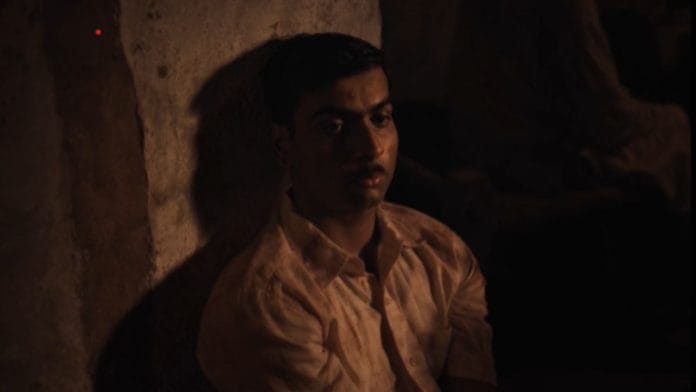
It brings an interesting character to life, who has largely been forgotten to history—Madanlal Pahwa. He was part of the team that was behind the assasination of Gandhi. Pahwa bombed Gandhi’s prayer assembly 10 days before his assassination by Nathuram Godse on 30 January 1948.
“No one knew who Nathuram Godse was back then. He was a ghost. Episode seven plays out from the point of view of Delhi DIG DW Mehra. He is interrogating Pahwa, with no idea what actually happened. Mehra is extremely guilty of the fact that a bomb has gone off at Birla house and the Home Ministry is trying desperately to figure out how it can make sure that this never happens again,” said Advani.
Just like in the book, Godse is a shadowy figure. He does not even get a physical representation in the series.
Advani, who first read the book in his teens, was fascinated by how Pahwa became the kind of man he did.
“It’s quite interesting to show that a Madanlal Pahwa is not born a Madanlal Pahwa. He felt extremely emotional about what he had to go through and was given a bomb in his hand,” said Advani.
Pahwa’s father, a diplomat named Kashmirilal, often beat up his son. He was especially upset when Pahwa joined the Rashtriya Swayamsevak Sangh camp. He felt the RSS activities were anti-government.
Pahwa was one of the millions of refugees who came to India during Partition. But what he saw had made him a violent man. He directed his anger and violence toward Muslims. In the show too, he is introduced as the man who bombs a rally organised by Muslims in Ahmednagar, Maharashtra.
Pahwa is played by Anurag Thakur, who rose to fame with his performance in the Netflix show Vikramaditya Motwane’s Black Warrant as a brash Haryanvi jailor.
Interestingly, Motwane only cast him for his show after he saw Thakur play Pahwa during the shoot of Freedom at Midnight.
Also read: Why Modi’s supporters fear ‘proud Hindu’ MK Gandhi and venerate his murderer Godse
Patel and Nehru
The show focuses largely on the three freedom fighters Sardar Patel, MK Gandhi and Jawaharlal Nehru, who became the pillars of the country. Through the show, Advani wanted to take his audiences to the rooms that shaped India’s destiny. To this end, he created characters that are humanised rather than larger-than-life.
“(Sardar Vallabhbhai) Patel actually has all the best lines and the jokes. I played him slightly like the kind of Gujarati uncles that I have grown up with in Mumbai.They are very pragmatic, and emotional but the emotion has to be about value and has to be about profit and loss, I told Rajesh Kumar to play Sardar exactly like that,” said Advani.
He gave Nehru an arc where a young ‘boy’ becomes a man, in every sense of the term.
“Everyone had something to say about Nehru not having much of a role in the first season, including Sidhant Gupta who plays him. I told them, wait for the second season, because he has the best character arc,” said Advani.
In the show’s writing room too, there were writers who were either a Sardar, Nehru or Gandhi fan, based on how the characters are written in the book. That also shows up in the way the dialogues of the show are written.
“I think the most important thing is that while they [Patel, Gandhi and Nehru) possibly disagreed, there was a huge amount of respect for the other person’s point of view. There is a dialogue where Gandhi tells Nehru and Sardar Patel, ‘What are these petty things that you guys are talking about that you guys can’t work together’,” said Advani.
Also read: Godse’s gender confusion, Gandhi as a surrogate father—this play enters the assassin’s mind
History you should know
Advani’s show is a space for episodes in India’s freedom struggle that have been lost in retellings—be it Pahwa’s character or why midnight was chosen as the time for India’s Independence.
A group of astrologists pushed for a later day, because the daytime was ‘inauspicious’.
“Danish Khan of Sony came up with the tagline—The history that you may not know, but the history you should know. His point was people should watch and go—I did not know this,” said Advani with a chuckle.
Advani’s 18-year-old daughter, who was interning with the directorial team, was suitably gobsmacked by some of the incidents.
“She has marked a series of links to read up on once she gets back to the USA. where she is studying. If people take up their phones even to Google or watch reels about some of the stuff in the show, then it’s a victory,” said Advani.
(Edited by Theres Sudeep)