





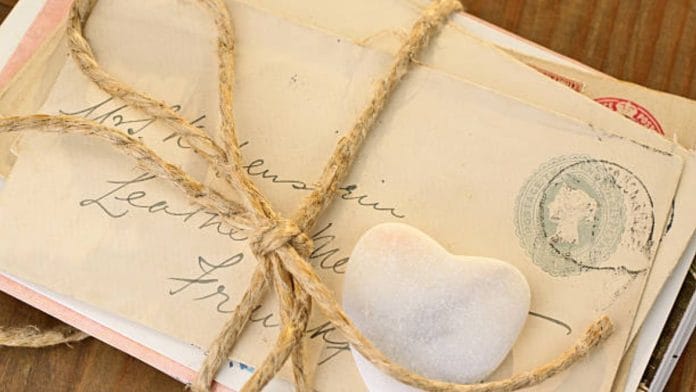


New Delhi: The sweet nothings exchanged in love letters carry enough meaning to trace the evolution of both romance and language through history. So, it makes sense that one of the largest archives of love letters in Europe is being digitised under a programme at the University of Koblenz in Germany. Some of these letters were written in the 1700s.
The archive, founded by a Swiss linguist Eva Wyss, started in 1977 and now has more than 60,000 love letters. Each of these has been donated by the public, as reported by The Guardian. Some have pressed flowers in them, some are decorated with lipstick kisses and some even have quirky sexual drawings. Wyss has started a project to bring these handwritten notes to the screen. And AI is useless in this pursuit—volunteers are manually transcribing these. The Technical University in Darmstadt is also involved in this massive project.
The volunteers also get to gather in a room together and discuss the contents of the letters to understand the relationship between the writers and the era of history they were living through.
“For every “darling”, “honey” and “angel”, there is boundless linguistic creativity to be found in the dusty pouches of her growing archive. Wyss cited a favourite from 1930: “Du Sapperlotslausbübischtolltrolliges Wesen Du!” (“You darndest cheeky elfin creature you!”), written by a “Spitz” to his Lisel,” read The Guardian report.
The archive also has 3,000 letters exchanged between a prison inmate in Berlin and his parole officer through the course of three decades. The letters reveal their clandestine affair and the state of the prison where AIDS was spreading. The lovers got married when the inmate was released from the facility. The parole officer ended up losing her job.
Also read: North Korean women footballers just had a tearful meeting with Kim Jong Un
A return to letters
It is by studying the letters that Wyss and her team found out about the drastic change seen in romantic-letter-writing from the 19th to the 20th century. “With the rise of early 20th-century feminism, language too was emancipated, unleashing playful humour and sometimes frank eroticism.” And after the war, when Nazi control ceased to exist, in 1980s Germany, people were exchanging letters with “pretty brazen sex drawings.”
The linguist also noted that the era of text messaging did not kill the love letter. “The rise of the telephone was a much bigger threat,” she said, arguing that digital communication has, in some ways, helped revive the practice.
“Some like to speak, some leave each other voice notes, some leave their communication entirely to swapping pictures. Some get upset if their partner forgets the kiss emoji. Every couple now needs to find what works for them, or doesn’t, online.”