


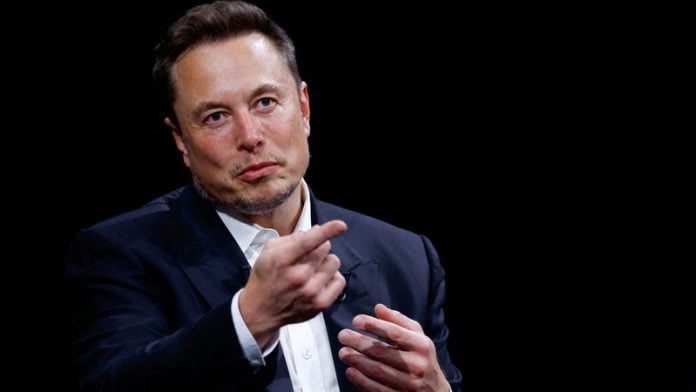
New Delhi: Elon Musk has admitted feeling “pretty foolish” after spending nearly $500 million backing Republican candidates in the 2026 US midterm elections, which ended in sweeping losses for the party as Democrats won control of both chambers of Congress.
Speaking virtually at The New York Times’ DealBook Summit on Wednesday, the Tesla and SpaceX chief executive told columnist Andrew Ross Sorkin that he regretted spending so much money on campaigns that yielded little electoral success.
“I feel pretty foolish about having spent so much money and not seeing much for it,” Musk said. “Or maybe it would’ve been much worse without that. But it certainly shows that American elections are not just about money.”
Musk said his objective was to ensure that Republicans retained control of at least one of three centres of power—the presidency, the House or the Senate—going into 2029, rather than allowing either party to secure overwhelming power. However, Democrats emerged with majorities in both chambers, with Democrat Mary Peltola’s victory in Alaska bringing the party’s Senate tally to 56 seats, against the Republicans’ 44.
Among Musk’s biggest political bets was his support for Texas Republican Ken Paxton, whose Senate campaign reportedly received around $220 million from him. Paxton lost to Democrat James Talarico. Musk also spent heavily on other Republican candidates through political action committees.
“If I could rewind the clock, I would have spent less money,” Musk said, adding that he had not devoted much personal attention to the campaigns because he was focused on building SpaceX and Tesla.
The admission marks a shift in tone from Musk’s earlier embrace of the Republican Party and President Donald Trump. Musk spent more than $250 million supporting Trump’s 2024 presidential campaign before joining his administration in 2025 as head of the Department of Government Efficiency (DOGE). The initiative sought to reduce federal spending and cut government jobs but shut down in July when its mandate expired. Musk and Trump subsequently had a public falling-out before reconciling.
At the DealBook Summit, Musk also sought to distance himself from the MAGA movement, saying he was “not MAGA” and questioning what the label meant.
“If that means sort of blind adherence to a set of policies by the Republican Party, then I certainly don’t have that,” he said, adding that he saw positives and negatives in both political parties.
Edited By Raunaq Lekhi