





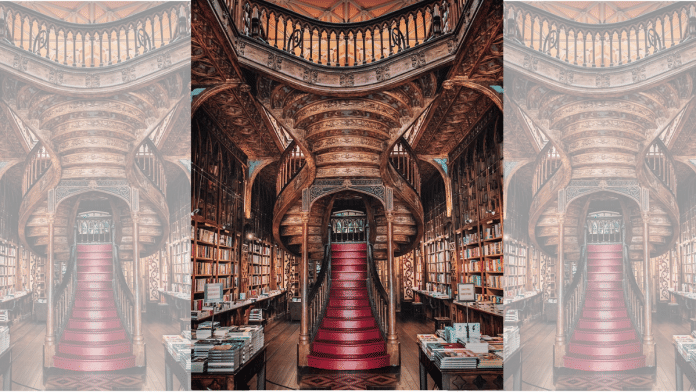


New Delhi: Global pop sensation and book lover Dua Lipa has opened the Manifesto Library in Porto, Portugal. Nestled among one of the world’s most beautiful bookshops, the library boasts entirely of banned books.
Lipa also runs the book club, Service95, which she founded in 2022. She is also set to curate the Southbank Centre’s 2026 London Literature Festival.
According to NME, the singer, in a press release, called the library “a dream partnership,” adding that “reading brings the world closer.”
“Here you will find one hundred books that ask questions, or have been questioned. Some have been banned by school districts for themes of race or sexuality. Others, written for LGBTQIA+ readers, have been restricted from display. In some cases, the author has paid for their words with their life,” Lipa said, introducing the library.
She added that the library is a “sanctuary for books that have disappeared, for authors whose courage exposes the structures of power and control, and for readers who refuse to be told which books they are allowed to read.”
“Because sometimes the most subversive thing you can do is read a book and then talk about it,” Lipa said.
The Manifesto Library
The library is situated inside the Livraria Lello bookshop, which first opened in 1881.
The bookshop’s head of brand, Francisca Pedro Pinto, said in a statement that, for 120 years, it has been built on the conviction that the book is a “technology of freedom.”
“Because what is at stake is not only the future of reading, but a society’s ability to imagine, interpret and build its own future.”
The library houses more than a hundred titles, including Margaret Atwood’s The Handmaid’s Tale (1985), Suzanne Collins’ The Hunger Games (2008), George Orwell’s Animal Farm (1945), Ray Bradbury’s Fahrenheit 451 (1953), Arundhati Roy’s The God of Small Things (1997), Malala Yousafzai’s We Are Displaced (2019), and Rupi Kaur’s Milk and Honey (2014), among many others.
The library is further divided into four sections—power, control, voice, and memory.
According to Vogue, the first theme questions who holds power, as well as who has the right to speak. It includes books that confront the powerful, such as George Orwell’s Nineteen Eighty-Four (1949), Simone de Beauvoir’s The Second Sex (1949), and others.
Control includes works that explore surveillance, propaganda, and thinking. It houses books like Franz Kafka’s The Trial (1925) and Yōko Ogawa’s The Memory Police (1994).
Khaled Hosseini’s 2007 novel A Thousand Splendid Suns and Judy Blume’s coming-of-age novel Are You There God? It’s Me, Margaret (1970) are included in Voice, which focuses on those who have been historically marginalised or ignored. The section underscores their narrative authority through race, gender, community, geography, and more.
The final section, memory, hopes to preserve the stories of the forgotten as well as those who have been through wars, dictatorships, trauma or exile. It includes books like Milan Kundera’s The Unbearable Lightness of Being (1984), Anne Frank’s The Diary of a Young Girl (1947), as well as Marjane Satrapi’s Persepolis (2000).