





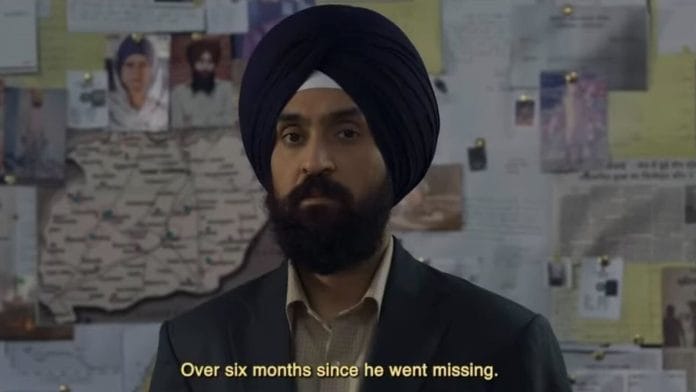


New Delhi: Diljit Dosanjh says he is merely an artist and would prefer to stay away from protests. In an Instagram Live session Wednesday, the artist was asked about the CJP protest at Jantar Mantar in Delhi. Responding in Punjabi, Dosanjh said he was unaware of the protest.
“What kind of protest is underway at Jantar Mantar?” he asked in Punjabi. “Bro, keep me away from these protests… I’m an artist.”
Dosanjh added that he is not a politician. Laughing, he congratulated those who were protesting and those for whom the protest was being held. During the live session, he also remarked that everything cannot be good in the world.
The CJP protest at Jantar Mantar has been ongoing for 20 days, with protesters demanding the resignation of education minister Dharmendra Pradhan. They seek accountability from the government over the NEET paper leak and student suicides. Activist Sonam Wangchuk recently began an indefinite hunger strike in support of the movement.
While Dosanjh maintained that an artist should not be political, his own filmography tells a different story.
When a fan asked about the release of Punjab ’95, the actor replied, “Very soon.”
“Many people’s mouths will be shut,” he added.
Punjab ’95 is based on the life of human rights activist Jaswant Singh Khalra. Set in Punjab of the 1980s and 1990s, the film follows the struggles of Khalra’s family during the insurgency. It is yet to receive clearance from the Central Board of Film Certification.
Also read:
A politically charged filmography
Dosanjh’s previous films have consistently explored politically and socially sensitive subjects. Punjab 1984 (2014), set during the 1984-86 insurgency, featured him as Shivjeet Singh, a young man wrongly branded a terrorist by the police. The film highlighted the political turmoil in the state and the devastating impact of government actions on Punjabi families.
In 2022, he starred in Jogi, a historical drama set against the backdrop of the 1984 anti-Sikh riots in Delhi. The film follows a group of friends from different faiths who risk their lives to save hundreds of people trapped in communal violence.
Dosanjh collaborated with director Imtiaz Ali for Chamkila in 2024, a biographical musical based on the life of Punjabi singer Amar Singh Chamkila. Beyond celebrating the legendary singer’s music, the film offered a sharp political commentary, examining caste discrimination, the state’s failure to protect an artist, and the impact of religious extremism on artistic freedom.
His recently released movie, Main Vaapas Aaunga, explores the long-lasting scars of Partition. It’s the latest addition to a filmography that constantly engages with history, politics, and the human cost of conflict.
While Dosanjh insists he is “not political”, his body of work continues to reflect some of the most politically charged chapters of modern Indian history.
(Edited by Prasanna Bachchhav)