



New Delhi: Near the Jantar Mantar protest site in Delhi, a sea of masked faces fills the streets. Some wear them to conceal their identities; others as protection in case police deploy tear gas. But for many, the masks are a desperate barrier against the worsening stench rising from overflowing piles of rotting food waste and other garbage that’s threatening to overwhelm the capital’s power seat.
As thousands of demonstrators occupy the high-security Lutyens’ Delhi district, a severe sanitation crisis has unfolded on the ground, keeping protesters as well as civic officials on their toes.
The New Delhi Municipal Council (NDMC) has responded by launching a massive, round-the-clock cleanup operation, moving staff from other parts of the pristine district to work in three continuous shifts.
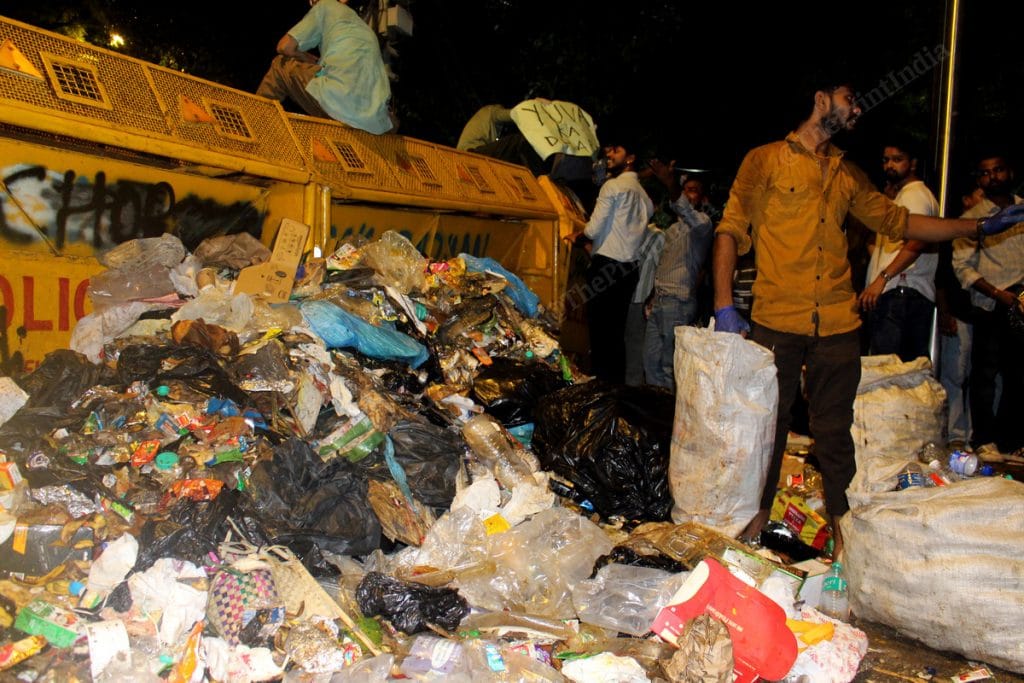
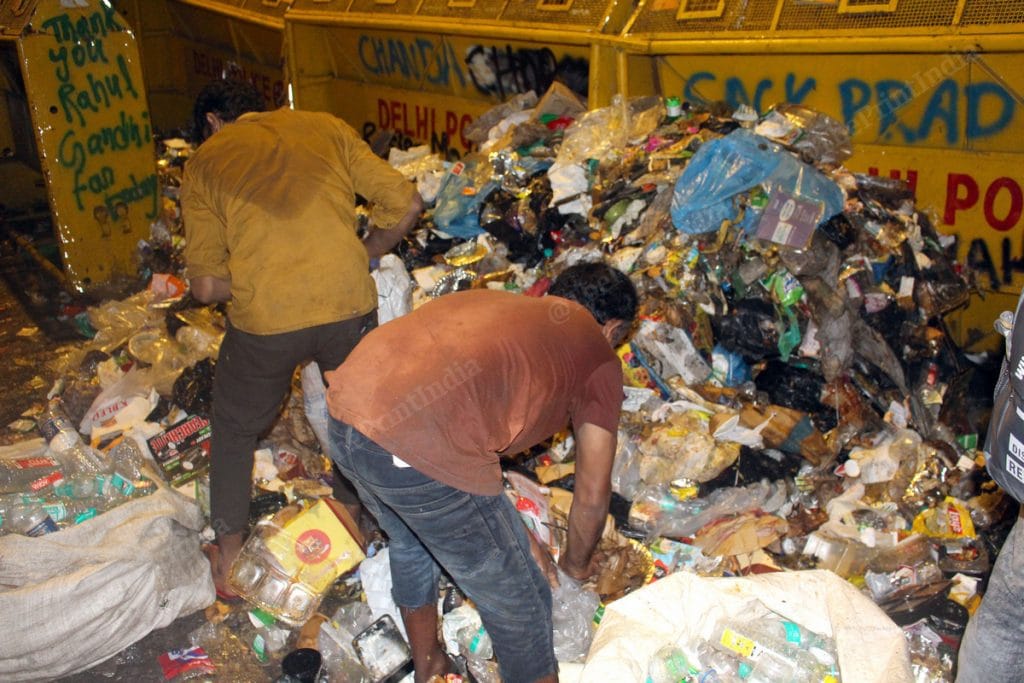
Civic officials confirmed that the daily volume of garbage removed from the site surged to 15 metric tonnes on Friday, up from 14 metric tonnes on Thursday. Despite ongoing cleanup efforts, mounds of waste remain across several sections and on internal roads leading to the protest site.
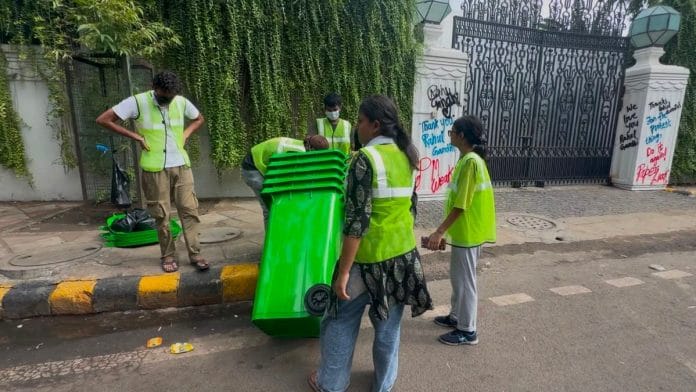
While students are volunteering to clean the site, with many walking around with garbage bags and picking up waste from the streets, the civic body’s efforts are facing stiff logistical hurdles. Permanent police barricades around the perimeter prevent high-capacity NDMC compactor trucks from entering the core protest zone. This has left the garbage collected by the students to rot within the premises of the barricaded site.
“The security closures mean our large vehicles are completely blocked,” an NDMC official said. “We have asked our field staff to manually pack waste into bags so that smaller auto-tippers and gobbler machines can quickly haul them out whenever access opens up.”
Also Read: Pakistanis see Jantar Mantar protests and ask why they can’t do the same
Slogans and then sweeping
The staggering volume of garbage is linked to the thousands arriving daily to protest, along with many others who have decided to make the site their home until their demands are met. Most protesters are using food delivery apps for their meals, while volunteers are also distributing packaged food at the site. As a result, miniature landfills have begun spilling onto pavements and road dividers along Tolstoy Marg, Janpath Road and outside the NDMC headquarters on Sansad Marg.
To prevent an outbreak of vector-borne disease, municipal health teams have separately stepped up anti-mosquito fogging at the site, NDMC officials said.
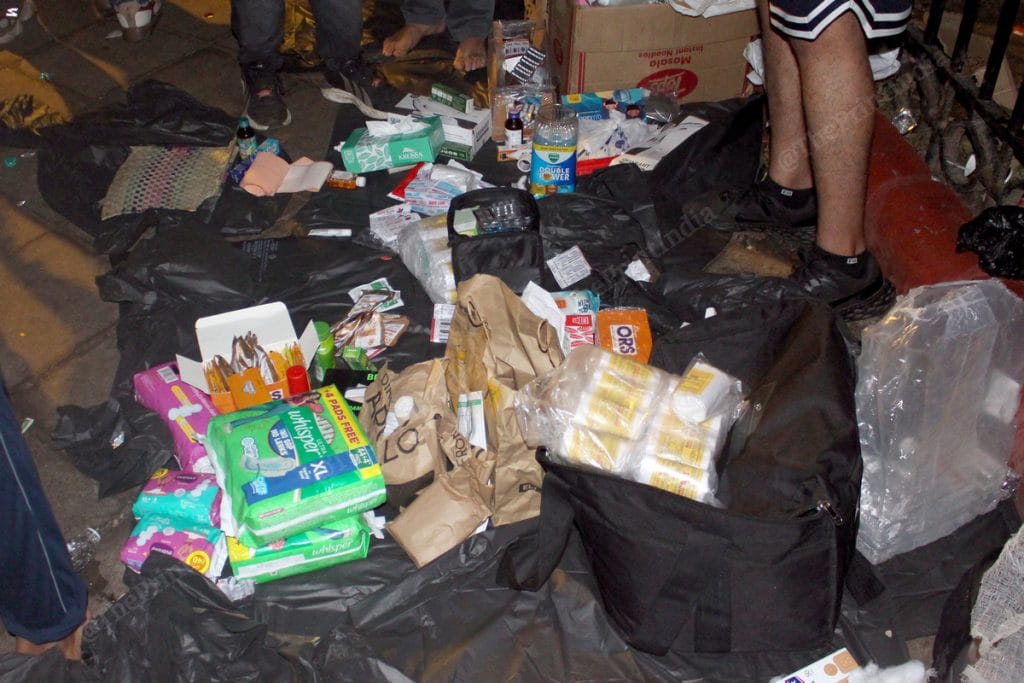
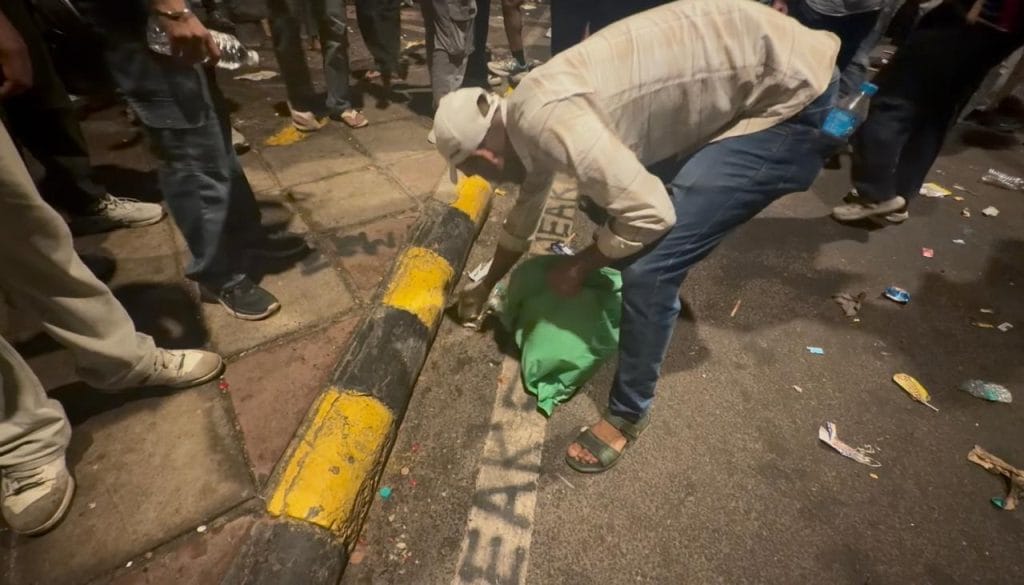
For many volunteers, clearing the trash has become an active extension of the protest itself. Dozens of student groups, some wearing neon jackets, masks and heavy gloves, can be seen sweeping the streets with small brooms and collecting plastic scrap alongside local ragpickers.
“We saw that a massive crowd in such a tight area was causing a lot of litter, which is common. As students, we took on this responsibility,” said a medical student volunteering with a group that raised funds through Instagram to purchase heavy-duty trash bins. “NDMC workers sweep once or twice a day and leave, but the trash builds right back up. We are staying on top of it constantly and teaching people to use the bins so this movement leaves behind a clear message, not a mountain of trash.”