







New Delhi: Amid Bihar’s financial crisis, the state government is seeking fresh avenues to collect taxes. Now, panchayats can impose and collect holding taxes from villagers after the Bihar Cabinet approved the draft Gram Panchayat Taxes, Rates and Fares Rules on 15 July.
“With the aim of enabling Gram Panchayats to develop their own resources and reducing their dependence on the state government, Section 27 of the Bihar Panchayat Raj Act, 2006, includes provisions for imposing various taxes, rates, and fees by Gram Panchayats. This will lead to a significant increase in the Own Source Revenue (OSR) of the Gram Panchayats,” said Manoj Kumar, secretary at Bihar Panchayat Raj Department.
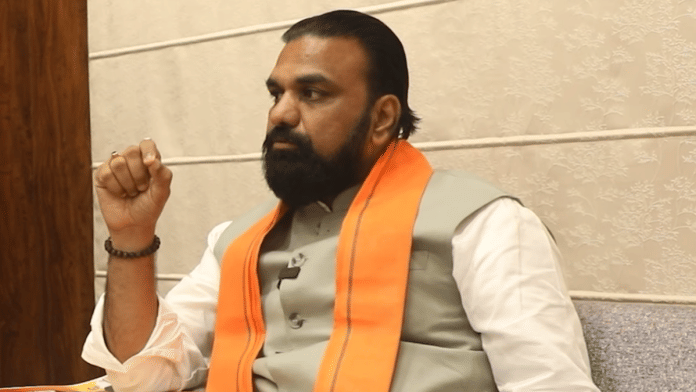
Since the 73rd Constitutional Amendment Act was passed in 1992, several states levied taxes at the panchayat level. However, Bihar had no formal system for collecting taxes despite the state having passed the Act in 2006. After Nitish Kumar stepped down as chief minister, his successor Samrat Choudhary is making a series of changes in the system. The latest is panchayat-level taxes.
Bihar has more than 45,000 revenue villages across its 38 districts, and the government is targeting a revenue of Rs 1,300 crore through the new exercise.
The Panchayati Raj Department will levy 24 different taxes on houses, commercial shops, water supply, petrol pumps, cleanliness, and cinema halls.
“The process of recovering the money has not yet begun. This process will be initiated soon,” said a Panchayati Raj Department official.
According to the Cabinet’s decision, an annual tax of Rs 100 will be levied on permanent houses, Rs 50 on semi-permanent houses, and Rs 25 on houses constructed under the Pradhan Mantri Awas Yojana.
Sanitation and water supply charges have been fixed at Rs 30 each. Meanwhile, an annual fee of Rs 5,000 will be imposed on petrol pumps, LPG agencies, brick kilns (chimneys), and cinema halls.
Panchayats will also be authorised to collect taxes on hoardings and other advertising media in accordance with prescribed rules.
While panchayat elections are expected in Bihar this year, the delimitation exercise is likely to delay them.
‘It’s like Jiziya’
The move has not gone down well with economists and opposition leaders.
Santosh Mehrotra, economist and former Secretary of the Planning Commission, said that there is a “vast difference” between taxation in villages and cities.
“While employment is still available in cities, it is often lacking in villages. In developed nations, taxes are collected from small-scale units. What the Bihar government has initiated is not wrong. However, conditions in Bihar are not such that a direct comparison can be made with states like Tamil Nadu or Kerala, or even a country like Brazil,” Mehrotra said in a press conference on 17 July.
Mehrotra acknowleged that while the state government is not doing anything illegal, the problem lies with autonomy. He explained that the Government of India had passed a law establishing Panchayati Raj institutions that stipulated that the government would devolve 29 subjects to these units—which constitute the third tier of the Indian governance system.
“The question is how autonomous these units are,” said Mehrotra.
Earlier, the Samrat Choudhary government notified the road user fee framework for levying toll tax from commercial vehicles.
Aviral Pandey, assistant professor at the Department of Economics, Patna University, says that the new avenues are being introduced because the current tax collection is low.
He noted that a major question remains regarding how this process will be executed at the panchayat level, emphasising the need for transparency.
“If people pay for services, their engagement is likely to increase. Furthermore, it is crucial for panchayats to possess their own resources to develop amenities at the village level. Panchayats are a vital component of democracy, and their strengthening is essential,” said Pandey.
However, he pointed out that public participation in the panchayat system tends to decline significantly after panchayat elections.
Opposition leaders questioned the state of Bihar’s financial health and contractors, saying that the government owed more than Rs 50,000 crore to various departments.
To clear the pending social security and other pension payments, the state Cabinet decided to withdraw Rs 3,662 crore from the Contingency Fund after the government approached the RBI for an emergency Rs 12,000 crore loan which was delayed.
“Bihar is going through a financial emergency. The state has never previously used emergency reserves to cover monthly welfare pensions, fuelling allegations of severe structural mismanagement,” said Tejashwi Yadav, RJD’s working president in July.
On 17 July, Sudhakar Singh, RJD MP from Buxar, held a press conference in Patna calling the new system Jiziya tax, a religious levy imposed during the Mughal era.
“This is like the Jiziya tax imposed during the Mughal era. It is like the tax that was once imposed on women in Kerala for covering their upper body. Villagers are already burdened by poverty, and now the government wants to impose another tax that has no relevance,” said Singh.
Even Chirag Paswan is opposing the decision.
“If the government is trying to increase its revenue by collecting more from the common people, I do not think that is appropriate. We certainly need to increase the state’s revenue, but it should not come at the expense of the public,” Paswan told the media.
Also read: Rakhigrahi is ASI’s most expensive active excavation. There are 15 more
How the new tax will work
In February, the 16th Finance Commission report was submitted for the 2026-2031 period by chairman Arvind Panagariya, who recommended that states must ensure panchayats achieve an own-source revenue target of Rs 1,200 per household.
The commission has allocated Rs 4.35 lakh crore in grants for Rural Local Bodies (RLBs) for the 2026-31 period.
However, in the first week of July, Bihar Panchayat Raj minister Deepak Prakash clarified that the government will not levy Rs 1,200 per household and will work on alternative ways to increase the panchayat’s income.
A week after his assurance, the Bihar government clarified the draft Gram Panchayat Taxes, Rates and Fares Rules, 2026 in the Cabinet.
In the 2006 Act, section 27 titled ‘Taxation by Grama Panchayat’ mentioned the collection of taxes. It stipulates that a Gram Panchayat may impose tax on occupants of holdings, on profession, trades, fee for providing sanitary arrangements, water and lighting fee.
In India, generally, panchayat finance operates with funds coming from Central and state government grant transfers, while their Own Source Revenue is minimal.
“Gram Panchayats also have the authority to levy taxes. The government needed to frame the rules, and that has now been done. This will enable them to generate their own revenue. Previously, the government did not have these rules in place,” said Arvind Kumar Choudhary, Bihar Additional Chief Secretary (Cabinet).
Arvind Kumar explained that the taxes such as holding tax on buildings, tax on land used for commercial purposes, on cinema halls, on haats (local markets), fairs, and marketplaces will be levied.
Bihar has a highly rural population, with more than 80 per cent of people living in villages with an average annual income of Rs 76,000.
Ram Kripal, a resident of Samastipur, said Bihar’s villages lack basic facilities such as clean water and drainage and yet the government wants more taxes.
“How can the government collect tax from us? They have to first give us better facilities. It’s just extortion,” said 42-year-old Kripal.
(Edited by Prasanna Bachchhav)