





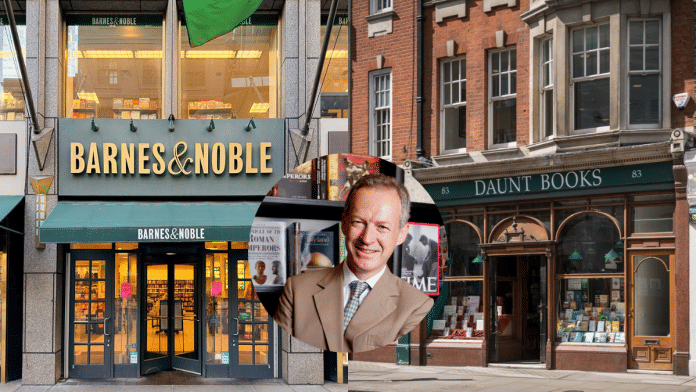


New Delhi: America’s largest retail bookseller, Barnes & Noble, is now adopting the You’ve Got Mail playbook.
Much like Meg Ryan’s carefully curated bookshop in Nora Ephron’s 1998 romantic comedy, CEO James Daunt is also cashing in on the indie bookstore hype.
Since taking on the role in 2019, Daunt has been on a mission to run Barnes and Noble according to the independent bookstores playbook. Speaking to Fortune, the 62-year-old businessman explained that there are universal factors that make a great bookstore, regardless of whether it’s a huge chain or a neighbourhood secret.
His methodology is simple: allow local stores to curate inventory, displays and aesthetics according to the community’s tastes.
But perhaps the CEO’s insistence on treating the over 700 stores as hallowed grounds stems from his own experience managing Daunt Books.
Daunt is the founder of his namesake Edwardian book chain, famous for its architecture, unique book arrangement and tote bags beloved by stars like Benedict Cumberbatch and Helena Bonham Carter as well as half of London.
He admitted that soon after joining Barnes & Noble, he noticed the company had a uniformity problem that bored customers.
The practice of co-op advertising had dulled the bookstore’s sparkle, so Daunt decided to abandon it altogether.
“It created these really dispiriting, anodyne stores because they were all the same, selling the same old books, the same authors, the same bestsellers. We just said, ‘No more of that.’ We’re going to choose what we sell,” he said, adding that now each store curates its own assortment and “does their own thing.”
In the latest episode of Fortune’s Behind the Business, the British bookseller said that an average American customer buys more than a UK customer.
“The American consumer is wonderful because they buy enormous amounts of books… The American consumer, of course, is world famous in all forms of retail, but it applies also to bookselling,” Daunt said.
Despite the rise of Amazon and AI, Barnes and Noble continues to flourish, opening more stores every year and is well on track to open its 800th location. Daunt does not believe that the book market is a finite one, particularly because of the way people come into a bookstore.
“If you come into a bookstore, you’re going to get inspired. You’re going to come in for one book, you’re going to walk out with three. That’s the way it works. The better our bookstores, the more books are sold, the larger the market expands, but it’s not eating the share of somebody else,” he said, adding that it is “not a zero-sum game at all.”
In fact, Daunt even plans to improve and reopen stores in markets abandoned since the pandemic.
He went on to explain the tiny details he has added at the Barnes & Noble flagship store in Manhattan’s Union Square, including staff recommendations and a selection of books curated by the staff on themes such as current affairs and income inequality.
“It takes time, it takes intelligence. These are great books. You’ll walk away with two, three, four, five books, not just one book or no books.”