





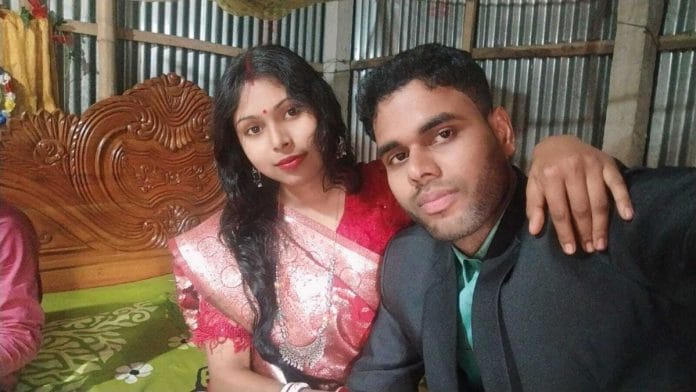



New Delhi: Nineteen-year-old Jabarani Sarkar, who recently walked out of a prison in Jalpaiguri, West Bengal, migrated to India from Bangladesh when she was just five months old, cradled in her father’s arms.
That journey, over which she had no control, is now a hot-button issue in India for multiple reasons. The safety of the Hindu minority in Bangladesh, India’s CAA endeavour to give citizenship to Hindus who flee persecution, and the rising political crackdown on undocumented immigrants from Bangladesh. Jabarani Sarkar finds herself entangled in all three narratives.
On 24 August last year, Sarkar was arrested for residing in India without valid documents. On 13 February, the Calcutta High Court granted her bail on the ground that the “accused had already applied for registration as a citizen of India under the Citizenship Amendment Act (CAA)”. After six months, she was finally released from the Sitalkuchi Police Station on 17 February.
Sarkar’s story sits at the uneasy intersection of borders and belonging. She grew up in India, married here, built a life here — yet the law still sees her through the lens of the border she crossed as an infant, a decision of which she was never part.
Her arrest underscores a larger anxiety among migrant Hindu families from Bangladesh who pinned their futures on the CAA—unless citizenship is granted, the line between refuge and illegality remains thin and frighteningly real.
Sarkar’s father, who is from Lalmonirhat in northern Bangladesh, travelled to India in 2007. His primary concern—the safety of women in Muslim-majority Bangladesh, especially those from the Hindu community—pushed him to leave home and cross the perilous border.
“I was very young to remember the journey. It wasn’t until I turned five or six years old that I realised I had been staying at my aunt’s house in Jalpaiguri district,” Sarkar told ThePrint. “I am grateful that he took this decision. We all know how unsafe that country is for Hindu women.”
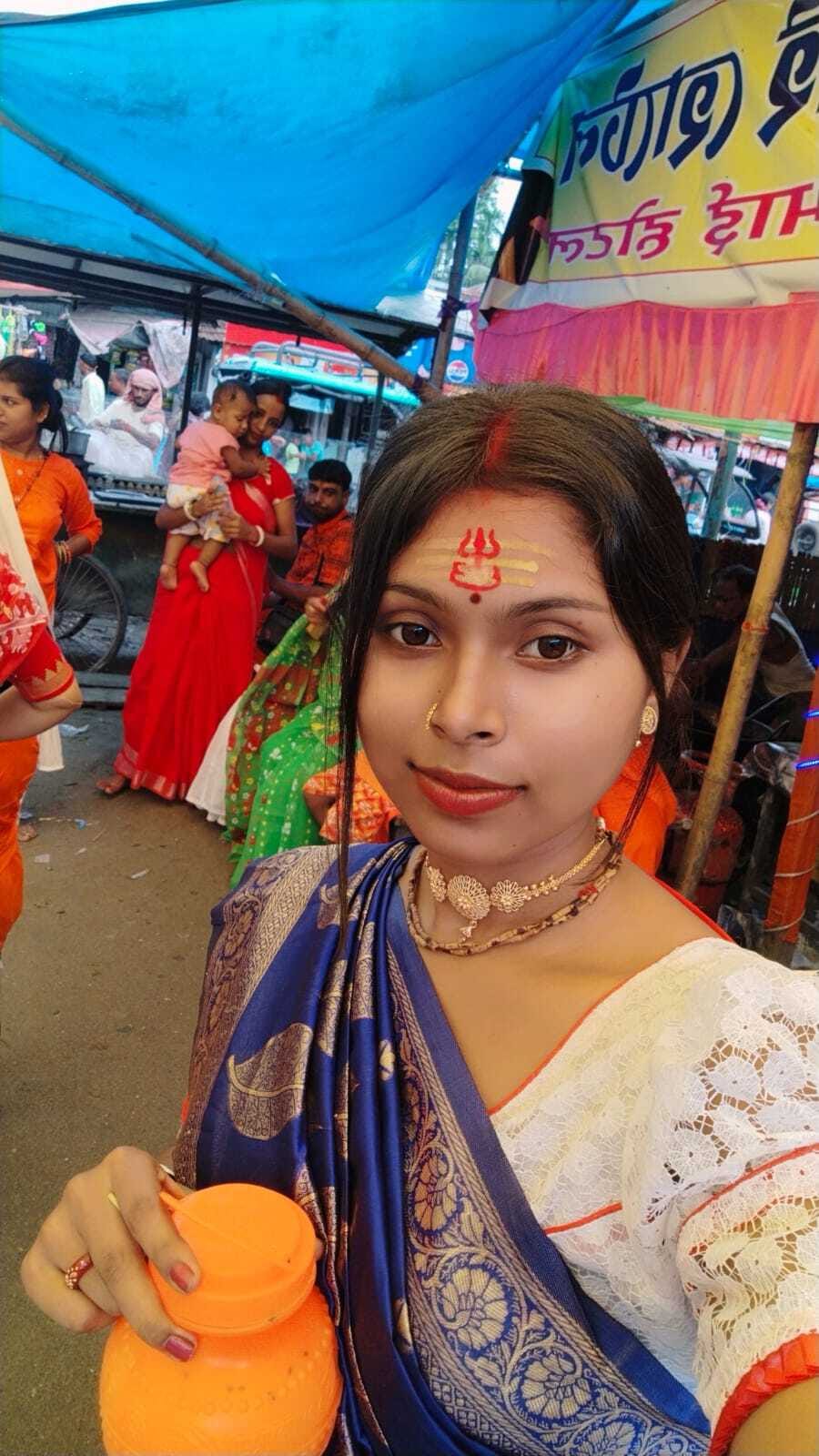
Endless nightmares
Last year, on 23 August, the Sarkars started the day with the usual morning clamour—chores to be completed, meals to be cooked, and money to be earned. It seemed like ‘just another day’. Nothing hinted at how fast things would unravel.
At 11 pm, a series of ear-splitting knocks on the door pierced the silence of the night, waking the entire family.
“The police abused me and physically assaulted my husband and brother-in-law. We were then dragged to the police station. There, too, we were assaulted. Later, they had threatened my family and extorted money,” said Sarkar.
The next morning, the couple was produced before the Mathabhanga Court and sent to 14 days of judicial custody. While Sarkar was lodged in Cooch Behar prison, her husband was sent to Mathabhanga jail.
Uncertainty loomed over Sarkar. A question that constantly kept coming to her—would she be sent back to Bangladesh? Living in this constant dilemma—she had already prepared herself mentally to leave India, abandoning her in-laws, family, and the little dreams that she had woven around to reside in this country.
“I can never forget that night when the police knocked at our door. We were completely unprepared. Scared and scarred, initially, I was unable to comprehend the situation,” Sarkar said, adding that she and her family clung on to hope and belief to secure an Indian citizenship through the CAA route.
For Sarkar, the five-month tenure in prison has led to endless nightmares. She kept waiting—waiting for her family’s daily visit, waiting for court hearings, waiting for updates from lawyers. The dilemma she went through was not just about her legal status, but also about where she belonged. The fear of being sent back to her ‘unknown motherland’ lingered like a quiet threat in her mind.
“I felt completely helpless in prison. I had never imagined I would see what a prison looks like from the inside. I was in a constant dilemma about how long I would be staying inside or what exactly lies in my fate,” she said.
“Nights felt longer when the silence dawned upon the prison,” Sarkar said, adding that days were rigorous and full of chaotic noises of other inmates, and evenings were usually spent completing the daily chores of the prison.
“The other inmates treated me well. We would sweep the ward, mop the floors, clean utensils and cut grass daily,” said Sarkar. “I felt suffocated. There was not a single day when I did not cry.”
Inside the prison, the day began at 5.30 am and ended with a roll call by the jailer at 5.30 pm. Food which was mostly “edible” involved puffed rice, jaggery, tea and biscuits. Amid this rigorous routine, Sarkar managed to set aside 15 minutes each day to pray—for strength, sanity and survival.
“Just before lunch, I used to take a bath and pray to God. There was no one with whom I could share my pain. So I would speak only to God,” Sarkar said. “I will never forget this difficult period of my life. The pain and suffering felt unbearable. Sometimes, I even felt like ending my life.”
The CAA, passed by Parliament in 2019, makes it easier for certain migrants to become Indian citizens. It specifically applies to Hindus, Sikhs, Buddhists, Jains, Parsis, and Christians—who fled religious persecution in Afghanistan, Bangladesh, and Pakistan.
To qualify, a person must have entered India on or before 31 December 2014. Under the law, these groups can apply for citizenship after living in India for five years instead of the usual 11. The Act also protects them from being treated as illegal migrants while their applications are processed.
“Sarkar was booked under sections 14A/14C of the Foreigners Act. The police arrested her illegally. As per the CAA Act, I have assured that she cannot be deported to Bangladesh,” Subhankar Dutta, the defence lawyer, said.
Refuting the possibility of the state challenging the bail order, he added that Sarkar may face the trial or file an application to quash the case against her.
“This case felt very different, especially because she is a Bangladeshi national. The legal bindings of the case had struck me the most when I had taken it up,” Dutta said.
Since Sarkar is not yet an Indian citizen, the Jalpaiguri bench of the Calcutta High Court released her on bail with certain conditions. It directed her to submit a bail bond of Rs 10,000 along with two sureties of the same amount, one of whom must be a resident of the local area, before the Additional Chief Judicial Magistrate (ACJM) in Mathabhanga, Cooch Behar.
“The petitioner has an application pending under Section 6B of the Citizenship Act, 1955, making further detention unnecessary. Her further detention is not required for the purpose of custodial interrogation,” said Justice Suvra Ghosh in her bail order.
Also read: Sex, spa and two Muslim women. The Bhopal crime drama that’s in every WhatsApp chat
She breaks down too often
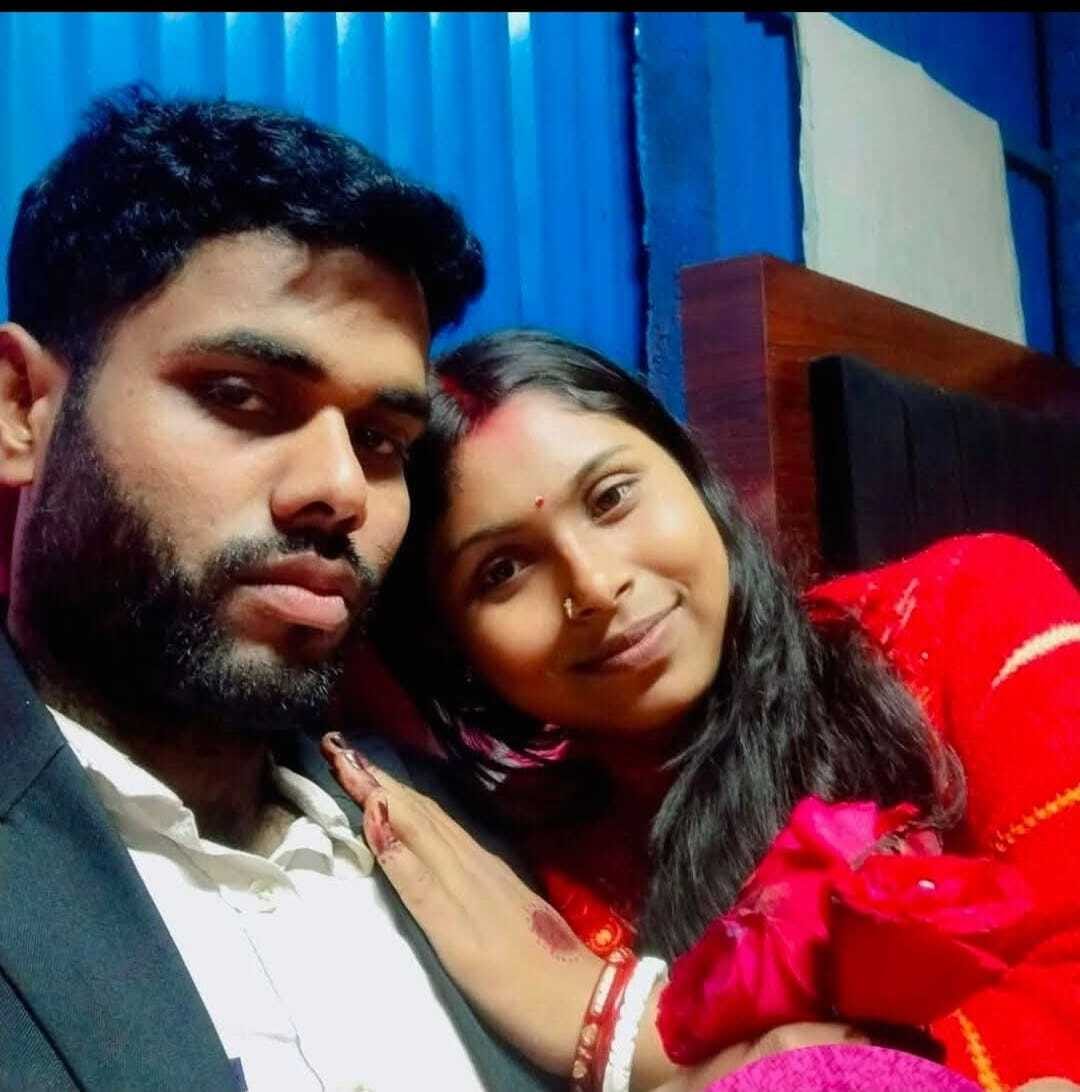
Debashish Sarkar, 26, Sarkar’s husband, was also arrested on the same day for allegedly harbouring an illegal citizen from Bangladesh. However, he was granted bail just one month after the couple’s arrest.
“When I got out, the job was still half done for me. She was still in, and I had to get her out. A local court had already rejected her bail, and I was being told that she would be deported to Bangladesh after serving two to three years of prison term,” he said.
The real battle for Debashish began then—a four-month-long, uncertain legal tussle. From local corporators to politicians, he knocked on doors that rarely opened easily. His sole aim was to keep his family from being torn apart.
“The most difficult sight in these six months was when the police took her inside the lockup. I was shattered to see her like that,” he said. “Jabarani is still in trauma; she breaks down very often.”
Emotionally broken, Debashish now just hopes that his wife gets an Indian citizenship at the earliest, irrespective of the strain on their finances.
For now, their lives forge a constant battle between court dates and documents. Sarkar is out on bail, but the citizenship application, which is still pending, will continue to haunt her. Every hearing feels forbearing. Nineteen years of living in India now rest on what the paperwork finally decides.
Back in Jalpaiguri, life has resumed, though not in the same way as before. There is work at home, family members seeking answers, and a quiet recognition of the fleeting nature of things.
“In the end, we won,” Sarkar and Debashish echoed the same sentiment.
(Edited by Ratan Priya)
Exactly why the CAA is such a blessing for Hindus, Buddhists, Sikhs, Jains and other religious minorities living under Islamist rule in our neighbouring nations.
May God bless this girl and her family.
Hope this case serves as a lesson for the Union govt and it ensures no one else gets harassed and tortured like this.