


New Delhi: Why do some artworks stay in our minds long after we see them, while others are quickly forgotten? A new study published in Psychological Science suggests that the answer may lie partly in the artist’s ability to deliberately make an artwork memorable.
Titled ‘Artists can design memory, and AI can predict it ‘, the study was first published on 13 October. Researchers at the University of Chicago explored the idea through a nationwide art competition, collecting submissions over three months and receiving 86 entries.
The team asked artists from across the country to create artworks that people would either remember easily or forget quickly. The results showed that artists could influence how memorable their work was, although they were more successful at creating memorable artworks than forgettable ones.
The researchers also found that a deep learning model was particularly good at predicting which artworks people would remember.
“Our study suggests that artists can offer valuable insights into memory,” said Yifei Chen, a co-author of the study. “They seem to have an intuitive sense of what makes artworks actually stick in people’s minds.”
Which artworks were remembered
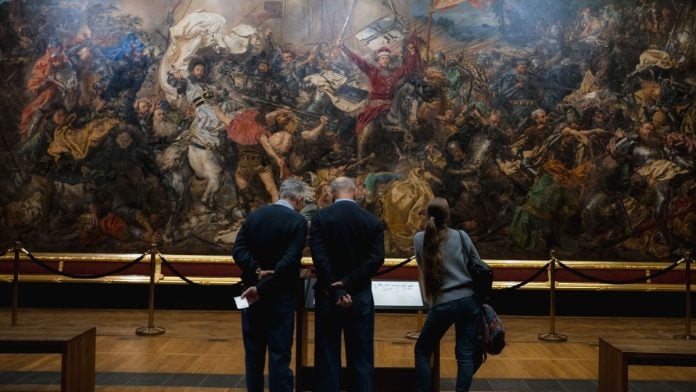
The researchers then selected 20 of the most memorable artworks and 20 of the most forgettable ones. They invited the artists to send their work to Chicago for a month-long art exhibition.
Visitors were free to walk around the gallery and view the artworks. After the visit, the researchers tested how many of the artworks they could remember.
The team also asked online participants to look at the artworks and tested which ones they could remember later. The results showed that artworks created to be memorable were more likely to stick in people’s minds, while those designed to be forgettable were easier to forget.
The researchers found that simpler artworks, with fewer repetitive elements and less symmetry, were generally more memorable.
“The same pattern held in the gallery: Artworks that were more memorable online were also better remembered in person,” Chen said.
Wilma Bainbridge, the study’s senior author and Chen’s research adviser, said the experiment was a big risk for the research team. The gallery displayed only 40 artworks, all based on the theme of memory.
The entire experiment was also documented in a short film.
Also read: Losing memory begins earlier than you think, says new US study
AI vs humans: Who can predict what people remember?
The researchers then compared how well artists, ordinary viewers, and an AI model called ResMem could predict which artworks people would remember. ResMem performed the best, followed by artists and then ordinary viewers.
The research team also found that ResMem, which had been trained using photographs, could still predict the memorability of these original artworks better than humans.
“What people think is memorable is different from what actually is,” Chen said.
Although artists were not as good as AI at predicting memorability, they were successful at creating artworks that people could remember. The researchers believe the findings could help artists make their work more memorable, museums plan exhibitions, and teachers choose images that make learning easier.
Chen believes this research could open new ways to understand how images affect our memory and how we remember things in everyday life.
“A direction that the whole field could explore further in the future,” she added.
(Edited by Maryam Hassan)