


Nainital: A Bhutanese superhero character who can fly, a temple caught between history and fantasy, a chutney that travelled from South India to the Caribbean, and ghosts said to live in peepal trees.
At first, these stories seem like they belong to entirely different worlds. At the 11th Himalayan Echoes: Kumaon Festival of Literature and Arts, however, they shared the same stage.
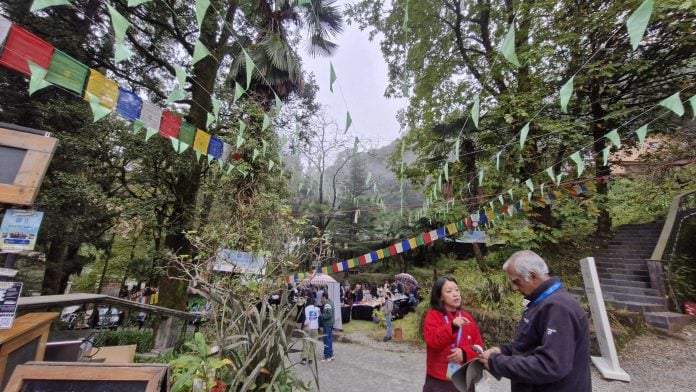
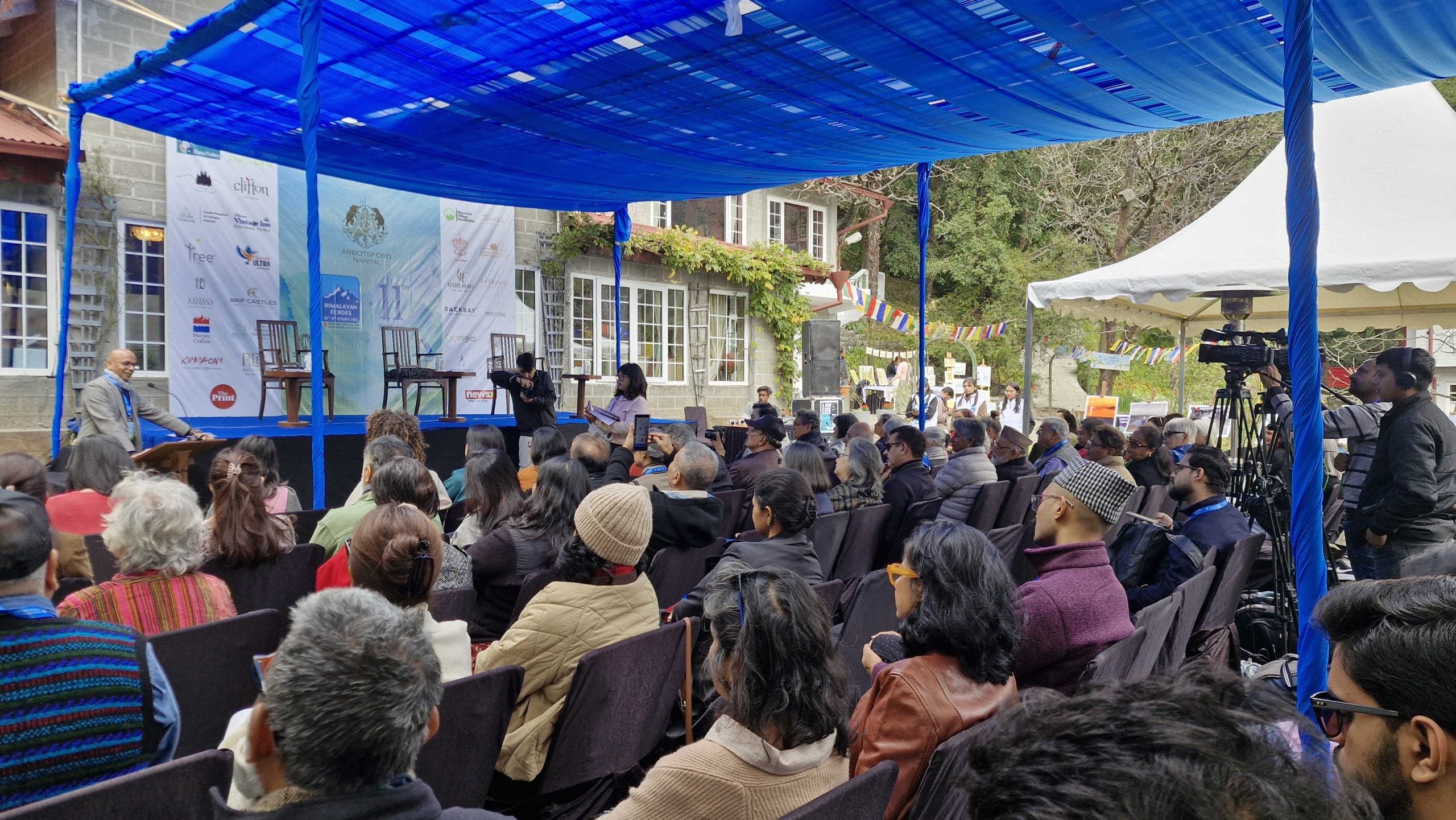
The Abbotsford Estate was wrapped in green, mist moving across its wooded slopes, while mountains formed a background for conversations between authors, poets and food historians.
Though authors dominated the line-up, the talk rarely stayed within the covers of a book. It wandered through folklore and history, food and migration, forests and ghosts, but kept returning to one question – how do stories preserve histories, traditions and identities of a community, and what gets lost when they are forgotten?
Held on 30 and 31 October, the festival brought together 26 speakers, including Bhutanese writer Chador Wangmo, mythologist Sunita Pant Bansal, Nepali author Rishi Amatya, author Amish Tripathi, poet Sudeep Sen, writer Satyajit Sarna, food writer Rushina Munshaw Ghildiyal and children’s author Paro Anand.
Old Gods, New Heroes
In the first session, Chador Wangmo spoke about discovering a gap in Bhutan’s literary world. Wangmo, a former teacher, had noticed that most of the written stories in Bhutan were in English and directed at adults.
“In my class, sadly, out of the 38 children, not even one knew any Bhutanese folk tale.”
That realisation led her to create Dema, a 12-year-old nun who is also Bhutan’s first superhero. She then came up with three more parts of the series, giving children stories of their own to grow up with.
In the same session, Sunita Bansal, who grew up in the Kumaon hills, traced her storytelling instinct to her grandmother, Ija. As a child, she would sit beside her while she narrated stories about the gods in a way that did not feel distant.
“She would never say ‘God.’ She would say Krishna and Vishnu and so on and so forth,” Bansal recalled.
“So, I was never scared of them. For me, they were like an extended family.”
That closeness runs through her retellings today for young readers.
“I normalise mythology. I make all the stories relatable. I make them like one of us.”
Launched during the session, her latest book, Mythology in Nature, turns to the myths and folklore attached to plants in the same way as Ija would narrate.
“If you know the story of a plant, then you would think twice before destroying it,” Bansal said.
Buried stories
While stories like Bansal’s can take root in trees, some can also be buried under rubble. Rishi Amatya, a Kathmandu-based heritage interpreter, saw this after the 2015 earthquake brought down temples in Patan Darbar Square in Nepal.
While helping document the damage, he found that the boards at the rebuilding sites named the donors but said nothing of the temples’ histories or deities. His novel, Radha – The Wrath of the Maeju, tries to fill that silence by weaving Newa mythology and the cultural life of Patan into fiction.
“What I wanted to have was stories of regular people who live in the square, who want to know about the square, who have seen this temple, who have worshipped in the temple and want to know more about the temple,” he said.
Amish Tripathi then moved from the concern over unrecorded history to the ones recorded too narrowly. History textbooks, he pointed out, leave out large parts of the country.
“Most of India, east of Agra, is ignored. Most of India, south of Jaipur, is also ignored in our history textbooks.”
His remedy, he told ThePrint, is not to simply recover forgotten histories but to interpret it better.
“I don’t think things should be forgotten. How we remember it is very important, because how we remember it defines how we live today.”
The evolution of stories was equally important to Tripathi.
“Take the best of the old, add in something of the new,” he said.
He cited the Lakshman Rekha, which does not appear in Valmiki’s Ramayana but entered popular memory through Tulsidas’ Ramcharitmanas and Ramanand Sagar’s television adaptation.
Such reinterpretations, he suggested, are not necessarily departures from tradition but part of keeping it alive.
Also read: Kumaon Festival of Literature and Arts is doing something no one else is—refusing to grow
Passing down recipes
Not all cultural memory lives in books or temples. Some of it sits in a family kitchen, in a recipe that has crossed borders. Food writer Rushina Munshaw Ghildiyal traced one such journey, that of chutney through the South Indian diaspora.
In Mauritius, she explained, the word ‘Chutney’ retains the South Indian term satini. However, it forms new versions like satini di coco for coconut chutney and satini pistachio, which, despite its name, is made with peanuts. In Trinidad and Tobago, recipes adapted to local ingredients, including scotch bonnet chillies and sawtooth coriander, shaping new flavours.
“The concept has always been embedded in us, but it transformed as it travelled,” Ghildiyal said.
But she had little interest in arguing over which version tastes better. What worries her is the recipes that were never written down.
“We need to talk to the older people in our families and write down those recipes before we lose them.”
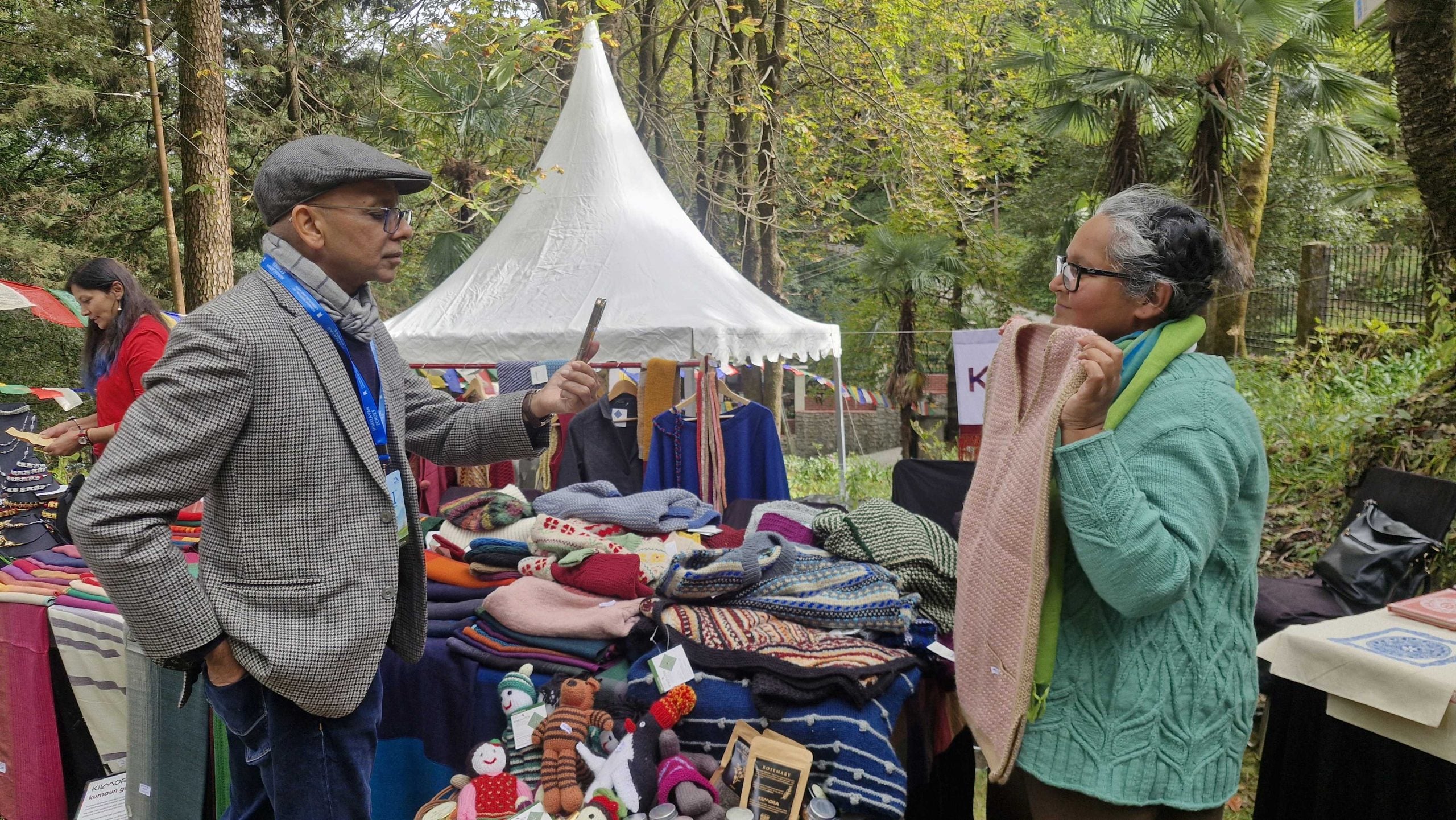
The same urge to hold on to traditions was visible outside the sessions. The Kumaon Bazaar had come up under white tents among the pine trees. Local artisans sold hand-knit sweaters, mufflers and stoles, knitted toys and jewellery.
Preserving difficult stories
The second day opened with author Paro Anand, who brought the conversation back to children and to the adults who decide what they may read. Their reluctance, she suggested, comes from fear of what a book might set off.
“Parents are afraid of the questions that will follow some readings,” she said.
One of her Sahitya Akademi Award-winning books, Like Smoke, was banned in some schools. It began with the line “I hate Muslims.”
Paro, unapologetic about it, said,
“It’s not Paro Anand saying it. It’s a general perception saying it. I was highlighting the prejudice.”
Her session then focused on how preserving stories also meant letting difficult ones be told, and trusting young readers to handle them.
Ghosts on trees and mountains
The landscape around Abbotsford was never just a backdrop. The mountains and the forests kept entering the stage. Peepal Baba carried the environmental thread on the back of folklore.
The 61-year-old environmentalist grew up on his grandmother’s promise that the ghosts living in peepal trees would look after him if he looked after the trees. He thinks his elders knew exactly what they were doing.
“All our elders, they were ecologists, environmentalists in their own way. They had a way of storytelling to protect the trees and to protect the forest.”
Many people still won’t cut a peepal because of this myth, and he doesn’t correct them. He grows peepals and other native trees in 400 nurseries, with about four lakh volunteers across 226 districts.
As if on cue, the fog thickened during his session, and the host couldn’t resist.
“Ghosts are entering in the form of fog, just to welcome you,” he said.
The ghosts stayed on for the last session, where Satyajit Sarna led the audience into Red Tooth: A Himalayan Horror Story.
The novel is set on a commercial trekking route to Goechala in Sikkim, near Kanchenjunga. It is based on his own treks in the Himalayas, including one interrupted by a sudden storm and some restless ghosts.
Beneath the horror, though, the book looks at the fragile bond between people and mountains. Sarna questioned the idea that environmental responsibility rests only with individuals.
“You can separate your garbage, you can recycle all day long, you can plant as many trees as you want. But this is not your cross to bear alone,” Sarna said.
“It is the greatest act of magic and deceit of corporations and governments to thrust this responsibility entirely back on you,” he added.
Human-to-human interaction
On the final evening, as rock band Parikrama took the stage, the festival turned from conversation to music. People danced to classics, the town’s lights scattered across the hillside and the mountains shining behind them.
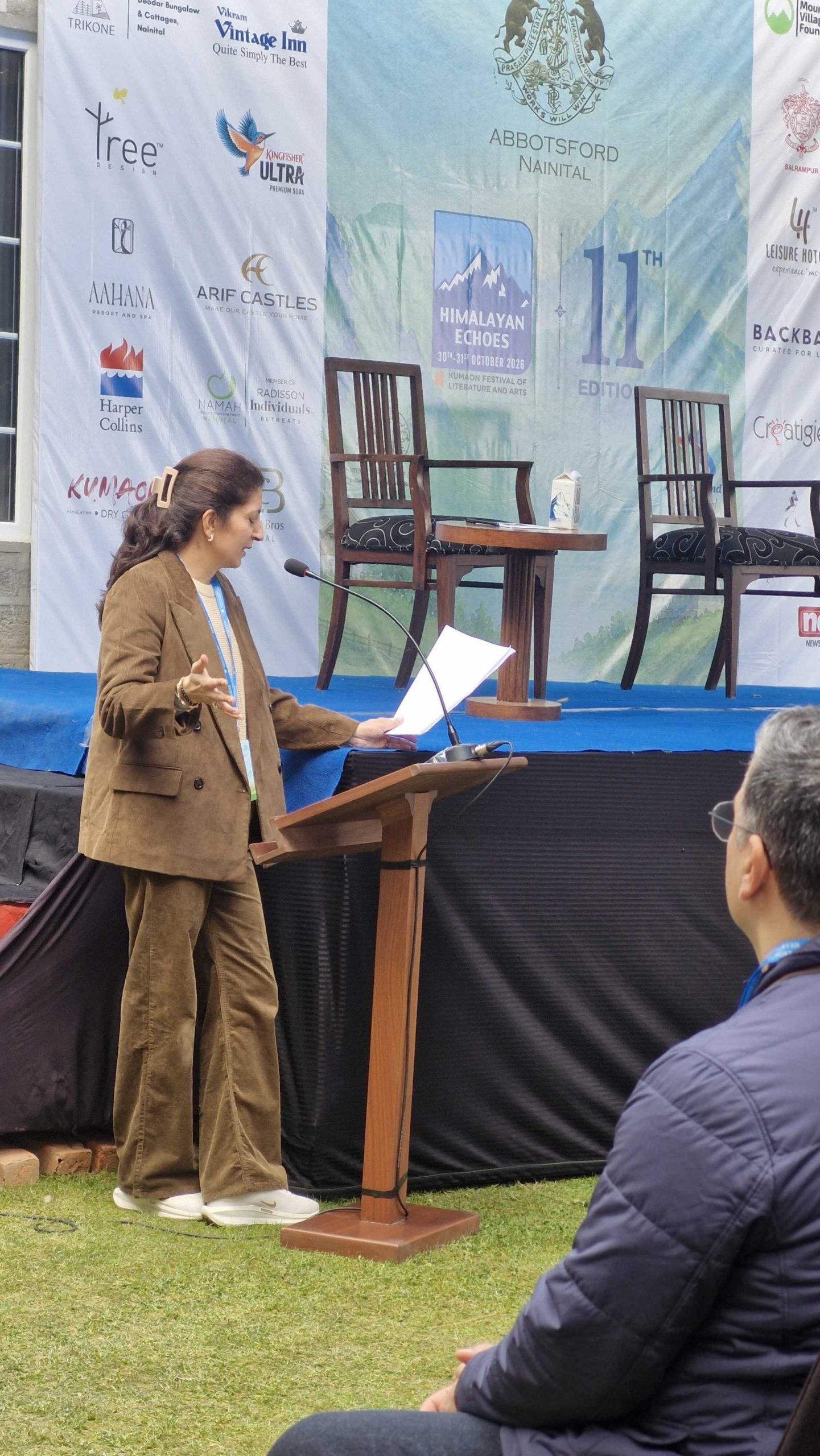
For festival director Janhavi Prasada, Himalayan Echoes is as much about the community that sustains it as the stories that bring it together. A fourth-generation resident of Nainital, Jahnvi described the town as a close-knit place where families have known one another for generations.
“That sense of belonging has shaped the festival into an intimate gathering which brings people from different professions and places through their shared love for the mountains,” she said.
“Over the years, Himalayan Echoes has become a voice for people who speak for the mountains, who live in the mountains, who work in the mountains, whose life revolves around the mountains,” she added.
Asked what she still finds most precious about the gathering after 11 editions, her answer was past the books and discussions.
“I think human-to-human interaction is the most precious thing that we must carry.”
While it is the one thing no archive or textbook can hold, “it’s the one most easily lost,” she said.