







By Valerie Volcovici
WASHINGTON (Reuters) – Rural communities and tribal nations lacking access to reliable energy will begin receiving more than $300 million to develop clean and affordable energy sources, the U.S. Energy Department said on Wednesday.
A bipartisan infrastructure law signed by President Joe Biden in 2021 earmarked $300 million for remote communities of fewer than 10,000 residents plus $15 million for a prize competition to help them build capacity for new energy systems.
The announcement means communities can now apply for federal cost-share funding from $5 million to $10 million for single-site demonstration projects and for up to $100 million for multi-community projects to increase energy affordability and build climate resilience.
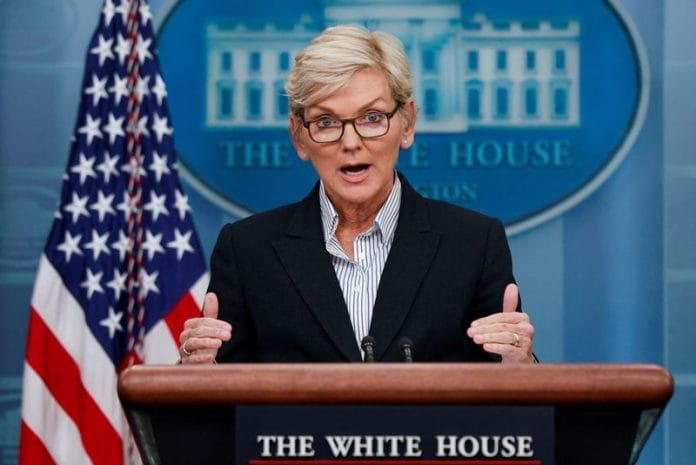
“The DOE is doubling down on its efforts to ensure every American — especially those in rural and remote areas — can unlock the public health and cost-saving benefits that come with the transition to a clean energy future,” Energy Secretary Jennifer Granholm said in a statement.
Roughly one of every six Americans lives in rural or remote communities, which tend to grapple with disproportionately high energy bills and unreliable energy service due to their distance from larger transmission systems and low population density.
Lack of reliable energy for tribes and rural communities is often a barrier to economic development.
The funding aims to provide these communities with eligible projects to upgrade electric grid transmission and distribution, modernize existing electric generation facilities and increase energy efficiency.
U.S. Deputy Energy Secretary David Turk announced the availability of funding at the Alaska Federation of Natives’ Alaska Day Convention.
The funding will be distributed through nine geographical regions representing different energy access issues, weather patterns and climate impacts. Projects must include plans ensuring that benefits will be spread equitably across affected communities.
(Reporting by Valerie Volcovici; Editing by Howard Goller)
Disclaimer: This report is auto generated from the Reuters news service. ThePrint holds no responsibilty for its content.