







By Gabrielle Tétrault-Farber
GENEVA (Reuters) -Temperatures are expected to soar across large parts of the world after the El Nino weather pattern emerged in the tropical Pacific for the first time in seven years, the World Meteorological Organization said on Tuesday.
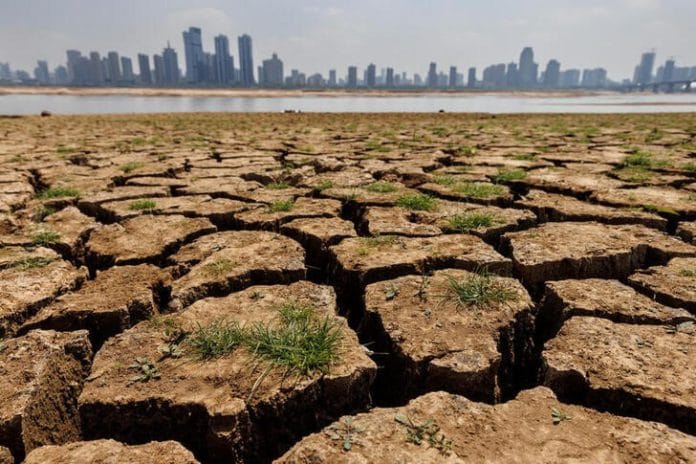
El Nino, a warming of water surface temperatures in the eastern and central Pacific Ocean, is linked to extreme weather conditions from tropical cyclones to heavy rainfall to severe droughts.
The world’s hottest year on record, 2016, coincided with a strong El Nino – though experts says climate change has fuelled extreme temperatures even in years without the phenomenon.
Even that record could soon be broken, according to the WMO.
The organisation said in May that there was a strong likelihood that at least one of the next five years, and the five-year period as a whole, would be the warmest on record due to El Nino and anthropogenic global warming.
“To tell you whether it will be this year or next year is difficult,” Wilfran Moufouma Okia, Head of Regional Climate Prediction Service at WMO, told reporters in Geneva.
“What we know is that throughout the next five years, we are likely to have one of the warmest years on record.”
The World Health Organization said last month it was preparing for an increased spread of viral diseases such as dengue, Zika and chikungunya linked to El Nino.
“We can reasonably expect even an increase in infectious diseases because of the temperature,” Maria Neira, Director for Environment, Climate Change and Health at WHO, told reporters.
During El Nino, winds blowing west along the equator slow down, and warm water is pushed east, creating warmer surface ocean temperatures.
The phenomenon occurs on average every two to seven years, and can last nine to 12 months, according to the WMO.
It is typically associated with increased rainfall in parts of southern South America, the southern United States, the Horn of Africa and Central Asia.
In the past, it has caused severe droughts in Australia, Indonesia, parts of southern Asia, Central America and northern South America.
(Reporting by Gabrielle Tétrault-Farber; Editing by Andrew Heavens, Alex Richardson and Christina Fincher)
Disclaimer: This report is auto generated from the Reuters news service. ThePrint holds no responsibilty for its content.