







By David Stanway
SINGAPORE (Reuters) – Half the world’s natural pasture land has been degraded by overexploitation and the impact of climate change, putting food supplies and livelihoods in peril, the United Nations body in charge of fighting desertification said on Tuesday.
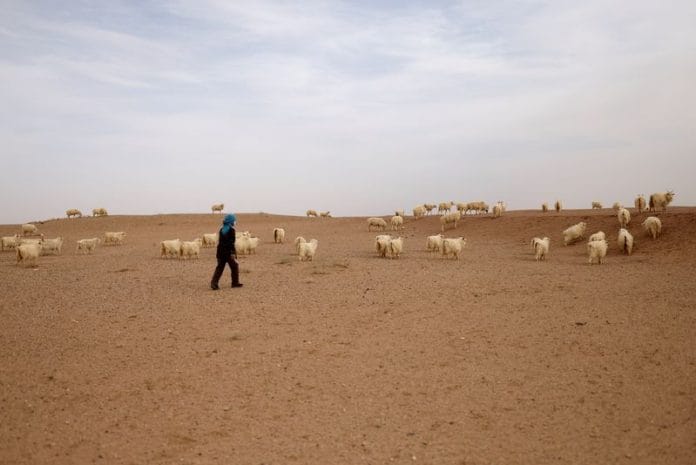
The United Nations Convention to Combat Desertification (UNCCD) warned that a sixth of the world’s food supplies were at risk from the deterioration of the world’s rangelands – which include savannas, wetlands and deserts as well as grassland.
Population growth, urbanisation and rising food demand have encouraged herders to rear more animals than the land can support, and have also driven the conversion of natural pastures into intensive cropland, leading to declines in soil fertility and worsening droughts, it said.
Barron Joseph Orr, UNCCD’s chief scientist, said that while the situation was bleak, there was a growing recognition that land restoration is part of the solution to climate change – with rangelands accounting for a third of the world’s carbon reservoir capacity.
“Emissions are the big issue for sure, but where do we want to put the carbon – where does it naturally belong? In our soils and in our vegetation, and if you keep undermining that, you undermine your solution,” he said.
Rangelands constitute about 54% of the world’s total land and support two billion farmers, herders and ranchers, the UNCCD report said.
The previous estimate of degradation was 25%, but UNCCD said it severely undercounted the damage done, with its new figure based on surveys from experts in more than 40 countries.
The report identified Central Asia, China and Mongolia as the most badly hit, with agricultural industrialisation displacing traditional herding communities and putting more pressure on resources. Africa, the Middle East and South America have also seen widespread degradation, it said.
Orr said governments needed to take a more joined-up approach to the protection of land rather than focusing on individual restoration projects. He also said that traditional herding practices could help rangelands recover.
“In general, the way things were done in the past, traditionally, can go a long way towards the solutions that we’re trying to achieve today,” he said.
“They worked for a long, long time and they can work again, given the right circumstances.”
(Reporting by David Stanway; Editing by Mark Potter)
Disclaimer: This report is auto generated from the Reuters news service. ThePrint holds no responsibilty for its content.