







LONDON (Reuters) – Extracting minerals from the ocean floor could cause biodiversity loss up to 25 times greater than land-based mining, and fixing the damage would cost twice as much as extraction, a new report said on Thursday.
A search for alternatives to fossil fuels has driven demand for materials that go into batteries, some of which can be found on the seabed where ecosystems have yet to be fully explored.
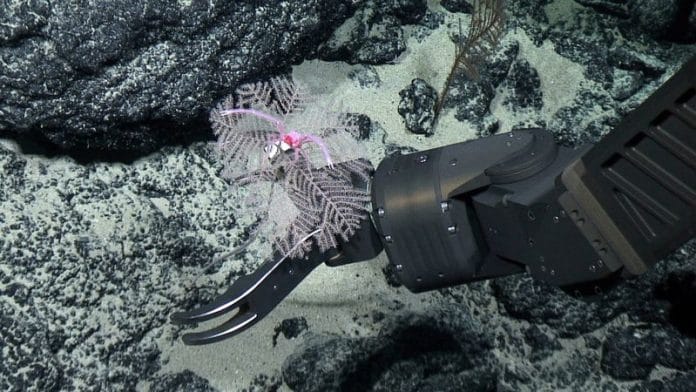
Deep-sea mining would extract cobalt, copper, nickel, and manganese from potato-sized nodules which pepper the sea floor at depths of 4-6 kilometres. The nodules are an essential habitat for many species.
The total biosphere impacted by this mining in international waters alone would be up to 75 million cubic kilometres, a greater volume than all the freshwater in the world, according to a new study by non-profit Planet Tracker.
“Sadly, the nodules… take millions of years to form,” said François Mosnier, head of Oceans Programme at Planet Tracker, which warned resulting biodiversity loss could be permanent.
Advocates say deep sea ecosystem restoration, such as installing artificial clay nodules to replace those lost, could mitigate these impacts.
But this would cost between $5.3 – $5.7 million per square kilometre, compared with $2.7 million price per square kilometre to mine them, according to the report.
That is “more than the revenue a typical company would make from mining,” Mosnier added.
Seabed mining in international waters cannot start until the International Seabed Authority (ISA), a Jamaica-based U.N. body, decides on regulations expected by July.
Several countries, including Germany, and companies, such as Google, AB Volvo Group, and Samsung SDI are calling for a moratorium on the start of the practice.
Others are supporting it. Norway in June proposed opening parts of its extended continental shelf in the North Atlantic for mineral exploration as it looks to fuel economic activity without hydrocarbons.
(Reporting by Clara Denina; Editing by Emma Rumney)
Disclaimer: This report is auto generated from the Reuters news service. ThePrint holds no responsibilty for its content.