


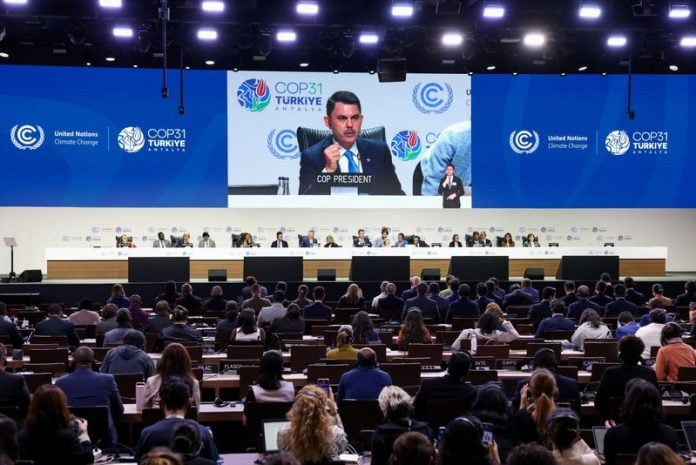
New Delhi: The 31st climate talks fell through Sunday for the first time since 2009 after the European Union and other countries rejected the final draft deal tabled by the Turkey-Australia presidency, insisting that it lacked the strength to advance the fight against climate change.
“It is clear that there are parties in this hall who oppose this text. We recognise that there is no consensus on this document. Therefore, these decisions have not been adopted,” said Turkiye’s COP31 President Murat Kurum during the closing plenary.
The main deal was rejected by a list of countries on Sunday. The talks, which were supposed to culminate on Friday, stretched by over 40 hours.
The final draft omitted the mention of ‘fossil fuel’, which is the primary driver of climate change. The text only made a reference to one of the last COPs, in which the governments had agreed to transition away from coal, oil and gas.
António Guterres, secretary-general, United Nations said that he was “deeply disappointed” that COP31 ended without consensus on an overarching outcome.
“I share the very profound frustration of all those who expected governments to rise to the moment the climate crisis demands. But this setback does not change the facts,” Guterres said.
He added there may be no consensus in the negotiating room.
“There is no ambiguity in the science. Temperatures keep shattering records. Climate extremes keep intensifying. Emissions remain far too high. And every delay makes our task harder and more costly,” he said.
Also Read: Fossil fuels vanish from COP31’s latest climate deal draft
A ‘weak’ COP31
Experts said that the inability to reach a consensus at Antalya reflects unresolved disagreements over climate security, equity, historical responsibility and the distribution of the cost of action.
The European Union and Panama vehemently rejected the final draft.
“We will not endorse a cover decision, or an Antalya Pact, that does not even mention fossil fuels, which is the key driver of climate change,” said Darragh O’Brien, climate and energy minister of Ireland, which holds the rotating EU presidency.
The discussions had started attracting criticism after the COP31 presidency released the second draft document on Friday, which also did not have any mention of fossil fuels. The proposed deal required the approval of about 200 countries.
“We will not accept negotiating backwards in time. And we will not accept a COP that greenwashes fossil fuel,” said O’Brien.
Some experts, however, felt that despite there being no outcome, this year’s COP cannot be painted as a complete failure.
Jennifer Morgan, senior fellow at the Fletcher School of Law and Diplomacy, Tufts University and former Climate Envoy for Germany, said multilateralism was still showcased in the final days of the summit.
“A group of over 130 countries–from the EU, to the islands, to least developed countries–pushed back against a draft deal that failed to accelerate the transition away from fossil fuels, provide adequate financing for poor and vulnerable countries, or reflect the urgency of the climate crisis,” she said.
(Edited by Stela Dey)