








By Nicolas Cortes
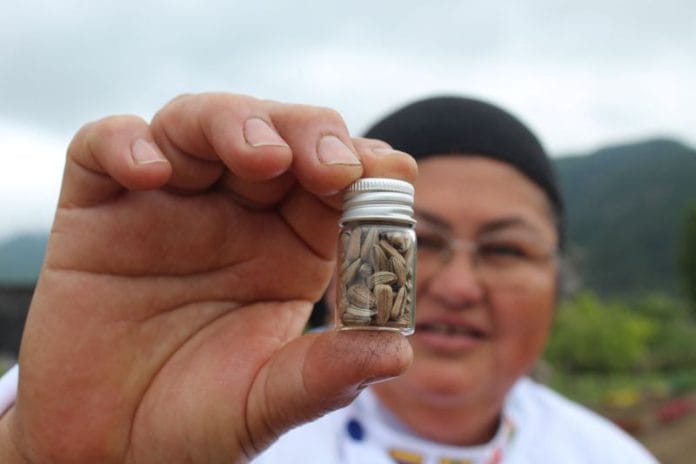
SAN VICENTE DE TAGUA TAGUA, Chile (Reuters) – An emerging group of farmers and growers in Chile, known as seed guardians, aim to protect the traditional crops of their ancestors, keeping them safe from industrial agriculture and genetic modification.
The guardians collect, trade and plant hundreds of seeds to preserve forgotten varieties of tomatoes, corn and other vegetables that were historically farmed by the indigenous Mapuche people.
One such guardian, Ana Yanez, said the varieties the guardians aim to save are dwindling due to changing environments or farmers opting for higher-yield varieties.
“We are rescuing the seeds and knowledge of our ancestors,” said Delfin Toro, another guardian. “How they harvested, how they sowed, the dynamics of the moon, when to plant, when to harvest.”
The guardians are finding clients at high-end restaurants.
Pablo Caceres, a seed guardian and chef at Vik Winery’s Pavilion restaurant in the Millahue Valley in central Chile, said he normally finds no more than five varieties of tomatoes at markets and fairs.
“This year we’ll have 26 varieties of tomatoes and we think that there are more than 200,” Caceres said.
This diversification could also help crops adapt to new terrain and areas affected by a changing climate. Ricardo Pertuze, an agronomist at the University of Chile, said new varieties are needed when climate change makes a crop’s current location unsuitable.
The genetic diversity the guardians are collecting are essential to find those varieties, Pertuze said.
Wilson Hugo, an official at the U.N. Food and Agriculture Organization, said the trend of safeguarding traditional seeds exists in other nations such as India, China, sub-Saharan Africa, as well as in countries of the former Soviet Union.
“We have to congratulate them and support them and that’s probably not enough,” Hugo said. “We need more of them, we need to do more of this kind of work.”
(Reporting by Nicolas Cortes; Writing by Fabian Andres Cambero; Editing by Alexander Villegas and Frances Kerrry)
Disclaimer: This report is auto generated from the Reuters news service. ThePrint holds no responsibilty for its content.