








New Delhi: The Special Intensive Revision (SIR) of electoral rolls, at the centre of a political storm since the exercise was launched last year, has not seen major protests in Uttar Pradesh despite the record number of deletions, with officials saying the process has been free of bias in the state.
The controversy has been loudest in West Bengal, where opposition parties, civil society groups, and minority organisations have alleged that the roll revision disproportionately deleted Muslim voters, a charge that has triggered protests, legal challenges, and a broader national debate about whether the exercise was politically motivated.
Uttar Pradesh, the country’s most populous state with 19 percent Muslim population and a strong opposition presence in parties like the Samajwadi Party and Bahujan Samaj Party, completed the same exercise and published its final electoral roll this week.
The state’s voter list was pruned from 15.44 crore to 13.39 crore — a reduction of 13.24 percent and the steepest in absolute numbers of any state that underwent SIR.
Yet unlike West Bengal, UP saw no major protests, no legal challenges, and no allegations from any political party that a specific community had been targeted.
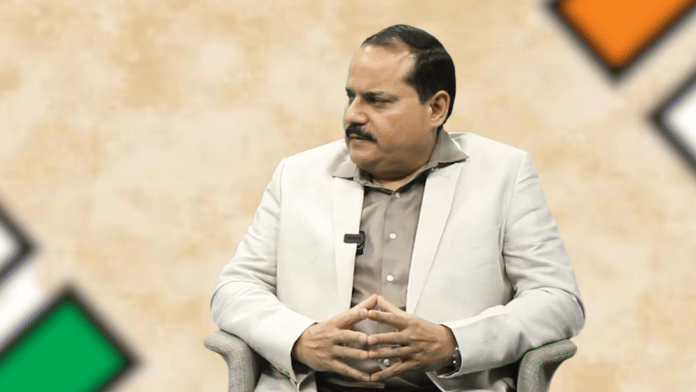
Chief Electoral Officer Navdeep Rinwa, in his first interview since the final roll was published, says the contrast is not accidental.
“There was no study, no report which said about any district of UP, any assembly constituency of UP that the deletions have been targeted,” Rinwa told ThePrint.
Also Read: SIR aside, why BJP is not counting its chickens for a non-vegetarian CM in Bengal
The ‘Bangladesh’ case
One of the more striking outcomes of the exercise came from a district in Uttar Pradesh where a family filed a police complaint saying their daughter-in-law had gone missing. When police investigated, they found she was allegedly a Bangladeshi national who had fled as soon as enumeration forms began reaching villages in the area. “There could be many such cases,” Rinwa said.
He added that many people who were not Indian citizens chose not to return their enumeration forms at all, which is part of why the number of voters who could not be traced in the field was high in UP. Some Form 7 submissions—used to delete names—also came in, citing non-citizenship as the reason.
What numbers actually show
Of the 12.55 crore names on UP’s draft electoral roll published on 6 January, notices were issued to 3.26 crore voters. These fell into two categories: around 1.04 crore who left portions of the enumeration form blank where they were required to map themselves to the previous electoral roll, and the remainder who had filled the form but where errors or logical inconsistencies were flagged.
A logical discrepancy, Rinwa explained, could mean something as simple as a name being spelled differently across documents, or an age gap between a parent and child that appeared implausible — less than 15 years. Notices were issued so voters could clarify or submit documents to resolve the mismatch.
Of the 3.26 crore served notices, only 3.5 lakh names were ultimately deleted— just above one percent. Over 91 lakh names were added to the roll after the draft was published, including first-time voters aged 18-19, new residents, and people who had shifted addresses and needed to re-register at their current location.
Why UP sought 4 extensions
Uttar Pradesh sought more time from the Election Commission of India at multiple points during the exercise. The enumeration phase, initially scheduled to end on 4 December 2025, was extended first by a week for all states and then by an additional 15 days for UP, concluding on December 26.
Further extensions were sought during the claims and objections phase, when the volume of incoming forms remained high — on one day alone, over two lakh Form 6 applications were received.
“Since the elections are a year away, we should give more time both to booth level officers and to the public,” Rinwa said.
The exercise also involved the rationalisation of polling stations. Under new Election Commission guidelines, no polling station can have more than 1,200 voters, down from 1,500 during the 2024 Lok Sabha elections.
The migrant voter problem
Uttar Pradesh has significant out-migration, with large numbers of residents working in Delhi, Mumbai, and other cities. Rinwa said that from the beginning, any adult family member was permitted to sign the enumeration form on behalf of an absent voter.
When notices were later issued, voters were also allowed to designate a representative in writing to submit documents on their behalf. Seasonal migrants, he said, are legally permitted to retain their vote at their original place of residence.
With the final electoral roll now published, Rinwa said his office is prepared to respond to any factual allegation about the process. “If there are allegations, we would be very happy to reply.”
(Edited by Ajeet Tiwari)
Also Read: Why Bengal’s election outcome matters. The world wants to know how SIR will play out