


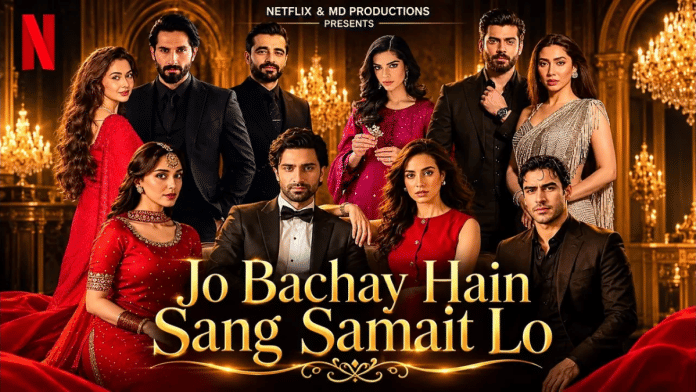
Mumbai: Fawad Khan, Mahira Khan, Hania Aamir and Sanam Saeed are starring in Netflix’s first Pakistani original series, Jo Bachay Hain Sang Samait Lo, which premieres on 4 December.
The show is based on Farhat Ishtiaq’s 2013 Urdu novel of the same name and is directed and produced by Momina Duraid. Duraid has previously produced several popular Pakistani television dramas, including Humsafar (2011-2012), Zindagi Gulzar Hai (2012-2013) and Dastaan (2010).
Fawad and Mahira worked with the director on Humsafar. Whereas Fawad and Sanam starred in Duraid’s Zindagi Gulzar Hai.
The new series, called All The Love Our Hearts Carry in English, follows six love stories across three generations. The story centres on Harvard law student Sikandar Sheheryar and Liza, an artist. Both are dealing with difficult experiences from their past when they meet in Italy.
The cast also includes Ahad Raza Mir, Iqra Aziz, Hamza Ali Abbasi, Maya Ali and several others. Here are some of the Pakistani dramas and films they’re known for.
Fawad Khan
Before making his Bollywood debut opposite Sonam Kapoor in Khoobsurat (2014), Fawad starred in Humsafar and Zindagi Gulzar Hai, two Pakistani dramas that were also popular in India.
In Humsafar, he played Ashar, whose marriage to Khirad (Mahira Khan) runs into trouble because of his mother’s interference.
In Zindagi Gulzar Hai, he played Zaroon, a wealthy young man who falls in love with Kashaf (Sanam Saeed), who comes from a much less privileged family.
Mahira Khan
Mahira Khan played Khirad in Humsafar. She also starred in Shehr-e-Zaat (2012), about a wealthy young woman who turns toward religion after a difficult relationship.
In Sadqay Tumhare (2014-2015), she played Shano, who is in love with Khalil (Adnan Malik), but their families are against the relationship.
She made her Bollywood debut opposite Shah Rukh Khan in Raees (2017).
Hania Aamir
Hania Aamir played Hala in Mere Humsafar (2021-2022), a young woman who is badly treated by the relatives she lives with.
She also starred in Mujhe Pyaar Hua Tha (2022-2023), a show about a love triangle involving three young people, and Kabhi Main Kabhi Tum (2024), in which she played Sharjeena opposite Fahad Mustafa. The show follows a married couple who have very different personalities.
Sanam Saeed
Sanam Saeed played Kashaf in Zindagi Gulzar Hai. Kashaf comes from a financially struggling family and wants to build a better life for herself. She eventually marries Zaroon, played by Fawad Khan.
Saeed also starred in the Pakistani film Cake (2018), directed by Asim Abbasi. She played Zara, who returns home from London when her father falls ill.
Also Read: Why Indians are flocking to hold watch parties of a Pakistani TV show in Delhi and Bengaluru
Ahad Raza Mir
Ahad Raza Mir played Dr Asfandyar in Yaqeen Ka Safar (2017), opposite Sajal Aly.
He also starred in Ehd-e-Wafa (2019-2020), about four school friends whose lives take different paths after they grow up. Mir played Saad, who joins the Pakistan Army.
He appeared in Netflix’s Resident Evil series in 2022.
Iqra Aziz
Iqra Aziz starred in Suno Chanda (2018-2019), a romantic comedy about two cousins whose families want them to get married, even though they spend most of their time fighting.
She also played Noori, a young woman trying to escape poverty, in Ranjha Ranjha Kardi (2018-2019). In Khuda Aur Mohabbat 3 (2011-), she starred opposite Feroze Khan.
Hamza Ali Abbasi
Hamza Ali Abbasi played the lead in Pyarey Afzal (2013-2014), a romantic drama. He also starred with Maya Ali in Mann Mayal (2016), playing Salahuddin, who falls in love with Manahil but cannot marry her.
In Alif (2019-2020), Abbasi played a filmmaker who begins questioning his life and turns towards religion.
Maya Ali
Maya Ali starred in Diyar-e-Dil (2015), a family drama about two branches of a family that have fallen out with each other.
She also played Manahil in Mann Mayal, opposite Hamza Ali Abbasi, and starred in Pehli Si Muhabbat (2021), a love story about childhood friends whose families oppose their relationship.
(Edited by Insha Jalil Waziri)