





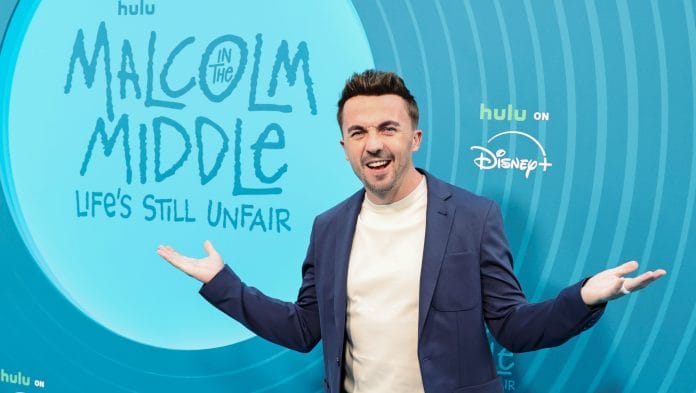


What’s the surest sign your age group dominates the culture? When the entertainment merry-go-round turns out one reboot after another playing to your generation’s childhood memories. With television right now, its millennials’ turn to go retro.
Malcolm in the Middle is back after 20 years, Scrubs after a 16-year-break. And a simple trailer for HBO’s Harry Potter reboot has been enough to melt the internet, with a record 277 million views in its first 48 hours alone, according to the network. The show doesn’t premiere for another eight months.
Hollywood long ago figured out that reboots and revivals are a safe bet. Beloved works — as different as a children’s fantasy series and a medical sitcom — have a proven audience to build on even if they’re less likely to be as big a hit as the originals.
“The creative businesses are risky. Nobody really knows what is going to find an audience and what won’t,” says Amanda Lotz, professor at Queensland University of Technology and author of books on the television industry. “The only thing you know worked is what worked before.”
Adults in their 30s and 40s who grew up with shows on network TV like dysfunctional-family sitcom Malcolm in the Middle are the core subscribers of cable and streaming services now, says Los Angeles entertainment lawyer Peter Kaufman.
“They’re nostalgic for what feels like a more stable time for them,” Kaufman says. In a period of broader societal unease, there’s a form of comfort in familiar characters and storylines, like tuning into see Frankie Muniz’s Malcolm break the fourth wall as he narrates the shenanigans his family members get up to.
It’s paid off for Malcolm in the Middle: Life’s Still Unfair, becoming Disney+ and Hulu’s most-viewed season premiere of 2026 so far, Disney says, with 8.1 million views globally in its first three days since the April 10 premiere. There’s still interest in Scrubs too — its premiere was ABC’s top-performing comedy episode in over a year, according to the network, based on the number of viewers who watched the broadcast or streamed the premiere. (It’s streaming in the US on Hulu.) Broadcast viewership numbers have dropped since then, according to Nielsen data, but the show remains among the top 50 broadcast programs.
In the early 2000s, Malcolm in the Middle succeeded on a scale nearly impossible to replicate today. At its peak, the show regularly drew audiences of 10 million to 15 million viewers per episode in the US, making it one of Fox’s flagship comedies and a consistent presence near the top of the weekly ratings.
Even midtier sitcoms of that era commanded audiences that would be considered exceptional now, Lotz says, though she’s hesitant to impose too neat a narrative on the current wave of revivals. It might be tempting to argue that the return of shows like Malcolm and Scrubs signals a renewed appetite for family-oriented or comfort viewing, but Baywatch — a very different flavor of popcorn entertainment — is also being rebooted, on Fox.
As for Harry Potter, Lotz thinks its revival is likely a strategy to find another avenue for millennial parents to introduce their Gen Alpha children to the franchise 15 years after the last film was in theaters. (Of course, kids have had ample chances to learn about the wizarding world from the book series, theme parks, a stage play and eight films.) At 42, the television series showrunner Francesca Gardiner is a millennial herself.
The reboot must contend with another issue: author JK Rowling’s controversial comments about the transgender community. John Lithgow, the actor playing Dumbledore, told the New York Times he nearly quit due to the backlash. The Hogwarts Legacy video game in 2023 also drew criticism, but still ended up being the top-selling game of that year.
Guy Bisson, co-founder of entertainment analytics firm Ampere Analysis, notes that although reboots might feel more visible today, they aren’t necessarily becoming more common. Adaptations of existing intellectual property like these long-off-the-air shows account for roughly one-third of all television series orders, a share that has remained relatively stable over time, he says.
The composition of what’s airing has shifted, though, he says. The dominance of sprawling superhero franchises that we saw with the Marvel heyday in the 2010s has stared to wane, a trend Bisson attributes to what he calls “franchise fatigue.” As audiences tire of increasingly repetitive blockbusters, studios and networks are looking elsewhere for reliable material.
“We’ve been in a nostalgia cycle for a while,” Bisson says, pointing to shows like Stranger Things, which traded heavily on 1980s references and sent 40-year-old Kate Bush songs rocketing up the charts. He says familiarity can carry a show only so far, especially as the biggest hits of recent years, such as Squid Game and Stranger Things, have largely been original ideas — or like Game of Thrones or Bridgerton, based on books.
But he points out that the shows don’t need to dominate the culture to succeed. They just need to find an audience, and there’s one already built-in for them. Once you’ve finished the revival of Malcolm, the first seven seasons are ready for binge-watching on the same services. (Viewing hours of the original show were up 107% compared with the week before the revival’s debut, according to Disney.)
Perhaps there’s another appeal of familiar favorites coming back to television: “Comedy is essential right now,” Malcolm star Bryan Cranston, who plays the family’s beleaguered dad, told the Guardian, calling it a break from the bombardment of nonstop information. Maybe a retreat back into a goofy sitcom is just what an audience of tired millennials needs.
Disclaimer: This report is auto generated from the Bloomberg news service. ThePrint holds no responsibility for its content.