





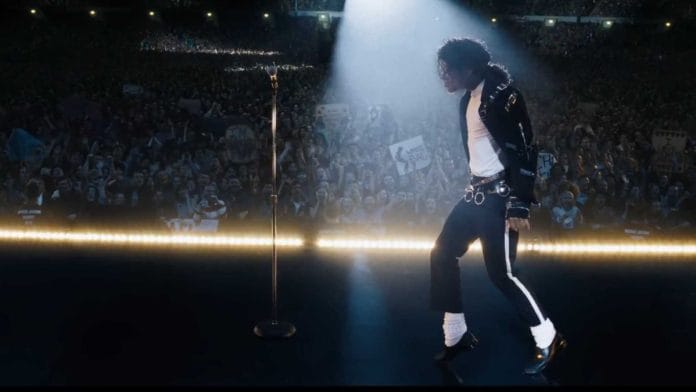

New Delhi: Michael Jackson’s ‘Billie Jean’ performance at Motown 25: Yesterday, Today, Forever in 1983 remains iconic in pop culture history. When he glided backward across the stage, the audiences were in shock, almost mesmerised. And, that’s how the world was introduced to ‘moonwalking.’
During that performance, even MJ wasn’t aware that his backslide would become an iconic dance move.
Decades later, the moonwalk is now back in conversation as a biopic on Michael Jackson is set to hit theatres on 24 April. MJ, who died in 2009 at the age of 50, is played by his nephew, Jaafar Jackson, on the big screen. The film, reportedly in two parts, will touch upon various aspects of MJ’s life, including his dance tours.
The moonwalk and Michael Jackson are inseparable, even though he didn’t invent the move. Before him, it was known as the ‘backslide’ among street dancers. MJ repeated it across concerts, music videos, and global tours, and eventually it became his signature, an extension of his persona.
At its core, the moonwalk is a street dance technique that plays with illusion. The dancer shifts their weight in such a way that one foot appears to step forward while the body seamlessly slides backward. The key lies in precise control: one foot stays flat while the other lifts onto the toe, then switches in a continuous, fluid motion. When executed well, it looks effortless, almost as if the dancer is being pulled backward by an invisible force.
Though it appears simple, the move requires balance, timing, and practice. The illusion only works when the transitions are smooth and the upper body remains relaxed, giving the impression of a natural movement rather than mechanical effort.
Who invented the moonwalk?
Variations of the moonwalk existed long before MJ performed it at Motown 25. Elements of the glide can be traced back to tap dancers, street performers, and even mime artists. In the 20th century, dancers like Bill Bailey performed similar backslides as early as the 1950s, and the move also appeared in funk and popping communities in the 1970s.
That said, credit where it’s due. It was Michael Jackson who transformed the moonwalk from just another dance move into a global phenomenon.
The initial appeal or the first pull of moonwalk is the illusion it creates. Human movement follows a predictable pattern — if a person is stepping forward, they are supposed to move forward. But, the moonwalk breaks that expectation.
Now, apart from this magical illusion, timing also played a crucial role in its popularity. The early 1980s marked a period when music television, especially platforms like MTV, was transforming how audiences consumed pop culture.
Visual performance became just as important as sound. And, Michael Jackson understood this shift better than most artists. He weaved storytelling into his dance by transforming movements into a visual language that expressed deep emotions, social commentary, and cinematic narratives.
Music videos like ‘Thriller’ and ‘Smooth Criminal’ functioned as short films where the choreography directly advanced a plot, such as battling zombies or engaging in a gangster showdown.
Why ‘moonwalk’?
While Jackson made the movement popular, the name was given by fans and media, who were desperate to find a way to describe it.
The term gives an imagery of astronauts moving in low gravity on the moon. And, it captured the essence of the illusion better than the more technical and uncool “backslide.” Once the term caught on, it became the standard name.
Even in today’s digital era, where viral dance trends come and go in one scroll, the moonwalk remains iconic. It doesn’t rely on novelty alone. There is history and artistry attached to it.
But, what makes the moonwalk timeless is not just its technique, but what it represents. It is a reminder that a single moment in a performance can redefine an artist’s legacy.
Sure, Michael Jackson didn’t invent the move, but he gave it meaning, context, and global reach. He turned a street dance illusion into a universal symbol of style.
(Edited by Aamaan Alam Khan)