


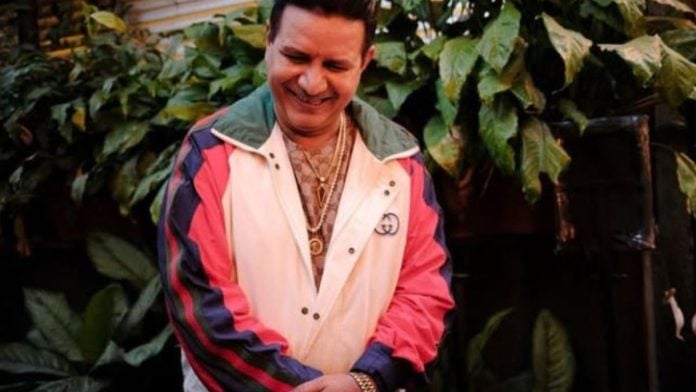
Mumbai: Actor Kumud Mishra wasn’t sure his character Pramukh Tripathi from Prime Video’s Waiting Hai would stay with the audience.
“I was quite scared. There aren’t too many words and he isn’t directly part of the main story. I wondered whether people would even remember him,” Mishra told ThePrint.
Released on 16 September, Waiting Hai is set around a Tatkal ticketing racket. Actor Divyenndu plays a rookie Railway Protection Force (RPF) officer Sugam and Bhuvan Arora plays Afroz Hamsa, the young hacker behind the scam. Mishra plays Pramukh, Sugam’s senior, whose story unfolds away from much of the central chase.
Mishra saw Tripathi as a man who wanted a family, although the search for one was not conscious. He was living a life that, to Mishra, had no definite meaning. He had his work, but little beyond it.
Divyenndu’s Sugam changes that.
“When he connects his life with Sugam’s, he begins to see some meaning in his own life, apart from the work that he is doing,” Mishra said.
Pramukh becomes deeply invested in Sugam, but also pulls himself away. Towards the end of the series, he has the option of allowing the relationship to become something like a family and giving his life the meaning he has been missing.
“But he chooses something else. In the end, he chooses hataasha (despair),” Mishra said.
Actors, Mishra said, naturally want the bigger role, one that gives them more room to explore themselves as performers. But those roles are rare.
“Every actor wants to do a big role, where, as a performer, there is more room to explore yourself. But that is very rare. It comes your way very rarely,” he said. “Pramukh is not a very big role in terms of length, but the golai (arc) of the character is tremendous.”
Pramukh’s arc ran alongside the main story and eventually became part of it. And Mishra had few words to show it.
“The character is saying something for which words are not needed,” he said.
Also Read: ‘Scam dramedy’ Waiting Hai turns India’s Tatkal chaos into a crime caper
Mishra’s tatkal woes
Tatkal bookings and train journeys are also part of Mishra’s own memory.
“I have spent a whole life in Tatkal—trying to book it, it’s not happening, what’s happening,” he said. He travels by train much less now, “for obvious reasons”, but has what he calls “a great romance with train journeys”.
Finding that world so closely observed on the page was unusual.
“Scripts like this are not made in very large numbers. When a world like this comes to you, that itself becomes a very strong reason to invest yourself in it,” Mishra said.
How much of that world survived beyond the page was not in his hands alone. Mishra said director Sameer Vidwans had his own emotional connection with the story, which brought what was on the page even closer to the world it was trying to capture.
After more than three decades as an actor, Mishra is less comfortable with a distinction he has made in the past: between work he wanted to do and work taken simply for the money.
“When I say that I am doing some work for money, I am actually disrespecting that work, that director, that project. You don’t go to act saying, ‘I’ll give 19 per cent here, 20 per cent here, and where it is work of my choice, I’ll give 100 per cent,’” he said.
Some of the work he once thought of as “timepass” taught him things he had not expected.
“There is no fixed grammar to this,” he said. “My journey is with myself. The fight is with myself. It is about making myself better, although ‘better’ is also not a very good term. I don’t know. I don’t have a word for it.”
That journey currently has Mishra in a rehearsal room in Mumbai. The play is about to open, but he feels he still hasn’t cracked the part.
“This is an everyday fight. One day goes much better and the next day you feel you should leave this profession because you can’t do such a simple thing,” he said. “But that is what is exciting.”
(Edited by Stela Dey)