





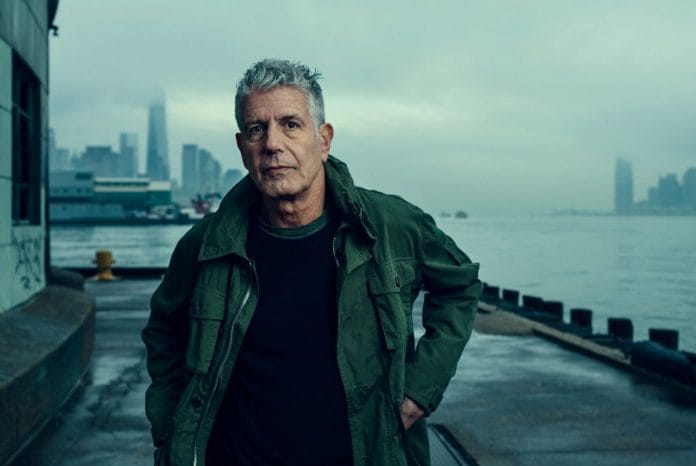


A biopic that would have been hated by the person it is based on- that’s what the internet thinks about Tony, an upcoming film on Anthony Bourdain, the first trailer for which dropped in May and is set to release on 7 August.
Bourdain was a celebrated author, chef and television host who spent much of his career turning the spotlight away from himself and towards the food, places, and people he covered through his books and television programmes. Critics argue that the film does the opposite: it puts Bourdain himself in the spotlight, something he spent his career trying to avoid.
Directed by Matt Johnson, Tony stars Dominic Sessa as a 19-year-old Bourdain, exploring a formative summer in Provincetown, a year before he began the journey that eventually made him one of the world’s most beloved cultural figures.
The Critics’ Verdict
The criticism began as soon as the audience got a glimpse of the young Bourdain. The trailer presents him as arrogant, hyper-masculine, volatile, and a compulsive liar; a personality that does not match the thoughtful, self-aware man the audience knew through his television shows and writing. Throughout his career, Bourdain consistently rejected being labelled a philosopher or a guru. He frequently criticised celebrity culture and the commercialisation of art. Several critics have argued that Tony ends up doing exactly what Bourdain spent years resisting.
Among the film’s earliest viewers was Bourdain’s younger brother, Chris Bourdain, who also worked with him. His reaction was blunt: “What is it, Ratatouille meets The Karate Kid?”
He went further, saying that “Anthony would have hated the entire idea of the film.”
While Chris criticised the idea behind the project, he praised Dominic Sessa’s performance, calling him a ‘naturalistic actor.’ “The awkward gestures, expressions and body language make me feel for a second that I’m seeing Tony himself,” he said. Responding to the criticism, director Johnson shared that Bourdain would probably have disliked parts of the film, but hopes the late chef would have recognised its emotional truth even if some details were factually inaccurate.
Who was Bourdain, Really?
Before Bourdain died in 2018, he had travelled across the world, documenting cultures through food. His first television series, A Cook’s Tour, premiered in 2002. “I travel around the world, I eat a lot of shit and basically do whatever I want.”, he said, describing his time on the show.
While the premise revolved around food, the programme was equally about people. Throughout the series, Bourdain consistently highlighted local cuisines, chefs and the communities behind them.
One of the defining moments of his career came in July 2006 while filming an episode of No Reservations, his second major show after A Cook’s Tour. Bourdain and his crew were in Beirut filming the episode when the Israel-Hezbollah conflict escalated around them; they kept filming as the city came under bombardment, capturing their own experience of the crisis until they were evacuated by the U.S. Marines. The episode was nominated for an Emmy Award in 2007.
His aversion to the branding of his image became clear in 2012 when he left the Travel Channel. In a blog post published months later, Bourdain explained that he was frustrated with the channel’s new ownership for using his name, image, and voice in advertisements, making it look as though he’d endorsed a car brand he had never approved.
After leaving the network, he launched another series, Anthony Bourdain: Parts Unknown. In Season 3, Bourdain travelled across Punjab, eating at local dhabas, visiting the Golden Temple and exploring regional cuisine. But his curiosity went beyond the plate: he spent time at local grain markets to understand how India’s agricultural trade functioned, and attended a fair in Himachal Pradesh before visiting a traditional akhada to watch pehelwans train – the kind of detour that defined his approach to travel and explore long before it defined his approach to fame.
(Edited by Maryam Hassan)