





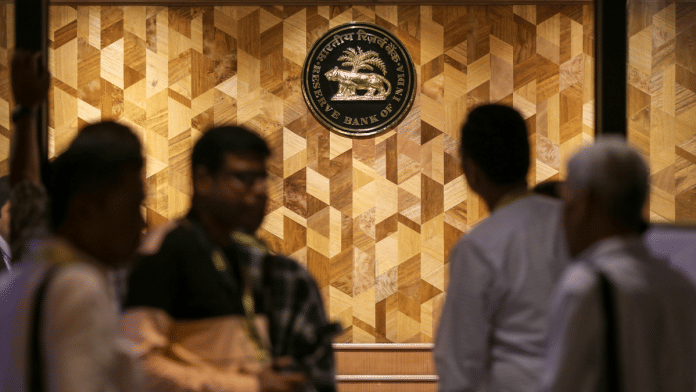



New Delhi: India’s central bank lowered its benchmark interest rate for the first time in six months and signaled its open to further easing, predicting inflation will remain relatively low even as the economy continues to boom.
The Reserve Bank of India’s six-member monetary policy committee voted unanimously to cut the repurchase rate by 25 basis points to 5.25% on Friday, in line with the forecasts of most economists surveyed by Bloomberg. The policy stance was retained at neutral.
Governor Sanjay Malhotra said inflation at a record low and growth above 8% mean India was in a “rare Goldilocks period.” Inflation is expected to remain relatively muted, while the economy is proving resilient in the face of high US tariffs, giving policymakers scope to ease.
“The growth-inflation balance, especially the benign inflation outlook on both headline and core, continues to provide the policy space to support the growth momentum,” Malhotra said in a televised speech.
RBI Cuts Rates, Keeps Stance at ‘Neutral’
Friday’s decision was one of the more challenging for the RBI in recent months. Several economists had predicted the central bank would keep rates unchanged this week after strong economic growth data and the rupee’s plunge to a record low this week. The currency is down almost 5% against the dollar this year, the worst performer in Asia, largely because of the slump in exports after US President Donald Trump imposed 50% tariffs on Indian goods.
The RBI’s measures “are growth-supportive, and the evolving growth-inflation mix keep the door open for one more rate cut,” said Churchil Bhatt, executive vice president for investment at Kotak Mahindra Life Insurance Co.
The rupee had a choppy morning Friday, swinging between gains and losses as traders digested the rate announcement. The currency was up 0.1% to 89.8875 against dollar as of 12pm local time, after briefly falling past the 90-level earlier in the day.
India’s sovereign 10-year bonds gained, with the yields falling as much as 6 basis points to 6.45%, after the RBI also announced steps to inject about $16 billion into the banking system through bond purchases and a foreign-exchange swap.
Inflation weakened to 0.25% in October, well below the central bank’s 4% target, prompting the RBI to lower its forecast for the fiscal year through March to 2% from 2.6%. The RBI raised its growth projection for the period to 7.3% from 6.8% previously.
“Despite an unfavorable and challenging external environment, the Indian economy has shown remarkable resilience,” Malhotra said. “The headroom provided by the inflation outlook has allowed us to remain growth supportive.”
The RBI’s liquidity steps are expected to offset the cash drain caused by its dollar sales in the currency market as it supports a weakening rupee. Malhotra said the main purpose of the open-market bond purchases was to infuse primary liquidity and not to influence the currency or bond yields.
Dhiraj Nim, an economist at Australia & New Zealand Banking Group, said the rate cut shouldn’t undermine the rupee too much, since the Federal Reserve is expected to ease in December, which would preserve the interest rate differential between the two markets.
“We believe this could be the last rate cut,” he said. “From here on, the RBI will mostly support via liquidity.”
Disclaimer: This report is auto generated from the Bloomberg news service. ThePrint holds no responsibility for its content.
Also Read: India’s strong growth lowers odds of RBI rate-cut, economists say