







New Delhi: The United Arab Emirates (UAE) has discussed a potential currency swap line with the US, as a financial lifeline amid the West Asia war and has threatened to conduct oil sales and other transactions in alternative currencies, including the Chinese yuan if there is a dollar shortage, according to a Wall Street Journal exclusive report Monday.
A currency swap line is an arrangement between two central banks that allows them to exchange currencies, enabling access to foreign-currency liquidity, with the issuing authority, mostly to supply domestic commercial banks. Swap lines have become a key instrument for safeguarding financial stability in recent years, helping contain market stress before it spills over into the broader economy.
If the Emiratis conduct oil sales in another currency, it would threaten the petrodollar system, an arrangement established in the 1970s where oil-exporting nations, primarily in West Asia, price their oil exclusively in US dollars in exchange for US security guarantees.
The shift could carry broader implications for global markets.
The UAE officials, according to the report, claimed in private discussions that US President Donald Trump’s decision to attack Iran drew their country into a destructive conflict whose economic consequences keep increasing.
The governor of the Central Bank of UAE, Khaled Mohamed Balama, raised the possibility of establishing a currency swap line with US Treasury Secretary Scott Bessent and senior officials from the Treasury Department and the Federal Reserve during meetings in Washington last week, US officials told the WSJ.
No formal request for a swap line has been made, US officials said. Emirati representatives framed the idea as a “preliminary and precautionary measure”, noting that while the country has so far avoided the worst economic fallout, it might require access to dollar liquidity if conditions worsen.
According to US officials, such an arrangement would give the UAE central bank low-cost access to dollars to defend its currency and shore up foreign reserves during a liquidity crisis.
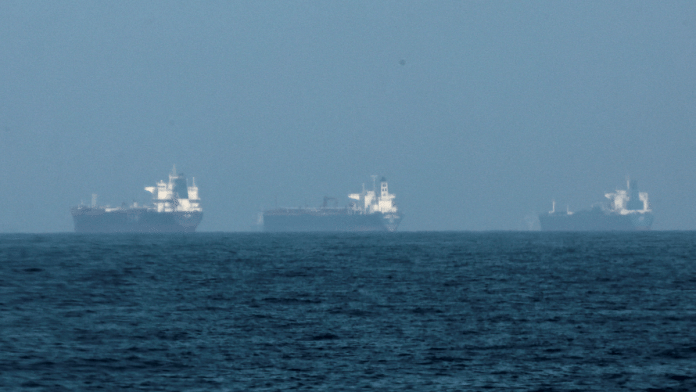
Damage to oil and gas infrastructure, along with disruptions to tanker traffic through the Strait of Hormuz, has curtailed a critical stream of dollar revenues. The discussions show a growing concern in the Emirates that the conflict could undermine its role as a global financial hub, erode foreign reserves and unsettle investors long drawn to its reputation for stability.
The US Federal Reserve typically extends swap lines only in circumstances where global funding stress risks spilling back into the United States. It maintains standing arrangements with major economies including those in Europe, Japan and Canada, and has temporarily expanded access during crises such as the 2008 financial meltdown and the COVID-19 pandemic.
The Emirates, which maintains fewer direct financial linkages with US markets than traditional recipients, may struggle to secure such support.
Before a cease fire took effect on 17 April, Iran had launched more than 2,800 drones and missiles toward the Emirates, according to the country’s defence ministry, though most were intercepted. The strain has begun to show in financial markets, with analysts citing risks of capital flight and increased volatility, the WSJ report stated.
The Emirati dirham remains pegged to the US dollar and is supported by roughly $270 billion in foreign reserves. In a March 2026 report, S&P Global said the UAE’s “substantial fiscal, economic, external, and policy flexibility will act as an effective buffer” but warned that prolonged disruption to oil exports and infrastructure damage posed “clear risk” to its outlook.
The war has also complicated the Emirates’ regional strategy. UAE officials have considered freezing billions of dollars in Iranian assets held within the country, a move that could sever a vital economic channel for Tehran but also risk undermining the Emirates’ attractiveness as a financial centre for politically sensitive capital, including funds from Russia.
At the same time, the crisis has drawn the Emirates closer to Washington, tempering earlier efforts to balance ties with Iran. US Treasury officials, meeting Gulf counterparts on the sidelines of gatherings hosted by the International Monetary Fund and the World Bank, invited countries in the region to outline reconstruction needs, pledging priority consideration for assistance.
Across the Gulf, governments have moved quickly to shore up finances. Abu Dhabi, the wealthiest emirate, has raised roughly $4 billion through private placements, while Bahrain recently secured a $5 billion swap line with the UAE to increase stability.
(Edited by Viny Mishra)