



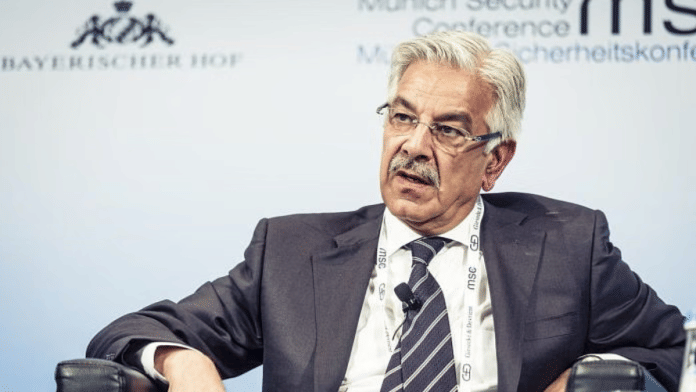
New Delhi: Pakistan Defence Minister Khawaja Asif on Wednesday said it was time to implement Islamabad’s defence pact with Saudi Arabia and Turkiye, a day after Saudi Arabia said it had intercepted and destroyed a Houthi drone south of the Islamic holy city of Mecca.
“The Mecca agreement applies to us, and we will fulfil our duty,” he was quoted as saying by Geo News. He added that Pakistan was fully prepared to meet its obligations under the pact.
The trilateral defence agreement between Pakistan, Turkiye and Saudi Arabia, referred to as the Mecca Pact, was signed last month. It establishes a NATO-like framework for collective deterrence under which an armed attack on any one of the three countries would be treated as an attack on all.
“If Mecca is attacked, there is no need for an agreement to protect it,” Asif was quoted as saying. He added that Pakistan did not need a formal agreement to defend Islam’s holy sites, as safeguarding them was a duty that existed even without the pact.
Saudi authorities said the “Houthi drone” had been destroyed before entering Mecca’s prohibited airspace. The Iran-backed Houthis, however, denied targeting Mecca or any Islamic holy site and accused Saudi Arabia of lying.
During a weekly briefing on Thursday, Pakistan Foreign Office spokesperson Sajjad Haider Khan reiterated Islamabad’s commitment to upholding the agreement and acting in accordance with its intent and spirit.
Asked whether Pakistan had developed a mechanism to respond to recent Houthi attacks in Saudi Arabia, Khan said Islamabad remained committed to implementing the pact.
“However, when, how, where and what force will be used against what objectives, in which modes and matters—operational confidentiality requires us to be discreet at this stage,” he said.
Khan said Pakistan had long advocated peace and stability in the region. He described the situation around the Bab el-Mandeb Strait as “exceptionally serious” and called on the Houthis to halt their activities. The Houthis have made rapid advances along the Red Sea coast and around the strait, leaving Saudi oil exports and shipping more exposed.
“In this regard, our discussions basically revolve around bringing peace and stability through dialogue and diplomacy and not through coercive measures,” said Khan.
(Edited by Chingkheinganbi Mayengbam)
Also Read: Mecca Pact is an alliance of unequals. Pakistan’s silence on the attacks by Houthis shows why