







New Delhi: On Monday, Pakistan summoned Afghanistan’s chargé d’affaires, Sardar Ahmed Khan Shakeeb, to lodge a formal protest over a deadly bombing in Bannu, Khyber Pakhtunkhwa, on 9 May, that killed 15 police officers, further escalating tensions between the neighboring countries. Islamabad accused militants operating from Afghan territory of orchestrating the attack.
“Reiterating Pakistan’s grave concern over the continued use of Afghan soil for terrorist attacks against Pakistan, it was impressed upon the Afghan side that Pakistan reserves the right to respond decisively against the perpetrators of this barbaric act,” the statement read.
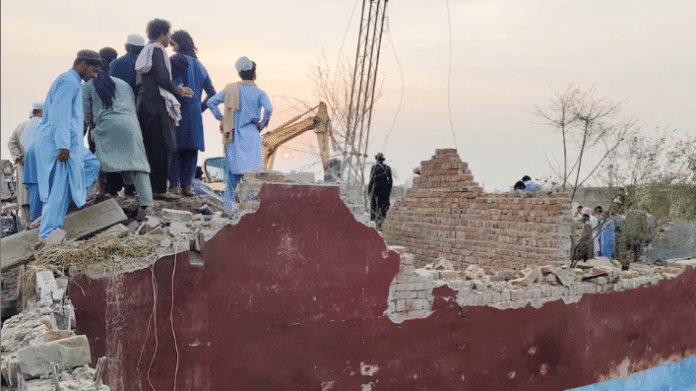
The attack, which targeted a police post in the Fateh Khel area of Bannu District in Khyber Pakhtunkhwa Province Saturday, occurred after a suicide bomber rammed an explosives-laden vehicle into the checkpoint, according to Pakistani officials. Gunmen then stormed the site and opened fire on surviving officers and reinforcements rushing to the scene.
Pakistani authorities said the attack bore the hallmarks of an increasingly coordinated militant campaign along the Afghan border. A militant alliance known as Ittehad-ul-Mujahideen, which Pakistani security analysts link to factions of the Pakistani Taliban, claimed responsibility, Express Tribune reported.
Pakistan’s Foreign Ministry stated in its release that a preliminary investigation, supported by “evidence collected and technical intelligence,” indicated that the operation had been “masterminded by terrorists residing in Afghanistan”.
“The fight against terrorism is a common cause,” the ministry said, adding that the Taliban authorities “must honour their commitment not to allow their territory to be used for terrorism against other countries.”
Pakistan’s Foreign Ministry said Islamabad engaged the Taliban regime through several rounds of talks mediated by “friendly and brotherly countries”. Still, it accused Kabul of failing to deliver meaningful action against militant networks.
“If it continues to harbour these terrorist organisations, Pakistan will not compromise on its national security or on the safety and protection of its citizens,” the statement said.
The bombing reduced much of the checkpoint to rubble. Photographs from the scene showed twisted metal, shattered masonry, and debris strewn across the compound. Police officials said several officers were rescued alive from the wreckage and taken to hospital in stable condition.
Prime Minister Shehbaz Sharif condemned the attack and praised the security forces battling militant groups in the country’s northwest, saying Pakistan’s armed forces would continue operations until terrorism was “eliminated permanently”.
Tensions between Pakistan and Afghanistan’s Taliban regime have escalated sharply since late February, raising fears of a prolonged regional conflict. The violence intensified after Taliban attacks on Pakistani military bases near the disputed border, followed by Pakistani airstrikes on Afghan border areas and Kabul—the first such strikes on Afghan cities by Islamabad.
On 16 March, Pakistan bombed a drug rehabilitation center in Kabul, causing hundreds of casualties. Although a temporary ceasefire was announced for Eid al-Fitr at the request of Saudi Arabia, Turkey, and Qatar, the situation remained unstable, with dozens of civilians killed and injured since fighting began on 26 February. As of 13 March, the UN Assistance Mission in Afghanistan recorded at least 75 civilians killed and 193 injured since the conflict began on February 26. However, these figures are preliminary, a CFR report stated.
(Edited by Varnika Dhawan)
Also Read: Brothers & arms: The Taliban’s complicated relationship with Pakistan