





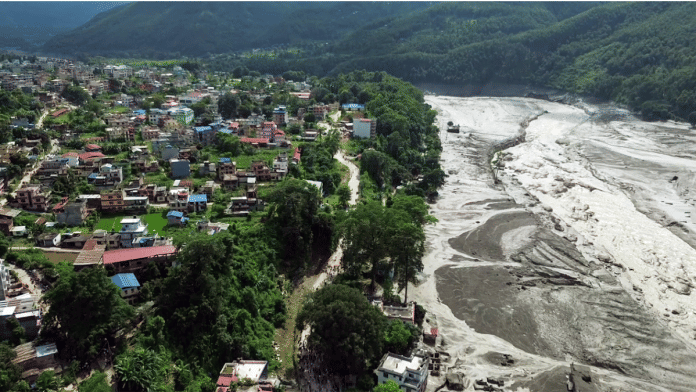

New Delhi: At least 105 Indian tourists are reported missing after a flash flood swept through parts of the Nepal-Tibet border Wednesday.
The Nepal Tourism Board said 291 foreign nationals were among 384 reported missing after floodwaters tore through the Rasuwa district, destroying homes, vehicles, bridges and other infrastructure.
India is sending relief material as soon as possible, govt sources said.
PM Narendra Modi has spoken to Nepal PM Balendra Shah and conveyed condolences on the loss of lives due to the floods in Nepal. “The people of India stand in solidarity with their sisters and brothers in Nepal at this difficult time,” he told Shah.
India is ready to provide all possible humanitarian assistance to Nepal. Our teams are coordinating closely on rescue and relief efforts.
More than 300 Indian pilgrims traveling to Tibet for the Kailash Mansarovar Yatra were also cut off from communication in the Rasuwagadhi area along the Nepal-China border, according to The Kathmandu Post.
The surge entered the Bhote Koshi River from the Tibetan side at about 9 am Wednesday, severely affecting the border settlements of Timure and Syapru Besi, according to officials.
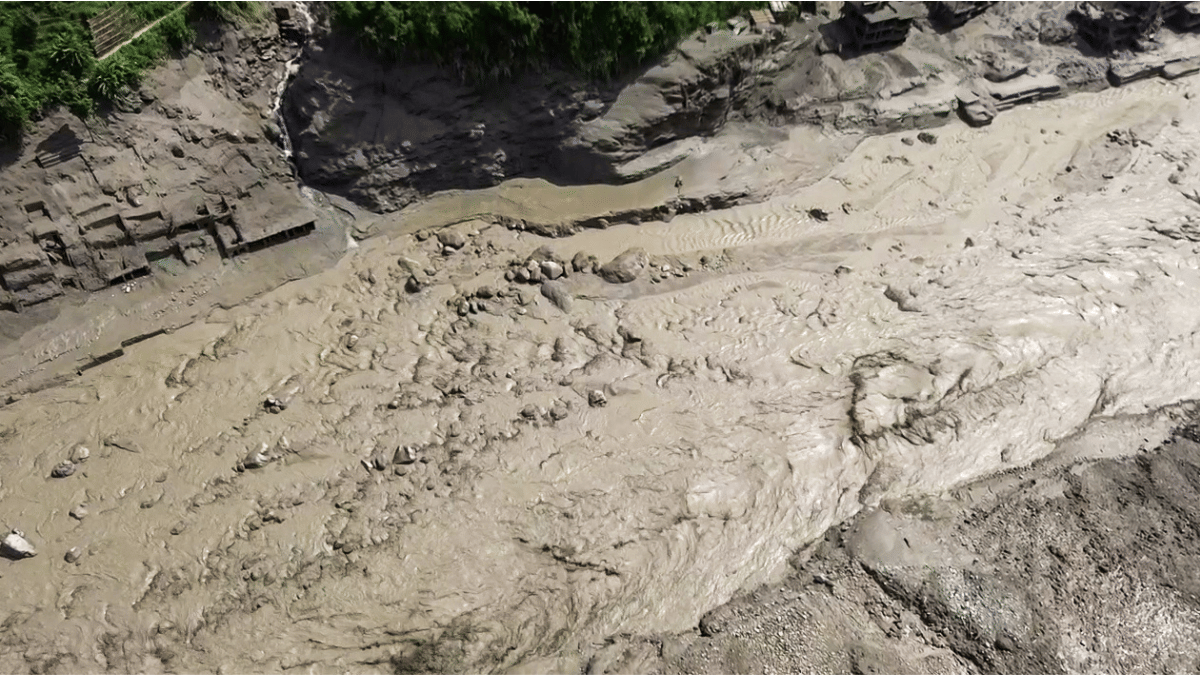
A mudslide also struck the Tibetan side near the Gyirong border crossing, causing casualties and leaving people missing. the flooding did not appear to have been caused by heavy rainfall in Rasuwa. Satellite imagery instead showed significant rainfall on the Tibetan side of the border. Officials are investigating whether a glacial lake outburst flood, or GLOF, had triggered the sudden surge.
Nepal’s Foreign Minister Shisir Khanal told Parliament that preliminary information suggested that the flooding in the Rasuwa district might have been caused by an avalanche triggered by an earthquake Wednesday in the Tibetan region.
Two Nepal Army helicopters Kathmandu were dispatched toward the affected areas, but officials said they were unable to land in Timure and Syapru Besi because water levels remained too high. Army spokesman Raja Ram Basnet said the difficult conditions had severely complicated rescue efforts.
Nepal Prime Minister Balendra Shah chaired an emergency meeting of the Council of Ministers to assess the flooding, damage and ongoing rescue operations.
“People along the river are advised to exercise extra caution and remain alert,” Shah said.
Home Minister Sudan Gurung also urged residents living along the Bhote Koshi and Trishuli riverbanks to evacuate to safer areas.
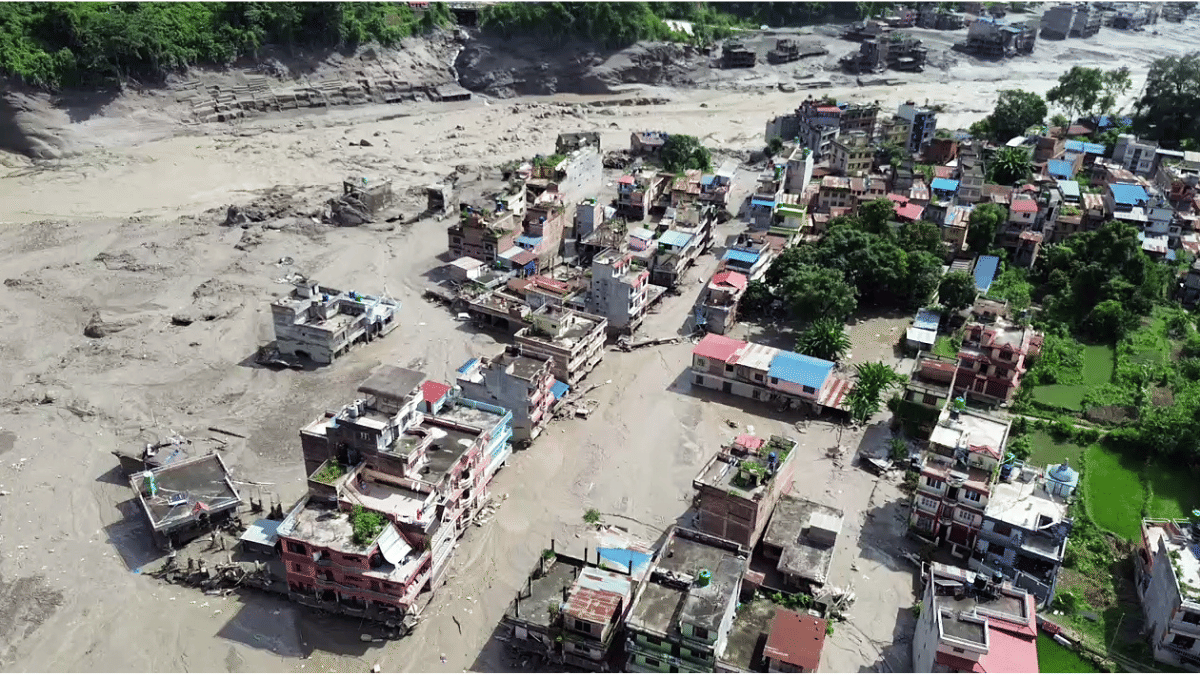
The flooding moved downstream into the Trishuli River basin, prompting warnings for settlements in Nuwakot, Dhading, Gorkha and Chitwan. Authorities also suspended traffic from Kathmandu toward Rasuwa, Nuwakot, Chitwan and Dhading because of a flood threat.
Timure Bazaar, a market near the Tibetan border, and the adjacent customs area suffered extensive damage, with vehicles and goods carried away by the floodwaters. Nine Armed Police Force personnel stationed in Timure near the border were also reported missing.
Hydropower facilities, roads and bridges were also damaged or swept away. Nepal’s Energy Ministry said roughly 430 megawatts of electricity supply had been affected, most of it from hydropower projects, making up more than 12 percent of Nepal’s total installed hydropower capacity of about 3.2 gigawatts, according to Reuters.
The floodwaters from the Bhote Koshi had reached Narayani Devghat, where water levels continued to rise.
The Bhote Koshi originates in Tibet and flows through Nepal before joining the Trishuli River system, which eventually enters India as the Gandak. The region experienced another devastating flood last year when the Bhote Koshi killed nine people and destroyed the Friendship Bridge connecting Nepal and China, disrupting trade and transportation for months.
On the Chinese side of the border, a mudslide struck Gyirong County and the Gyirong port, cutting roads and disrupting communications and electricity in parts of the Shigatse region, according to Xinhua. The agency reported major casualties and missing people.
Xi Jinping called for an all-out search for those missing in Tibet and called for stronger monitoring and early-warning systems to reduce the risk of secondary disasters.
The flooding also prompted authorities in Bihar to increase vigilance as water moved downstream. Chief Secretary Pratyaya Amrit held a video conference with district magistrates and instructed officials in areas along the Gandak and Kosi river systems to remain particularly alert.
(Edited by Viny Mishra)
Also read: Nepal’s ruling RSP is caught in a power tussle—PM Balen vs party chief Lamichhane