



New Delhi: The US House of Representatives has voted in favour of granting India a waiver from CAATSA sanctions, taking one step towards allowing New Delhi to purchase Russian missiles without being subjected to punitive measures.
The decision comes amid escalating tensions between the US and Russia over Moscow’s invasion of Ukraine. It currently translates to a waiver recommendation from the House, with the final call resting with US President Joe Biden.
CAATSA or Countering America’s Adversaries Through Sanctions Act is a US legislation that imposes punitive measures, by way of sanctions, for defence and strategic engagement with “American adversaries” like Iran, North Korea, and Russia. It was passed in 2017.
The legislative amendment seeking a waiver for India was introduced and pushed by Indian-origin Congressman Ro Khanna, who is the Vice-Chair of the Congressional India Caucus and member of the House Armed Services Committee.
Khanna stated that Washington has to grant the waiver to New Delhi keeping in mind a “strong” US-India defence partnership.
After the amendment was passed by the House of Representatives, a press release issued by Khanna’s office said the “Khanna amendment will affirm the United States’ partnership with India and urge the Biden administration to use their authority to provide India with a CAATSA waiver to help deter aggressors like China”.
“It was passed by voice vote as part of an en bloc amendment during floor consideration of the National Defense Reauthorization Act (NDAA),” it added.
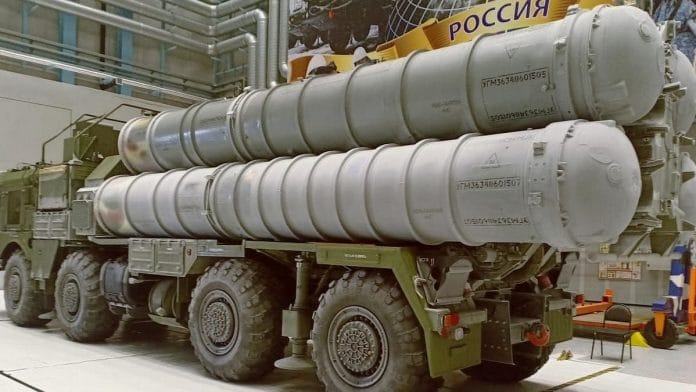
If the waiver is indeed granted, it will allow India to freely purchase Russia’s S-400 missile system without the fear of American sanctions.
According to diplomatic sources, the amendment only “urges” the Joe Biden administration to grant the waiver. The amendment “does not” mean a waiver has been granted.
This is because, sources said, only the President can grant the waiver under CAATSA. “The amendment urging the waiver is not a bill to be voted on and signed into law. The CAATSA waiver is separate,” a source said.
If the Biden administration decides to consider India’s case for a waiver, the US Senate will have to discuss it and take it up for voting. Once that is done, the President will sign it into law and, in between, there are a number of procedural issues that have to be addressed, sources said.
The matter also came up for discussion during the last round of India-US 2+2 talks, held in April this year.
However, after the meeting, the Biden administration made it clear that the US has not yet decided to grant a waiver to India.
‘US must stand with India in face of aggression from China’
Explaining his move, Khanna Thursday said that Washington needs to grant the waiver to New Delhi as India is facing “escalating aggression from China”.
“India faces immediate and serious regional border threats from China, with continued military aggression by the Government of China along the India-China border,” he added.
“India relies on Russian-built weapons for its national defence, and the United States should take additional steps to encourage India to accelerate India’s transition off Russian-built weapons and defence systems while strongly supporting India’s immediate defence needs.”
While India faces immediate needs to maintain its heavily Russian-built weapons systems, he said, “a waiver to sanctions under the Countering America’s Adversaries Through Sanctions Act during this transition period is in the best interests of the United States and the United States-India defence partnership to deter aggressors in light of Russia and China’s close partnership”.
(Edited by Sunanda Ranjan)
Also Read: No impact on S-400 deal, but ‘severe’ sanctions likely to dent Russia-India trade, says Moscow