



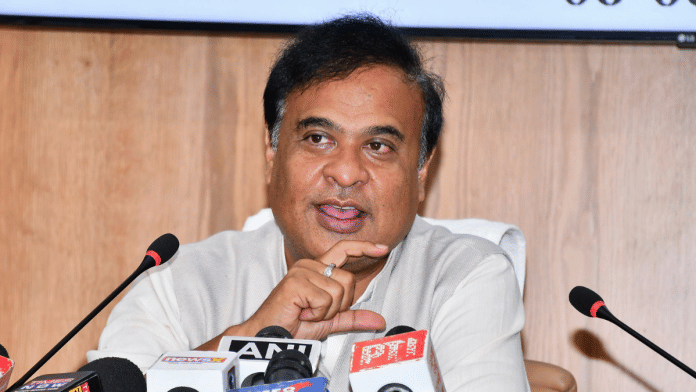
New Delhi: Bangladesh Thursday lodged a strong protest against comments made by Assam Chief Minister Himanta Biswa Sarma, summoning India’s Acting High Commissioner Pawan Badhe.
According to media reports in Bangladesh, Director General (South Asia) in Bangladesh’s Ministry of Foreign Affairs Ishrat Jahan communicated Dhaka’s position on Sarma’s recent comments in an interview with an Indian media house to Badhe. Bangladesh’s foreign ministry has made no official comment on the summoning. Officials highlighted that Dhaka conveyed to Badhe that the remarks made by Sarma were “disparaging” to bilateral ties and expressed their “displeasure”, according to the Bangladeshi news agency United News of Bangladesh (UNB).
In a conversation with ABP News a couple of weeks ago, Sarma had claimed that deporting alleged Bangladeshi nationals was extremely difficult through official channels, such as the Ministry of External Affairs (MEA). Instead, Sarma said, people are “pushed back” by “taking advantage of the night’s darkness, in places where the BDR (Bangladeshi Rifles, now the Border Guard Bangladesh) is not present”. According to the Assam Chief Minister, India’s Border Security Force (BSF) detains individuals until a suitable moment is found to “push them back” into Bangladesh.
Sarma also said that Dhaka refused to acknowledge Bangladeshi nationals, when the Assam government went through the official route via the MEA to initiate deportation proceedings, leading to this situation.
Over the last couple of years, and especially in the last few months, the Assam Chief Minister has been posting statements with pictures of alleged infiltrators from Bangladesh being “pushed back” into the country as part of his government’s efforts to curb illegal migration.
The issue is the latest friction point in a diplomatic relationship that has been slowly thawing since February 2026. India made a concerted outreach to Bangladesh’s new Prime Minister Tarique Rahman in an attempt to normalise strained ties.
Ties cratered following the ouster of Prime Minister Sheikh Hasina in August 2024. The interim government of Bangladesh that succeeded Hasina, led by Muhammad Yunus, took an adversarial position against New Delhi. The interim government and New Delhi rarely saw eye-to-eye on a number of issues, which led to imposition of trade barriers and other measures by both countries. Since Rahman’s electoral victory in February, however, Prime Minister Narendra Modi has sent letters to the new leader in Dhaka with the aim of stabilising ties.
More recently, India appointed Dinesh Trivedi, a senior politician from the Bharatiya Janata Party (BJP), as New Delhi’s next High Commissioner to Bangladesh. The political appointment is rare, given that Indian Foreign Service officers are usually appointed to the post in Dhaka.
Bangladesh Foreign Minister Khalilur Rahman made a stopover in New Delhi in the first week of last month, meeting External Affairs Minister S. Jaishankar and National Security Adviser Ajit Doval.
During the ongoing West Asia crisis, India has remained a key supplier of energy, particularly diesel, to Bangladesh. New Delhi exported an additional 40,000 tonnes of fuel to Dhaka last month as the war between US, Israel and Iran roiled energy markets. Despite the turbulence in ties, New Delhi and Dhaka have sought to decrease tensions in the diplomatic relationship over the last few months.
(Edited by Nardeep Singh Dahiya)
Also Read: What’s the 1950 law Nehru put on hold that BJP vows to ‘unleash on Bangladeshi Miyas’ in Assam
Thousands of Hindus butched and raped by Muslims of bengladesh, Assam CM is telling all illegal Muslim bengladeshis will be pushed back, nothing wrong,peanut Bengalesh Muslim country’s bilateral relations we Hindus won’t Care,we will throw out all bengladesh Muslim terrorists from hindustan.jai Hindu unity Jai Hindus Jai shree Ram.