





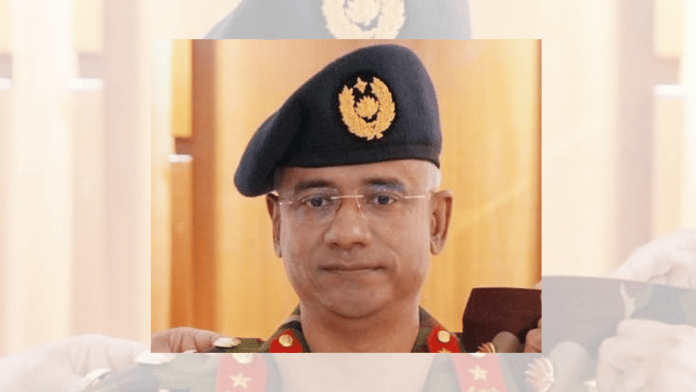



New Delhi: Within weeks of the new government assuming power in Dhaka, Bangladesh’s military intelligence chief Major General Mohammad Kaiser Rashid Chowdhury visited New Delhi and met with Parag Jain, chief of the Research & Analysis Wing (R&AW), and others including Lieutenant General R.S. Raman, his Indian counterpart, in another step of normalisation of ties between the two countries.
In a visit kept under wraps, Maj. Gen. Chowdhury, Bangladesh’s Director General of Forces Intelligence (DGFI), met with Jain and Lt. Gen. Raman, India’s Director General of Military Intelligence—a first since the ouster of former Bangladesh prime minister Sheikh Hasina in August 2024.
People familiar with the matter said Maj. Gen. Chowdhury met with the two officials and an understanding was reached about ensuring that neither country is used by individuals with interests “that are inimical to the other”, apart from opening channels of communication that were frozen for over 18 months.
Bangladesh’s new Prime Minister Tarique Rahman was sworn in on 17 February, making Maj. Gen. Chowdhury’s visit the first significant one from Dhaka to New Delhi. Chowdhury was made DGFI on 23 February, as part of Rahman’s shake up of the upper echelons of the Bangladeshi armed forces.
Since the ouster of the Sheikh Hasina-led government, a number of communication channels between India and Bangladesh were frozen, with conversations between the two countries largely routed through the offices of the National Security Advisers (NSA) until Rahman took office.
Khalilur Rahman, former NSA of Bangladesh, remains in Tarique Rahman’s cabinet as Minister of Foreign Affairs, a sign of continuity in foreign policy under the new PM. Khalilur Rahman and India’s NSA Ajit Doval remained in touch throughout last year, even as political and economic ties between New Delhi and Dhaka soured under the interim regime led by Muhammad Yunus.
Maj. Gen. Chowdhury’s visit to India, ostensibly on “medical grounds”, is significant amid security concerns in New Delhi that any uptick in violence in Bangladesh could impact peace and stability in the Northeastern states.
India has in the last few months indicated its willingness to work with and normalise ties with Tarique Rahman’s Bangladesh Nationalist Party (BNP).
External Affairs Minister S. Jaishankar met with Tarique Rahman on 31 December, 2025, in Dhaka and held a meeting for about half an hour while sharing a condolence letter from New Delhi on the death of former Bangladesh PM Khaleda Zia, Rahman’s mother.
New Delhi also sent Speaker of the Lok Sabha Om Birla and Foreign Secretary Vikram Misri to Rahman’s inauguration last month, in a further sign of intent to normalise a relationship that had frayed during Yunus’ interim government.
A number of challenges remain between India and Bangladesh, including Dhaka’s own domestic environment. India still houses Hasina, who was sentenced to death in absentia for the actions taken by her government to suppress the student-led demonstrations between June and August 2024.
However, Mirza Fakhrul Islam Alamgir, BNP’s senior-most leader and Minister of Local Government, Rural Development and Co-operatives, told The Hindu that ties between India and Bangladesh will not be held “captive” over the fate of Hasina.
Negotiations over the 1996 India-Bangladesh Ganges Water Treaty, which is set to expire in December 2026, is an important marker for both sides, and a number of economic restrictions imposed in the last year by both countries remain.
Bangladesh will also be reaching out to India diplomatically for the repatriation of two individuals—Faisal Karim Masud and Alamgir Hossain—accused of murdering political activist Sharif Osman Hadi in December 2025. The duo was captured by West Bengal Special Task Force (STF) Sunday. The death of Hadi had led to violent protests in Bangladesh at the end of last year, with India the focus of protesters’ ire.
(Edited by Nida Fatima Siddiqui)