



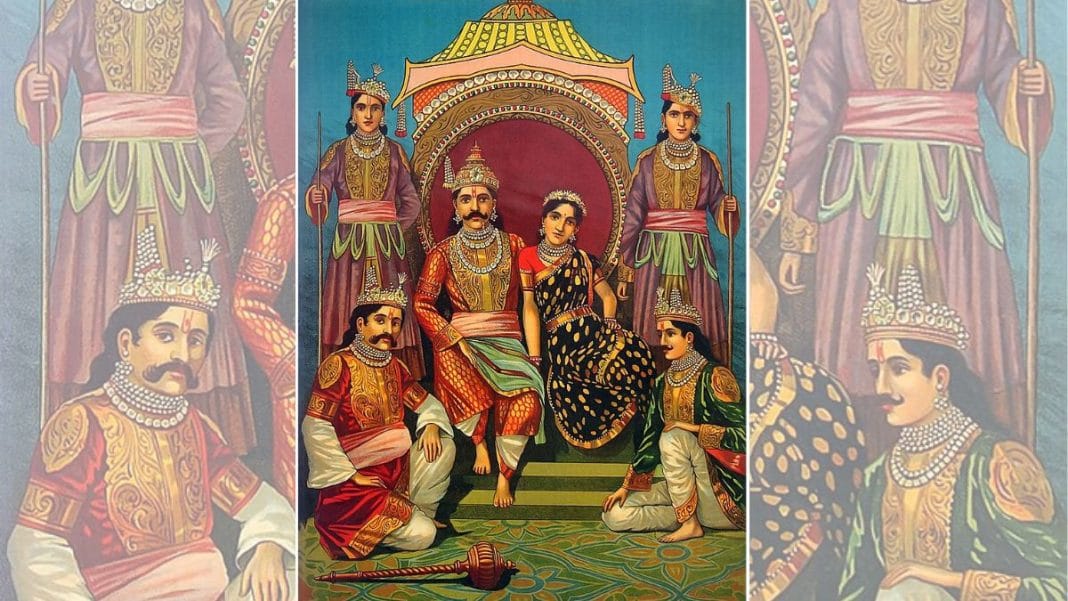


The morning assembly is a routine matter at our school—and most others, of course. But one fine day, our teachers did something different—they held a quiz on Indian mythology.
The result was shocking. Not a single student could say who the Pandavas were. Few knew Hanuman’s role in the Ramayana.
I was not surprised or angry. I just stood there thinking to myself—are we serious right now?
This was not just about a school quiz. It was a reminder of how disconnected many young people have become from their own culture. And in a country as rich in history and heritage as India, that is a serious loss.
Let me tell you a little about myself. I grew up watching ‘Devon Ke Dev… Mahadev’, ‘Radha Krishna’ and other mythology serials instead of cartoons. No one forced me. It simply happened.
I am not saying everyone should be like me. Watch cartoons if you enjoy them. Watch whatever makes you happy. But when I realised I was among the few people my age who actually knew Indian history and mythology, I did not feel superior. I felt sad.
Recently, I told my cousin about my interest in mythology. She is a science student—logical, practical and someone who does not easily believe in things she cannot see. But that night, she listened. She asked questions. She shared her views. We ended up having one of the best conversations we have ever had.
Last week, my principal visited our class and asked each of us about our interests. Everyone mentioned something common. When it was my turn, I said I had a deep interest in mythology. She looked genuinely surprised. Not because it was wrong, but because she did not expect it from someone my age.
That reaction said a lot.
Now let me ask you something. Have you ever seen Big Ben in London? It is just a clock tower. Yet millions of tourists visit it every year because it has been presented so well.
And then there is India. A country with monuments, traditions and stories that few places in the world can match. Every state has something unique—its own history, its own beauty, its own potential to become a world-class tourist destination. Yet countries with far fewer such assets often do much better than us in tourism.
Why? Because we do not know how to present what we have. And more importantly, we do not care enough to protect it.
Go to any famous tourist site in India and look around. You will often find litter, plastic and dirt lying beside monuments that have survived for centuries. We expect people from across the world to fall in love with our heritage, but we cannot even keep our own places clean.
This is where I stop blaming the government alone. We, the citizens—you and I—are equally responsible.
But the government is not blameless either. There is no proper promotion. There is not enough investment in tourism. There is no clear vision of what India’s tourism sector could become if it were taken seriously. Other countries treat tourism like a major industry. India often treats it like an afterthought.
And perhaps the root of all this lies in that school assembly. If our generation does not know its history, mythology and stories, how will we value them? How will we preserve them? How will we show them to the world?
We are not taught enough about India in our schools. We study the Mughals, the British, the French Revolution and European nationalism. All of that matters. But what about our own stories? What about the history that shaped us? You cannot preserve what you do not know. And you cannot show the world what you have never been taught to value.
Pahal Gupta is a student at Bal Vikas Progressive School, Panipat. Views are personal.
Also Read: Chamkila’s murder highlights paternalistic nature of society that sees censorship as protection