


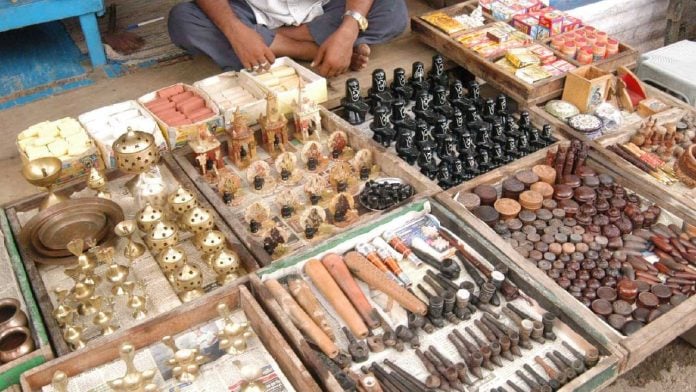
The ‘orange economy’ turns tradition, culture and creativity into economic opportunity. It transforms India’s intellectual property into a means of livelihood, sustaining people at the grassroots level. The term was popularised by Felipe Buitrago and Iván Duque, who describe the creative economy as the sectors whose goods and services rest on intellectual property. It is recognised across the world as a means of generating employment, increasing tourism and raising the overall flow of money in the economy.
In simpler terms, the orange economy is the creative economy, one that thrives on intellectual property, culture, tradition and innovation to generate economic opportunities.
Being the land of culture and tradition, India’s connection to the orange economy is even deeper. The diversity of the land, the richness of its traditions and the knowledge passed down through generations give our country a vast store of intellectual property, creating a comprehensive scope for its expansion.
The Constitution asks citizens under Article 51A (f) to “value and preserve the rich heritage of our composite culture”.
It is the bridge which connects India to its roots. The past is reflected in the present and carried into the future. The tales of the land come to life and skills are monetised. These opportunities are not limited to the border. Globally, creative services exports reached $1.7 trillion in 2024, creating a global identity and recognition for Indian talent.
India, in my opinion, is a land which celebrates. Honouring all cultures and traditions is integral to the Indian identity. Be it Diwali or Eid, Christmas or Gurpurab, Pongal or Bihu, India celebrates all of it. These celebrations express the secular spirit that our Constitution protects, but they also sustain the livelihood of many. In essence, they are celebrations of life and a means of survival.
Festivals increase the flow of money in the economy. As consumers spend on food, clothes, travel, gifting and decoration, jobs are created and livelihoods earned. Each festival requires specific traditional commodities, and industries in India plan their demand and supply around the festive season. Together, this promotes local culture, handloom, handicraft and food, and gives a push to traditional industries.
For one family, festivals are an annual tradition. For another, they decide the budget for the year ahead. Micro entrepreneurs, traditional artisans, event managers, performers and gig delivery executives all rely heavily on the orange economy. Viewed narrowly, buying candles for Christmas or diyas for Diwali may not seem significant. But festival spending creates similar work further down the chain, for potters, weavers, caterers and delivery riders who depend on a few busy weeks each year.
As a quiet engine, the creative economy has earned recognition from the Government of India. Prime Minister Narendra Modi placed India’s creative economy on the global stage through the WAVES summit in Mumbai . The Union Budget 2026-27 allocated Rs 250 crore for animation, visual effects, gaming and comics (AVGC) talent development, to set up Content Creator Labs in 15,000 secondary schools and 500 colleges. This makes it a nationwide initiative to build creative infrastructure in educational institutions.
Occupations that were eroding and unrecognised are now taught in an institutionalised manner, becoming subjects which require specialisation. That is the beauty of this nation: jobs once considered trivial now lead the grassroots economy and earn global recognition. Contribution made in the smallest way is recognised.
As India enjoy the festive season, it must be remembered that festivities in the house help the country grow. The diyas for Diwali, the candles for Christmas and every other purchase add up to economic growth and sustained livelihoods. Each celebration is significant, not only for the festival but for the livelihoods which depend on it directly and indirectly. The orange economy quietly drives the grassroots economy.
Aabha Jha is a student of National University of Study and Research in Law (NUSRL), Ranchi. Views are personal.
Also read: The false hopes of modern education