







Did you know that the invention of the washing machine was a feminist revolution? As women got more free time, they could turn to things that actually mattered to them—whether it was work or home.
This simple act of convenience liberated women and gave them what was missing: a choice.
Why is it, then, that in the world we live in, where everything is readily available to us, we are still not able to be liberated by our choice?
The truth is that our choices are constantly being manipulated by a double-edged sword—convenience culture.
There are two aspects of convenience culture—the availability of everything we could ever need at the click of a button, and the use of Artificial Intelligence to make our lives seemingly more comfortable.
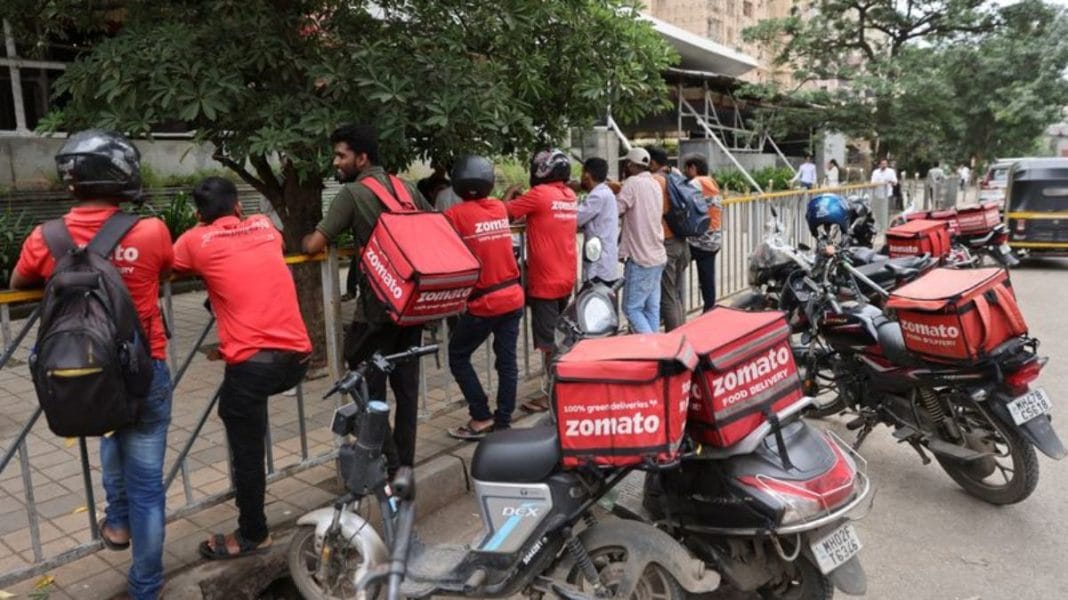
First, the rise of fast-paced deliveries. The problem with ten-minute delivery or overnight delivery is not the fast-paced delivery of the item itself—it’s how the item is delivered.
The thing about convenience culture is that it’s always exploiting something or someone. Fast-paced deliveries make someone work hard overnight and then deliver our order before we even wake up, all the while paying someone minimum wage for it. Or when someone has to rush through traffic dangerously to get our delivery to us within ten minutes, just so we don’t have to plan our groceries in advance. The entire system is based around exploiting someone and it’s never the wealthy.
This process traps us inside our houses; it creates a prison while giving us the illusion of a choice. Never getting out of the house also comes at a personal expense. Right now, we could live without getting out of our houses for years on end. The job? It’s remote. Feeling lonely? You can talk to people on social media. Need groceries? They will be there in ten minutes. Looking for a date? You can find it online.
You name the thing and it will be there, and probably in less time than you think. This act of not going out of our houses makes us cut back on human connection.
Humans are innately social beings and when we are deprived of one of our primal needs—socialisation—we can only imagine what that does to our brain chemistry.
The entire system of food delivery apps like UberEats or Swiggy is based around the fact that people do not even want to pick up the phone to order takeout—that is how much we avoid human interaction.
In recent years, capitalism has shifted from making money off our needs to making money off our inability to leave our houses.
The second thing we can focus on is the AI aspect of convenience. AI has taken convenience culture through a scary jump.
AI is based around the same system any convenience machine is: exploitation. But AI comes at the cost of two exploitations, our mind and the environment.
Now, you don’t even have to actually pursue your degree; we can just have AI pass our assignments for us. Certain things in life are supposed to be hard, like our education or our degree or creating art.
There is a deeper issue with the creation of art with AI, of which I will only be scratching the surface in this article. As an artist, if you use AI to create art—that is not really art and neither is it creation—it is just a product.
The whole purpose of creating art is the fulfilment that comes along with it and if we do not feel that fulfilment, it was never really ours.
With all its drawbacks, there is no denying that convenience has certain benefits as well. For someone who is a single parent or someone who is managing two jobs and does not have the time, doorstep, fast-paced delivery can be a dream but that dream can also only come with privilege. For the average person with ample time on their hands, it is just a means of exploitation.
Convenience culture is killing us slowly while giving us the illusion of a choice. It is killing our productivity, our ability to reason with people, the ability to think for ourselves and our ability to be humans.
Shreya Chauhan is a BACP student at Christ University, Bengaluru. Views are personal.
Also Read: Safety or stigma? How constitutional the blood donation ban on gay men, sex workers, trans people is