







Thank you dear subscribers, we are overwhelmed with your response.
Your Turn is a unique section from ThePrint featuring points of view from its subscribers. If you are a subscriber, have a point of view, please send it to us. If not, do subscribe here: https://theprint.in/subscribe/
Indian history often makes us look at how different communities lived together in the past. While political borders changed all the time, the true binding force of the country has always been its deep philosophy. At the very top of this heritage stand the Upanishads. They represent the highest levels of human spiritual thought. These ancient books do not talk about narrow rules or rigid divisions. Instead, they point toward a single, supreme reality that goes beyond all religious labels. The timeless power of this philosophy is best seen through a remarkable moment in history. It was a time when this ancient light almost changed the political future of the Mughal Empire.
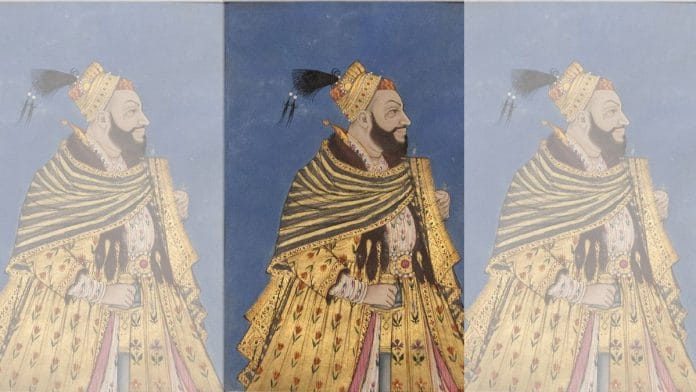
The person who brought this history to life was Prince Dara Shikoh, the eldest son of Emperor Shah Jahan and the rightful heir to the throne. Shikoh was a prince who loved to learn and study the spiritual traditions of India. He learned Sanskrit and spent hours talking to Hindu saints. When he read the Upanishads, he did not see them as just texts from another religion. He fell completely in love with their supreme philosophy and saw them as a vast ocean of truth. He came to a brilliant conclusion. He believed that the ultimate, single reality described in his own faith was beautifully and fully explained inside these ancient Indian books. He saw that at the highest level of Upanishadic thought, all human differences simply melted away.
To share this great discovery with the world, Shikoh brought a group of top scholars from Varanasi to Delhi in the year 1656. They lived and worked together at his estate along the Yamuna River. Together, they translated fifty major Upanishads from Sanskrit into Persian. He called this book the Sirr-e-Akbar, which means The Great Secret. For Shikoh, this project was a way to show the supreme glory of the Upanishads. He believed they contained the primary wisdom of all mankind.
The ultimate proof of this global power came a century later. French scholar Anquetil-Duperron translated Shikoh’s Persian text into a famous Latin book titled the Oupnek’hat. This Latin version spread across Europe and deeply inspired legendary Western philosophers like Arthur Schopenhauer, who famously called the Upanishads the consolation of his life. The ancient wisdom of India was so vast that a translation of a translation was enough to stun the greatest minds of the Western world.
However, the open world shown by the Upanishads deeply upset the conservative people in the royal court. Shikoh’s younger brother, Aurangzeb, had a very different view of power. He preferred strict laws and narrow divisions over open learning. As their father fell ill, the war for the throne became a clash between two entirely different futures for India. It was a battle between an open world illuminated by the oneness of the Upanishads and a rigid state built on fear and separation.
We all know the sad end of that struggle. Aurangzeb defeated his older brother, paraded him through the streets of Delhi in chains, and killed him. The official reason given for killing the prince was his beliefs, because Shikoh dared to say that the spiritual heritage of the Upanishads could live in perfect harmony with Islamic truth. By killing the prince and hiding his book, the rulers turned away from a path of mutual respect and chose the path of permanent division instead.
It leaves us with a profound, lingering question that echoes down the centuries. Imagine what would have happened if Dara Shikoh had succeeded over Aurangzeb. Imagine an India where the supreme, unifying wisdom of the Upanishads had become the guiding light for ruling the nation rather than rigid laws. Perhaps our modern religious fractures would never have become so deeply entrenched. The ultimate lesson of the Sirr-e-Akbar is that the Upanishads have always possessed the power to unite mankind, and their timeless message remains our best hope for finding common ground today.
These pieces are being published as they have been received – they have not been edited/fact-checked by ThePrint.