








“Turn in any direction you like, caste is the monster that crosses your path. You cannot have political reform, you cannot have economic reform, unless you kill this monster” — Dr B.R. Ambedkar, Annihilation of Caste (1936)
Dear Babasaheb,
In 1948, you characterised the Indian village as a “sink of localism” and a “den of ignorance”, and called on the oppressed to break free from these chains in search of dignity. In your Constituent Assembly speeches, you recognised that there would be outcasts as long as there are villages and that there would be no freedom, equality or brotherhood if the outcastes were still ruled by the village economy.
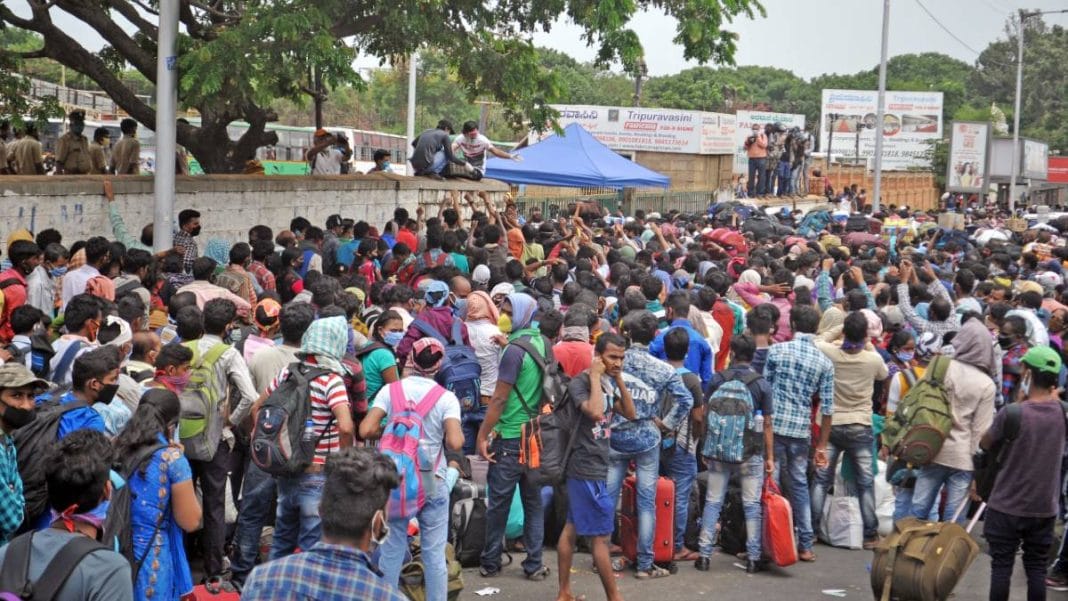
Millions heeded your call. The 2011 Census reports 453.6 million internal migrants (around 38% of the total population), while the National Sample Survey Office estimates the migration rate at 28.9% in 2021. Maharashtra, according to state labour data, is the home of 5-6 lakh workers from Bihar. Our people have moved in search of a better life, yet our welfare systems haven’t caught up, still clinging onto the archaic idea of the immobility of citizens, thereby trapping those who are mobile in a sort of administrative quicksand.
However, Babasaheb, the picture I want to paint is not so bleak. Pursuant to the roll-out of the One Nation One Ration Card (ONORC) scheme (pilot in 2019), ministry of consumer affairs’ 2025 data states that 80 crore beneficiaries are under the food security system. Transactions in areas which are not the native villages of the workers have tripled.
Workers can access subsidised grains at their work locations without the need to go back home. Such reforms significantly make life easier. Digital tools have also enabled impressive co-ordination with different administrations, echoing your socialist state vision where the state shall own or control the material resources of the community, as outlined in States and Minorities (1947).
Nevertheless, our federal constitution still presumes one’s residence to be rooted to a place, thus leaving migrants in a state of limbo. The Code on Social Security 2020, that streamlines nine labour laws in India, includes universal coverage, for gig workers and migrants, among others, but the barriers of various state departments keep cropping up. Additionally, the Ministry of Labour reported slow state-level adoption of established labour codes.
Babasaheb, you were a trailblazer in promoting the rights of women and marginalised groups. At the time of the parliamentary discussions you advocated for the Hindu Code Bill, wanting women to get inheritance and divorce rights. You are quoted as saying that the progress of a community is measured by the degree of progress women have achieved.
However, migrant women often find these provisions inadequate. The domicile quota in Bihar excludes migrant women from applying for schemes like Mukhyamantri Kanya Utthan Yojana, while so-called outsiders are also said to face challenges in Karnataka.
Migrants have rights, but the primary issue is with the fiscal fiefdoms which prevent mobility. We must have interstate fiscal pacts that cater to the needs of migrant-heavy states such as Maharashtra and Delhi and, besides, we may put forward a Migration Dividend Fund which allocates some percentage of GST (goods and services tax) to the host state based on the NITI Aayog model.
Grievance portals also require improvement to make them more effective. Moreover, we should make it mandatory for urban rentals to be affordable by amending the PMAY (Pradhan Mantri Awas Yojana), with a target of 1 crore units.
Implementation of remote voting through ECI-linked Aadhaar would be another great step towards our welfare framework for the migrant population. The labour ministry can ensure that code notifications are enforced all over the country by 2027, supported by central funds for migrant women’s hostels, an idea you gave birth to in your fight for the rights of women and minorities.
You dreamed of citizenship as something portable, tied to the person rather than the village. Today’s migrants show that this vision is only half-realised, and it’s time we fully brought it to life.
With respect,
A Citizen of the Republic
Kinjal Alok is a BALLB student at Maharashtra National Law University, Chhatrapati Sambhajinagar. Views are personal.