



PNN
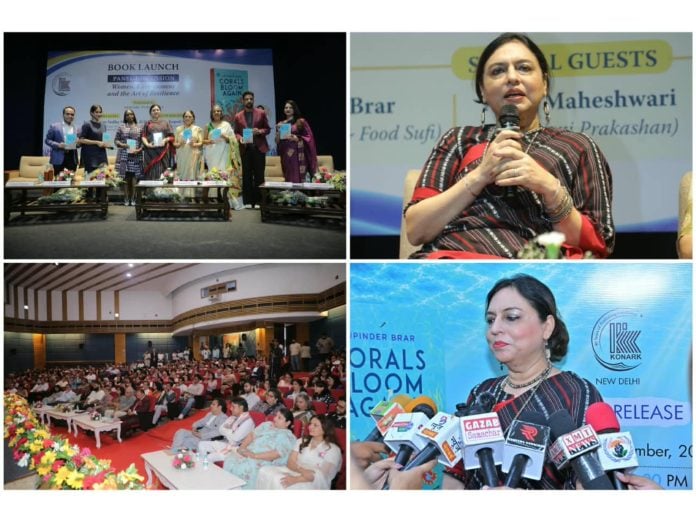
New Delhi [India], September 28: The book launch of Corals Bloom Again, the debut novel by Rupinder Brar, Additional Secretary, Ministry of Coal, Government of India, and senior Indian Revenue Service officer, was held today at the Auditorium, Prime Ministers’ Museum & Library, Teen Murti Bhavan, New Delhi.
The event witnessed a remarkable gathering of Delhi’s elite, with the auditorium packed to capacity. The city’s cultural and intellectual cream turned out in strength, with eminent authors, writers, and dignitaries in attendance, lending the evening a truly distinguished character.
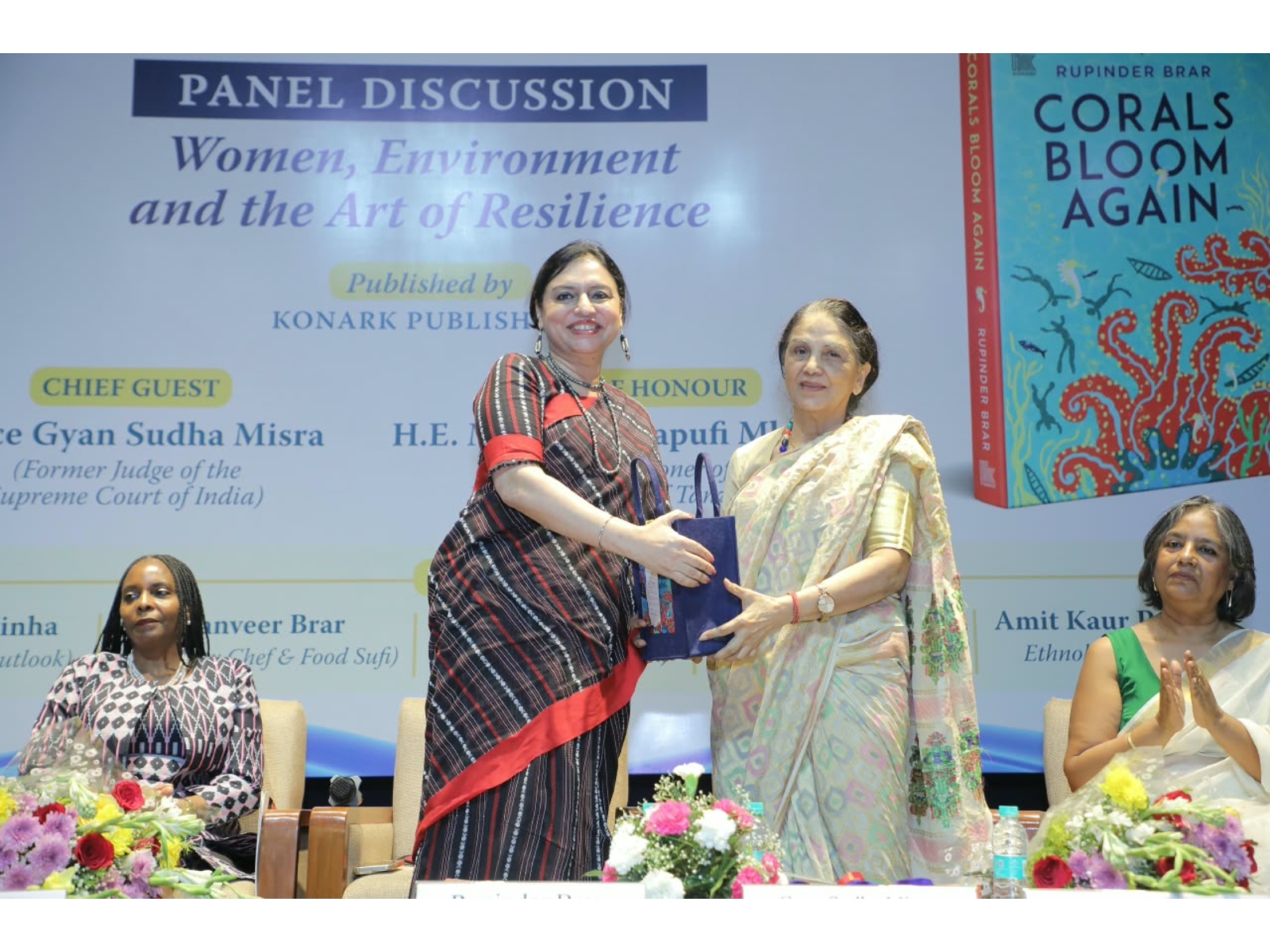
The event featured a distinguished panel discussion themed “Women, Environment, and the Art of Resilience,” bringing together voices from law, diplomacy, literature, gastronomy, and environmental science to reflect on the themes explored in the novel.
Justice Gyan Sudha Misra, Former Judge, Supreme Court of India, congratulated the author for mastering the emotional depth of the narrative, noting how effectively the novel captures the importance of environment through a real-world lens. Drawing from her own experience observing the lives of women in Jharkhand, Justice Misra reflected on issues of suppressed ambition and the need for greater representation, adding that despite its serious themes, the novel remains an accessible read that touches on geography, solidarity, climate change, and adivasi rights.
In conversation with Ms. Chinki Sinha, Former Editor, Outlook, Rupinder Brar spoke about the origins of the book, describing it as a moment of serendipity born from her years spent in Tanzania. She recalled how a news report about injured fishermen — a practice she later learned was blast fishing — sparked her interest, revealing that such malpractices occur not only in East Africa but also closer home, in places like Kerala. She spoke of her deep affection for the fictional island of Mizinga and the extensive research that shaped the narrative, as well as the long-standing cultural connections between India and East Africa that run through the story.
Author Pratyaksha Sinha described the protagonist Maya as a compelling and complex character, noting that the novel is far more than an eco-thriller — it raises deep moral and ethical questions. She observed that positioning Maya at the intersection of a layered India-Africa relationship reflects the very essence of women’s writing today, adding that Rupinder’s years as a seasoned bureaucrat lend the narrative a distinct authority and insight.
Celebrity chef Ranveer Brar brought a unique perspective to the conversation, discussing the kitchen as a space shaped by gender and politics, and food as a lens through which conservation can be understood. He spoke of nurturing as a fundamental human instinct, emphasizing that true conservation often means looking backward — to the sustainable practices earlier generations lived by. He reflected on the “sandwich generation” and the enduring wisdom behind the term “Mother Earth,” calling for a return to the feminine energy of care and conservation.
Dr. Amit Kaur Puri, Ethnobotanist, engaged the audience directly, posing the question: “Has anyone seen coral reefs? What exactly are they — rocks, or plants?” She explained corals as living polyps in a symbiotic relationship with algae, detailing how this relationship produces their vivid colours and structures built from calcium carbonate. Noting that over 6,000 species of coral exist worldwide, with many still undiscovered, Dr. Puri connected the science to the novel’s core theme of blast fishing — describing how such practices paralyze fish, strip corals of their algae, and lead to coral bleaching. She expressed hope for restoration through a change in collective mindset, citing coral ecosystems in Lakshadweep, the Rann of Kutch, and the Andaman and Nicobar Islands as vital to protect.
Ms. Winnie Mwanjala, Minister at the Kenya High Commission, spoke about indigenous rights and ancestral wisdom, noting that earlier generations were deeply thoughtful stewards of forests and nature. She highlighted the historic cultural ties between India and Africa — from the spice trade to Indian communities settling along Kenya’s coastline — and stressed the importance of honouring and enriching the sustainable practices passed down by mothers and grandmothers rather than discarding them.
Reflecting on her creative process, Rupinder Brar shared that her characters — Ken, Maya, and others — have lived with her for the past two to three years, becoming as real to her as people she knows.
Vishnukant Ramchandran, Director, Konark Publishers, addressed a question on the risks of publishing a book with such weighty themes, noting that his father took similar risks before him, and that Konark Publishers has always backed meaningful, thought-provoking work. He added that in today’s climate — shaped increasingly by AI — this kind of publishing feels more relevant than ever.
The event concluded with an engaging Q&A session, where members of the audience posed questions to the author and panelists.
Corals Bloom Again, published by Konark Publishers, is available for readers on amazon.
(ADVERTORIAL DISCLAIMER: The above press release has been provided by PNN. ANI will not be responsible in any way for the content of the same.)
This story is auto-generated from a syndicated feed. ThePrint holds no responsibility for its content.