








Mumbai: Wild times lie ahead for one of India’s oldest zoos, Mumbai’s Byculla zoo.
The over 160-year-old zoo, which lies in the heart of the city, is planning to get more than 20 exotic species, including black swans, jaguars, pumas, white lions and meerkats, as part of its expansion plans in recent years.
The Brihanmumbai Municipal Corporation (BMC) issued a tender Thursday to develop new exotic zones to house these species, along with infrastructure facilities such as a restaurant, public toilets, service roads and pathways.
Work on the new infrastructure, which is estimated to cost around Rs 500 crore, will begin once the contractor is finalised.
The Veermata Jijabai Bhosale Botanical Garden and Zoo in Mumbai, popularly known as Ranichi Bagh or Byculla zoo, spread across 50 acres, is currently home to over 350 animals.
They include tigers, lions, hyenas, deer, leopards, monkeys, elephants, nilgais, hippopotamuses, crocodiles and bears, along with birds like flamingos, herons, cranes, albino crows, pelicans and storks.
The exotic zones will have separate exhibits for various animals such as emus, wallabies, black swans, lorikeets, tortoises, jaguars, chimpanzees, pumas, gorillas, tamarins and marmosets, white lions, African Savannah species including zebras, giraffes and oryxes, giant anteaters, meerkats, ring-tailed lemurs, cheetahs and hippopotamuses.
In addition, the plan outlines the construction of a three-storey ‘Cheetah Restaurant’, visitor shelters, a public toilet block, an electric substation, service roads, pathways, a compound wall and landscaping.
“The construction will take approximately three years. Once the animal exhibit designs are approved, the construction will begin. When it is nearing completion, the process of procurement of animals will begin,” Byculla Zoo Director Sanjay Tiwari told ThePrint.
“All the animals mentioned in the proposal are already present in Indian zoos. Under India’s zoo-to-zoo exchange system, one zoo plans to exchange species with another. The tropical exotic species we want are available in Mysore, Kolkata, Hyderabad and Odisha’s Nandankanan zoo. In return, Byculla will send out species it has in excess, such as penguins, storks and cranes,” he added.
“If an exchange isn’t possible, animals will be procured from foreign zoos through a tender process, similar to the previous penguin acquisition.”
Once procured, the animals will be quarantined for a month in a separate section where routine health checkups are carried out to make sure they are not carrying any diseases that can spread across the zoo.
“It is a standard operating procedure in all zoos around the world when new animals are procured. We perform routine health checkups to make sure the animal is free of any zoonotic diseases that are transmitted between animals and humans. After a month, they are kept in the assigned enclosures,” Dr Abhishek Satam, a biologist at the zoo, told ThePrint.
“The new species that the zoo plans to welcome are Sub-Saharan animals, found in tropical regions. India is also a tropical country; therefore, acclimatisation of these animals is not that difficult,” he added.
Also Read: Indian zoos have a numbers problem. Too many animals, not enough vets, biologists, educators
Earlier expansion
The addition of exotic animals is part of the zoo’s expansion in recent years.
In 2018, the Byculla zoo extended its area by 10 acres after it acquired two neighbouring plots—Mafatlal Mill and Poddar Mill—after which the expansion process began.
In 2019, the zoo received blanket approval to bring 16 new animals from the Central Zoo Authority (CZA). The proposal for the procurement of 21 animals will be sent to the concerned agencies after the construction of the exotic zones nears completion.
The tender for the development of new zones and enclosures for exotic animals will use the new 10 acres of land.
“We already have approval for 16 animals. If we need more or change the existing list of animals, we will have to send a fresh proposal to the CZA and the PCCF (Principal Chief Conservator of Forests),” Dr Komal Raul, veterinary officer at the zoo, told ThePrint.
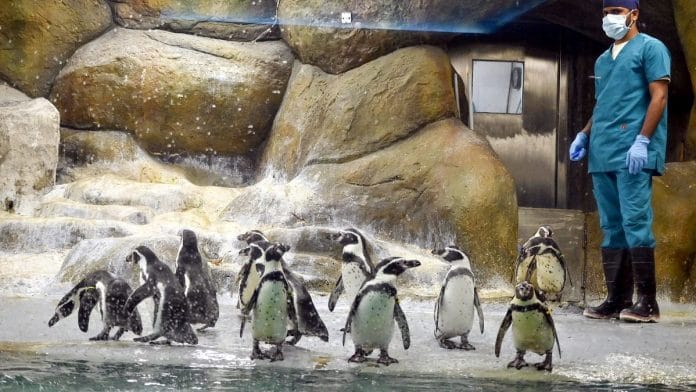
The Byculla zoo also has a penguin enclosure built in 2016 to accommodate eight Humboldt penguins procured from South Korea, in the same year. The enclosure, consisting of cool chambers, has a maximum capacity of 25 to 28 penguins and is currently home to 20 penguins.
When the penguins arrived at the Byculla zoo, controversy swirled that they had been bought from South Korea.
Tiwari clarified that animals are not “sold”. “The procurement cost only covers transport, veterinary care, husbandry and related expenses—the Rs 2 crore spent on penguins accounted solely for these charges,” he said.
(Edited by Sugita Katyal)
Also Read: Indians don’t deserve zoos. Elephant Shankar’s life is proof