


Thank you dear subscribers, we are overwhelmed with your response.
Your Turn is a unique section from ThePrint featuring points of view from its subscribers. If you are a subscriber, have a point of view, please send it to us. If not, do subscribe here: https://theprint.in/subscribe/
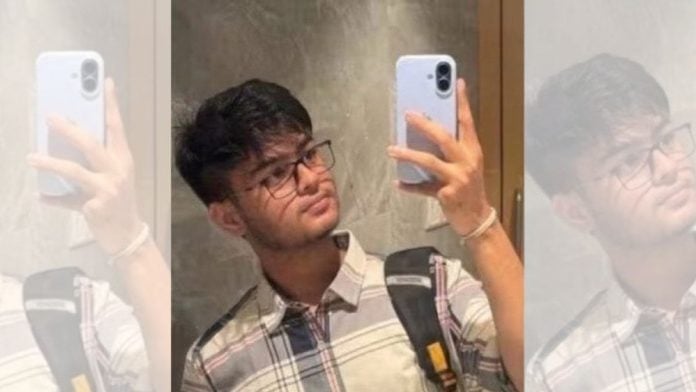
An IIT Mumbai student, Sahil Wakode, was allegedly caught using a smartphone/ChatGPT during a mid-semester examination. The invigilator, Professor Suryanarayana Doolla, followed standard, approved academic procedures, as expected, in dealing with such cases. Later, on the same day, the student was found dead in his room. The student’s parents filed a police complaint alleging that their son was subjected to casteist abuse and threats by the faculty. Consequently, the Mumbai Police registered a First Information Report (FIR) invoking abetment of suicide and the SC/ST (Prevention of Atrocities) Act against Professor Doolla.
The incident has led to a campus divide. Student representatives clarified that they do not condone cheating; rather, they are protesting against harsh disciplinary practices, deep-rooted systemic academic pressure, and a lack of proper mental health support. They have successfully pressured the administration to accept an 18-point charter of demands and to temporarily strip Professor Doolla of his administrative role as Dean of Student Affairs. The demands include a clause stating that the IIT Director must resign if the agreed-upon reforms are not implemented within the stipulated one-month timeline. But that is not all. They have also demanded that, pending the results of a formal enquiry, the initial communication accusing the student of cheating be withdrawn, and a public apology issued. The administration has since complied and issued an apology on X. The demands end with an explicit guarantee that the administration will not take any disciplinary, hostel, financial, or legal action against the students who participated in the campus protests.
Meanwhile, the professor has been charged under the Scheduled Castes and the Scheduled Tribes (Prevention of Atrocities) Act, 1989 (SC/ST Act) and Section 108 of the Bharatiya Nyaya Sanhita (BNS) based on a complaint filed by the late student’s parents. Both are serious acts that leave very little room for the accused, and bail pleas are often declined. Both the professor and the IIT Bombay administration have strongly denied the caste discrimination allegations, maintaining that the invigilator was only enforcing institutional examination rules and doing his duty.
There is a quote that says, “A small leak can sink a great ship, but in modern media, a small drop can be magnified into a tidal wave,” author unknown. A contemporary political aphorism goes thus, “There is nothing so small that it cannot be blown out of proportion by the breathless machinery of national politics.” Media critics often say, “We live in a world where the trivial is made serious, and the serious is made trivial.” A sociological observation on moral panics goes thus: “The art of policing public opinion relies on taking the mundane, dressing it in the garb of a national crisis, and letting the collective anxiety do the rest.” In the end, the incident in IIT Mumbai shows how trivial details are weaponised into grand national narratives.
If one sits back and reflects on the incident as it is unfolding, one thing stands out clearly. The professor, with impeccable credentials, is the undeniable villain of the story. His past credibility, professional competence, and impeccable record seem to have been pushed into oblivion in the anguish for the young student. The oft-repeated adage, “There are always two sides to a story, and the truth usually lies somewhere in the middle,” has been forgotten. The fact that “truth is a multi-sided diamond and showing only one facet misrepresents the whole stone” does not seem to bother anyone.
There is a quote attributed to Nigerian author Chimamanda Ngozi Adichie that says, “The single story creates stereotypes, and the problem with stereotypes is not that they are untrue, but that they are incomplete. They make one story become the only story.” At its core, the quote explains how stereotypes function and why they are harmful—not because they are completely fabricated lies, but because they capture only a tiny fraction of the truth and present it as the whole reality. This is exactly what is happening in our nation’s approach to the problem of casteism and reservations. When a stereotype takes root, it closes the mind to any alternative information. It flattens a complex, multidimensional human being or society into a one-dimensional caricature. When a single story becomes the only story, it robs people of their dignity and makes it incredibly difficult to see them as equals. In this incident, the professor, who was doing his duty, and the student, who was allegedly copying, are not being treated as equals. The former’s status as an equal has literally been stripped away, in favour of the accepted stereotype of an SC/ST/Dalit.
It is time to view the IIT Mumbai incident strictly as a standard academic disciplinary matter, and to focus on core institutional protocols. An alleged instance of malpractice during an exam is a routine issue in universities worldwide. It can be resolved efficiently through a swift, internal fact-finding enquiry to establish the truth without external interference. Elevating such an incident into a polarized national debate on caste atrocities risks overshadowing the standard rules of academic integrity, politicising campus life, and placing undue pressure on faculty members carrying out their duties. Resolving the matter through established administrative channels ensures an objective, evidence-based outcome while preserving the focus on student mental well-being and academic rigor. Such institutions of excellence will pay a heavy price if the stereotype casteism narrative is allowed to rule the campus.
These pieces are being published as they have been received – they have not been edited/fact-checked by ThePrint.