








In Episode 1817 of Cut the Clutter, ThePrint Editor-in-Chief Shekhar Gupta, explains how the UAE has been not just a collateral, but a primary target of Iran in the West Asian war. He also provides a detailed account of the missile defence systems that the UAE possesses and its future strategy if the conflict escalates further.
Here’s the full transcript, edited for clarity:
If you look at the war in the Gulf, we know that Israel and US’ allies are fighting with Iran. They are the ones attacking targets in Iran and also defending themselves—their bases, in the case of America, and other allied countries in the region from threats coming in from Iran, mainly missiles and UAS systems, loosely called ‘drone’ but really Uncrewed Aircraft Systems.
Iran, however, is fighting whom? That becomes a very important question. At a time when, in fact, Donald Trump keeps teasing us all the time. We are chasing a moving target, because we don’t know what he’ll say early morning, our time (IST), when he addresses his nation or at any point of time when he puts out a Truth Social post.
Today, for example, he put out a post saying that the Iranians are begging for ceasefire, but the Iranians almost immediately afterwards denied it. He also said that either they should accept our terms or we will continue to obliterate them, etc. So, we don’t know exactly what’s going to happen here.
However, this is a good moment to look at how the war has gone, in the sense of who does Iran see as its enemies. So those attacking Iran are Israel and the US. On the other hand, the ones Iran is attacking, most of all, is not Israel, or not even American bases, because America is far away. America has bases. It has some aircraft carriers. Israel is the main enemy in a way— ideologically, politically and, for Iran, militarily— for a very long time.
However, more than 85 percent of all of Iran’s attacks, i.e., all of Iran’s missiles, ballistic missiles, UAS, or cruise missiles ( Iran’s not using that many of them because cruise missiles tend to be subsonic and they are intercepted relatively easily in this kind of a high-tech defensive environment).
But if you generally look at the number, then the Arab news platform tells us that 83 percent of all Iranian projectiles have been fired at the six countries of the Gulf Cooperation Council. The six GCC countries going upwards from the South are Oman, the UAE, Bahrain, Saudi Arabia, Qatar, and Kuwait. Each one is a tiny country. Some have large area but tiny populations.
They’ve received so many of these projectiles. A couple have gone to Turkey—two or three. All were intercepted by NATO defences. One odd has gone on early to Azerbaijan. Although later, Iran said that these were false flag operations. However, the key thing is that Iran has targeted these GCC Arab countries.
Now, this tells us two things. One, it tells us that Iran sees these countries as the softest targets among the alliance that the Americans and the Israelis have put up against them. So, they think Israel is tough to attack. Israel has very good defences. Israel can also take a lot of damage. It can take a lot of attrition and deal with it.
But these Arab states are soft states. They’ve never seen combat. They have very small native populations, surrounded by and living in a sea of large numbers of expatriates. So local populations will get scared. Even more importantly, expatriates who drive these economies, they will get scared.
Just to give you an example of how this works— if you see Qatar or the UAE for example, more than 80-85 percent of the population is expatriate. In the case of the UAE, of a total population of about 11.57 million people, their own population is just over 1.3 million. Which means more than 90 percent people are expatriates. They are Indians, Pakistanis, Bangladeshis, Sri Lankans, Filipinos, Lebanese and in fact a lot of them are westerners. Moreover, 65,000 Americans live in the UAE.
These are the people that Iran thinks it can scare. Also, Iran thinks that once these countries see this threat, it’ll be very difficult for them to build their economies again and that is the leverage that Iran seeks. That look, ‘I’m telling you guys that if you want to build this great oasis of wealth and prosperity, and bring in western universities, a western way of life, allow other faiths to prosper, empower your women, then you have to make provisions for Iran. You have to make provisions for Iranian power. You can’t do it in defiance of Iran, or you can’t do it while partnering with enemies of Iran.’
Maybe the starkest way for us to understand how specifically the UAE has been targeted is to just look at the numbers. Overall, Israel has got 1,365 projectiles fired at it, yet. That is the total number of ballistic missiles, 600 ballistic missile, 765 UAVs, maybe some cruise missiles that Israel has received through this war, yet.
The UAE, on the other hand, has received as of today 2,469 of these. That is twice as much as Israel. That itself gives you an idea of how important of a target the UAE has been for Iran. And you know what? The degree of difficulty in intercepting these systems, these projectiles, in the UAE is much greater than in Israel. Because Israel is still quite far away and after the detection, the defences have more time to prepare. So far, as we know, in the UAE, a lot of people have got injured, 11 have died of which two are UAE soldiers.
That’s why these numbers have come up. And even within the GCC, while Kuwait has faced a lot of attacks, it is also seen particularly as a soft state by Iran. It also has a small domestic or native population. But there’s a big American base there and that’s why Kuwait has received a lot of attention.
But the GCC member, the Gulf country that has received the most ‘love and affection’ from Iran is actually the tiny UAE. Tiny because its total population may be 11.57 million or 1.16 crore. Its own population however is just over 1.3 million. Anything between 1.3 to 1.4 million, i.e., 13 lakhs to 14 lakhs. It’s a very tiny population.
The UAE also consists of seven distinct emirates. (The seven emirates, I know this is not a GK class but I should mention them because later when we talk about the islands close to the Strait of Hormuz, you will see some distinctions there because different emirates claim those islands occupied by Iran since 1971.)
So the seven different emirates are Abu Dhabi, Dubai and Sharjah, the three best known in India (Sharjah because of cricket), Ajman, Umal Al Quwain, Ras Al Khaimah and Fujairah. Fujairah is where this oil terminal is, where this pipeline from the other end of the UAE opens to bypass the Strait of Hormuz.
Seven distinct emirates in a system of semi-constitutional monarchy. Semi-constitutional, in the sense that there is a constitution which allocates powers to the ruler (to the monarch or the sheikh) of each of these members or each of these emirates. The ruler in Abu Dhabi is the monarch of all emirates. However, he does not function as one in terms of having immediate or obvious power over all of them. His powers are also circumscribed by the constitution.
It is this soft arrangement which Iran thought they will target. The UAE is also the most westernized, the most upward moving. It has, actually, been growing so fast that a kind of sibling envy has developed over time between the UAE and Saudi Arabia, who otherwise happen to be friends and comrades. But lately they’ve had quite a bit of what I just described as a sibling rivalry because the UAE is small and nifty. It is getting richer. It is also, a bit, the darling of India in the West Asian region.
Remember the UAE ruler made a quick visit to India just for a couple of hours and Prime Minister Modi went to receive him at the airport. The UAE and India have a special relationship, but remember also that the UAE has a very robust relationship with Israel. This was formalized with the Abraham Accords in 2020. But even prior to that, the UAE authorities and the Israeli authorities, including their intelligence agencies, have been working together on many areas of common interest.
The only other GCC country in the Abraham Accords is Bahrain, and that is also the reason that they’ve got so much attention from Iran. They (Bahrain) also host the Fifth Fleet of US Navy, US Central Command.
Now, the UAE itself has received more gift packages, if I may call them, more missiles, UAS and cruise missiles from Iran than many other GCC countries put together. If you look at all the GCC countries, they’ve received about 5,000-5,500 of these (numbers changing all the time). The UAE itself has received about 2,500 as we speak.
In fact, the latest count that the UAE defence ministry put out this morning, that’s at 438 ballistic missiles. Tiny UAE received 438 ballistic missiles, 2012 UAS or drone attacks (long range drones), and 19 cruise missiles of which it was able to intercept about 95 percent. I see different figures. Some figures say 93, some say 95. Nobody says below 93, which means very few have got through. In fact, almost all the ballistic missiles have been intercepted, I would say, from all the pictures we’ve seen besides the one effective hit (probably a ballistic missile hit though we can’t say for sure) at the Fujairah oil terminal.
That is where a pipeline that the UAE had built as a bypass to Strait of Hormuz opening out in the Gulf of Oman. That terminal was hit probably by a ballistic missile. Maybe one more hit. Otherwise, almost all ballistic missiles have been stopped. The debris comes down, causes some damage. Some drones or UAS might have gotten through but that is 2012 of them. It looks like all the cruise missiles, all 19 have been stopped.
We know the tactical, strategic and political importance of the UAE to Iran. It’s also a fact that of all the countries in the GCC, the UAE is the closest to Iran geographically. Most of the critical infrastructure areas and the critical “targets” in the UAE are about 40 miles away (60-65 km). Some may be 70 km away from Iran.
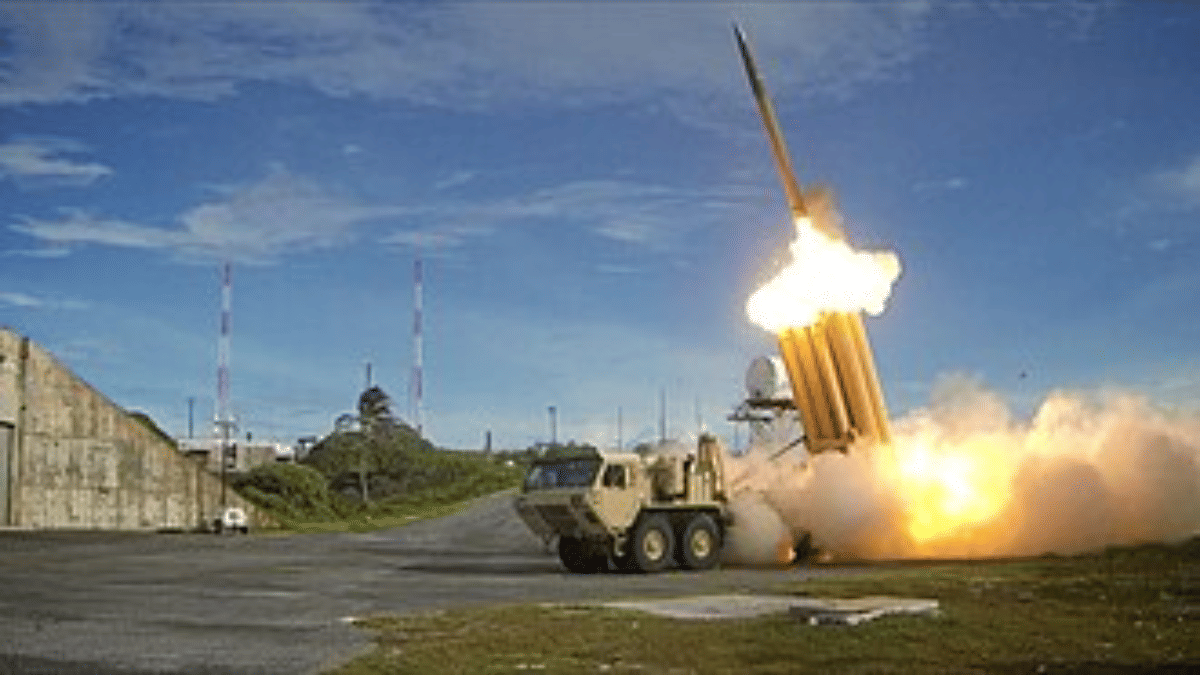
So, it is easiest to target the UAE for Iran and when they launch projectiles at the UAE, even if the satellites pick them up, even if the UAE’s own radar systems, especially the AN/TPY2 which has come with the THAAD (Terminal High Altitude Area Defence) systems, the top of the line anti-ballistic missile systems in the world, even if they detect them immediately, the time taken (by the Iranian missile)to travel to the UAE is the least. So, it gives the UAE the least time to intercept.
However, the UAE has still been very effective using a combination of THAAD systems, which they had ordered in 2015 and installed in 2022 with its radars. They have multiple Patriot batteries. So, if you miss the missile in the terminal phase (that’s why it’s Terminal High Altitude Area Defence) because the THAAD missile targets the incoming ballistic missile at the terminal point when it’s turning for re-entry into the atmosphere.
That is where it catches that and it catches the missile, carries out a kinetic hit. It does not kill the other missile with a proximity fuse. So going off somewhere close to it, it kills it by a kinetic strike. If the missile gets through, then there are the Patriot batteries.
Also, the Saudis and the Americans used this in Dhahran, for example, the base from which the US allied forces operated in Kuwait and Iraq. Patriot missiles were used to stop Scud missiles fired by the Iraqis. So, if a missile escapes the THAAD, then you have Patriots looking for it, and even if it gets past the Patriots, then the UAE has acquired another set of systems from Israel.
So, just like India, the UAE also has Barak series missiles which are medium-range missiles. Also SPYDER, which is a closer range missile. And, then not to leave anything to chance, the UAE also acquired from South Korean KM-SAM missile systems. What we see in the UAE by way of air defences or missile defences is not something that happened over time or over the last 3-5 years. They’ve been at it for 40 years now. Why? Because something happened almost exactly 40 years ago that woke them up.
25 November, 1986—two Iranian missiles struck two of their oil installations about 100 km from Abu Dhabi. This is when the Iran-Iraq war was going on. In the process, some missiles would have gone astray. The UAE did not see it like that. They saw this as a deliberate message by the Iranians to them that, ‘listen, you should know who’s the hegemon in this region.’ At that point, nobody held an army, navy, air force on the GCC side. The UAE hardly had an air force.
Iran on the other hand, in 1986, had a pretty good air force because the Shah of Iran had built a very powerful air force with the help of the Americans. Of course, he paid for all the stuff he got. That air force the UAE could not have fought. The UAE then went to the Americans asking for what would, today, be the modest Stinger missiles, saying, ‘give us something to protect ourselves from air attacks’ because that was not the era of long-range standoff weapons or missiles.
They thought at least these shoulder-fired missiles will also give them some protection from Iranian air attacks. The Americans said no, so the UAE went to the Soviets to ask for their systems.
In the course of time, the UAE also acquired the Soviet or Russian Pantsir-1 missile systems. These are point defence missile systems. Some of these, now, India is also considering as a point defence for critical installations or critical assets, particularly the S400 radars and S400 firing systems. This is something that’s in the works. The UAE acquired these and then the floodgates opened, and the Americans started selling them more and more as the Iranian threat grew. And I’ve already given you the laundry list of all the air defence systems that the UAE has.
However, we must remember that UAE is a very small country with a very small population. It has a standing army, navy, air force of about 65,000. Reservists are about 1.3 lakh. It’s not as if the country can go and fight anybody on its own.
But what have the Emiratis done now? They have now come across and become the first GCC country, or in fact the first Arab country, to say that if there is a fight with the Iranians, particularly for reopening the Strait of Hormuz, then ‘we are in the fight‘. That’s a big turning point in what’s going on in West Asia right now. The tiny UAE has become the first country to say that they are willing to fight now.
I will share a couple of articles with you—one from Forbes that describes how the UAE has built this air and missile defence system over the past 40 years. The second is an article, an op-ed, that UAE’s ambassador to the US, Yousef Al Otaiba, wrote just a couple of days back in The Wall Street Journal (WSJ). In the article, first of all, he explains why he thinks Iran dislikes the UAE. I think this is very important because after this I will also give you reference to something that Mohammad Javad Zarif, the former foreign minister of Iran from 2013 to 2021, then the vice-president from 2021 to 2024, said about the UAE.
Ambassador Yousef Al Otaiba writes in his Op-ed article for WSJ—‘Iranians don’t like us. Not only because we are so near, but because we are so different. The UAE is a modern, progressive, prosperous Muslim society that delivers for its people. We empower women and welcome all faiths. The UAE is the argument Iran can’t win. The idea it cannot accept.’
Now that is very precinct and that is very well said because Zarif has said repeatedly in the past also the way the UAE is conducting itself, cozying up to the West and to Israel, is not right and it deserves to be destroyed.
In fact, on 6 March, he exchanged some messages on Telegram which got leaked where he said that the UAE is as much an enemy or as dangerous an enemy as Israel and that the UAE and Israel are the same. There is no difference. I told you about the article from Forbes, an article in WSJ that says that the UAE is now ready to join the fight, and the op-ed article in WSJ by the UAE ambassador to Washington.
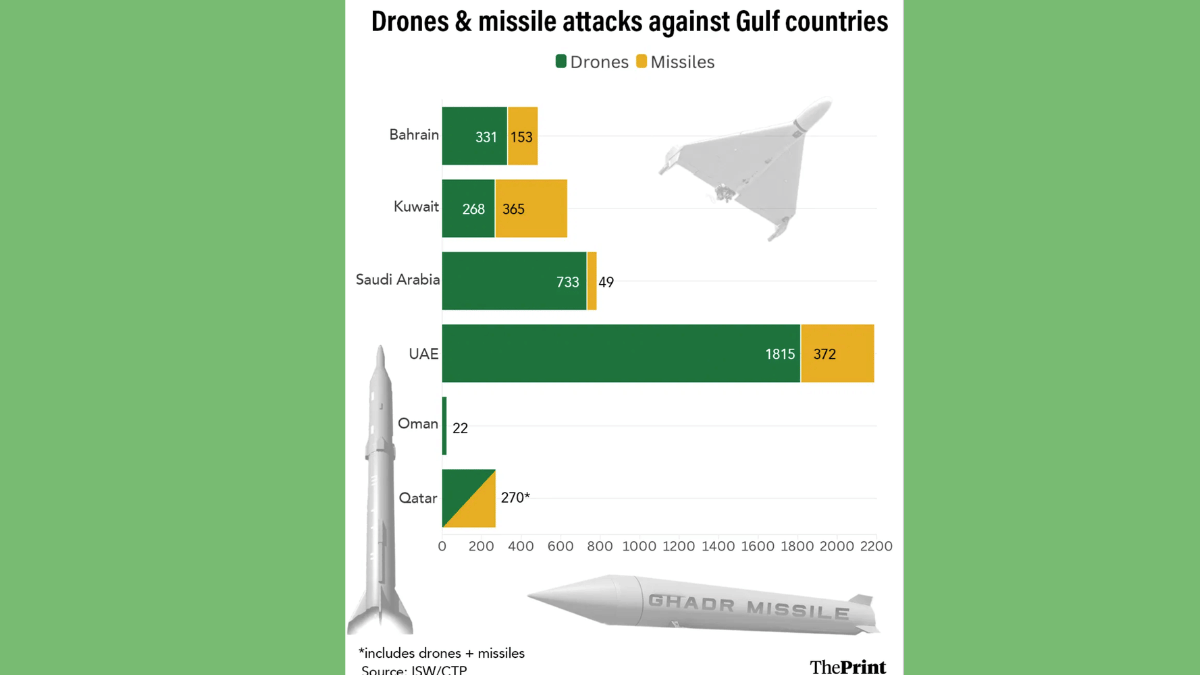
In addition to that, I will also share with you a data chart from the Institute for National Security Studies at Tel Aviv University that, everyday, updates the list of the projectiles fired at each country—UAS, ballistic and cruise missiles. All of these you can refer to. And because these keep changing day by day, you can then refer to these websites as we go ahead.
Now, a couple more things we must understand about the UAE. I see a lot of propaganda coming out particularly from the Iranian side, and some from the left support base of the Iranians or left anti-American, anti-Israeli support base of the Iranians saying, ‘What is the UAE?’ This is a country that was taken away from Saudi Arabia by the British and created as a separate nation. It has no business to be a separate nation. So, I will just tell you how the UAE came into being.
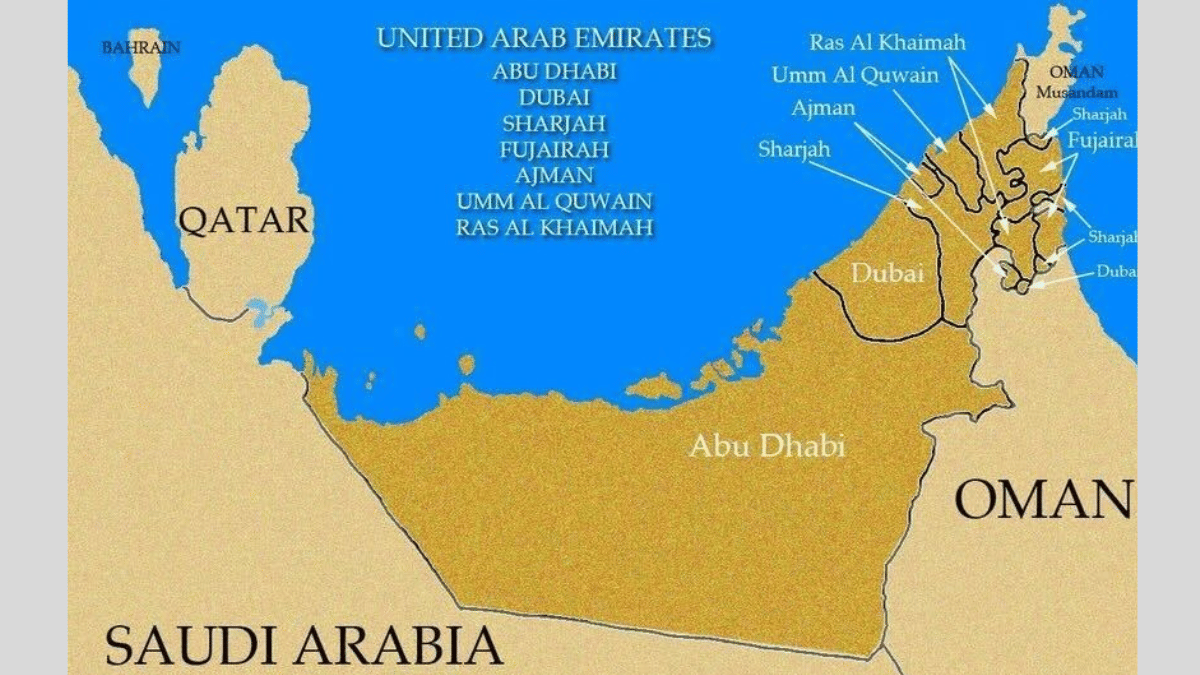
Between 1820 and 1971, these seven emirates were British protectorates. However, in the 19th century, there was a constant history not of warfare, but of piracy, because these were very underdeveloped seafaring tribes. If trade in the Indian Ocean today faces piracy, you can imagine what it was like in the 19th century, particularly in such narrow waterways. There was a lot of piracy.
In that situation, the British Royal Navy were going and taking action. They were trying to keep the peace and stability. In course of those decades, these seven emirates signed many agreements between themselves. These were called truce agreements—agreements not to attack commercial shipping. So, basically, a force for piracy and decided to bring order and maintain order in the Gulf, in the waterways.
Since these agreements were called truces or truce agreements, these were called a trucial state. This trucial state of seven emirates decided to become one in the arrangement that I told you. A constitutional monarchy where each one has its own powers but also has the equivalent of a central government. So, a bit of a federal system that happened in 1971.
In 1971, the UAE became a country. The British went away. They gave freedom to the UAE. Then, as usually happens in these situations, the neighbours say, ‘look, this is now changing. This will be a different country. What advantage can I take of it?’
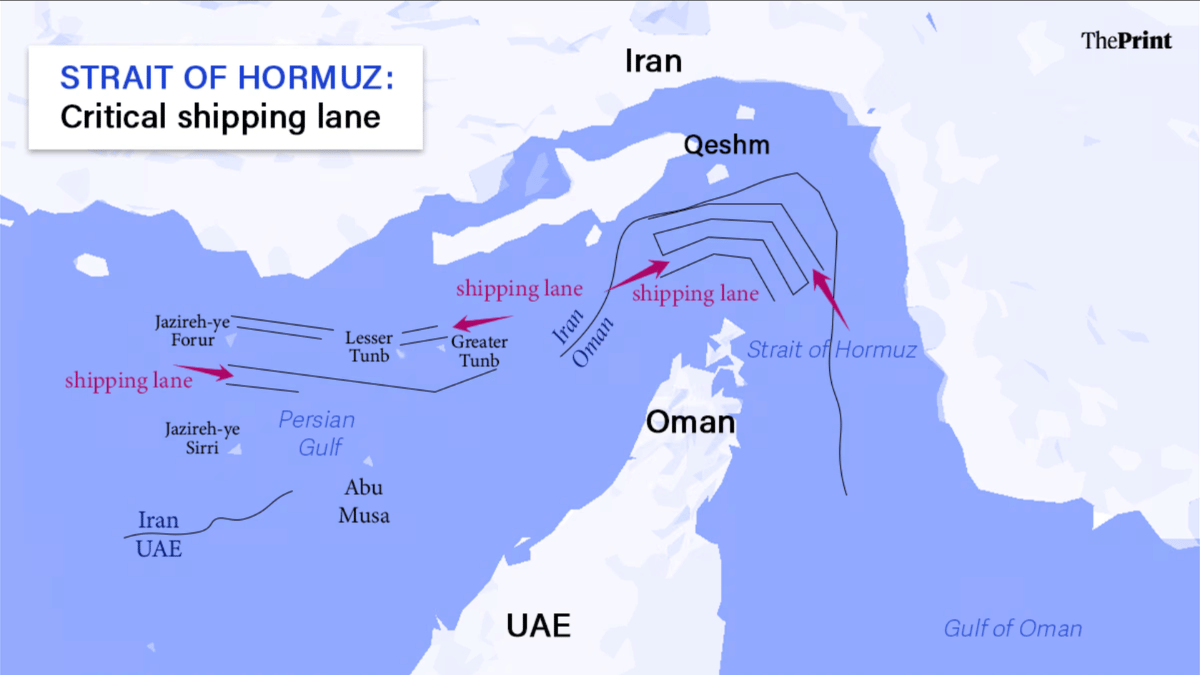
So the strongest neighbour then was none but Iran. Shah Reza Pahlavi’s Iran. That Shah was a western partner, a western ally. And yet he thought this an opportunity. ‘Let me grab what I can.’ So he grabbed three small islands—Abu Musa, Greater Tunb and Lesser Tunb— not far from the Strait. These are very, very tiny islands. Abu Musa is claimed by Sharjah, and the two Tunbs are claimed by Ras al Khaimah. That’s the reason I told you that I’m telling you these names of these emirates. This will become relevant as we go on.
Next to these, Iran has two islands. One is the Larak island. Larak is not that big but is much bigger than these UAE islands which Iran had grabbed in 1971 and which the UAE wants back. In fact, the UAE has been asking the Americans to recapture these and return them because they also think that these will help them protect the Strait of Hormuz.
But if you see where it’s located, that is where the key to the blocking, or to the defence, or unblocking of the Strait of Hormuz lies. That island is about 50-60 km, depending on the tide. It’s 11 km long, 6 km wide at its widest, has about 1,000 residents, but also has a very modern Iranian radar system. It has a naval base and missile bases.
And then, not far from that, is the Qeshm island. Qeshm island is Iran’s larger island. It’s bigger than Singapore. That’s twice as big as Bahrain that has nearly 1.4 lakh people. However, most of those people are Sunni Muslims who speak some dialect of Arabic called Bandari. Now, will the Americans go and try and occupy that island? That will be very big. I don’t know. That is 1,491 km. But they could definitely be looking at these three UAE islands and Larak. If they do that, then any force that is put together to protect shipping in the Strait of Hormuz will benefit.
What are the Emiratis now counting on? They are not going to fight Iran on their own. They are too small for that. They are waiting for a Bahranian resolution at the UN Security Council to come up later this week asking for a UN mandate to reopen the Strait of Hormuz. Now, there’s possibility that Russia, or maybe China, will veto it. It’s also reported that France is coming up with a different version of that resolution. We don’t know.
But even if the resolution fails, that will create justification for other forces to come together and force open the Strait of Hormuz. And if that happens, the UAE is saying that they will be willing to be a part of the fight, or the cleanup, or maybe even clearing the mines from that area.
(Edited by Tony Rai)