





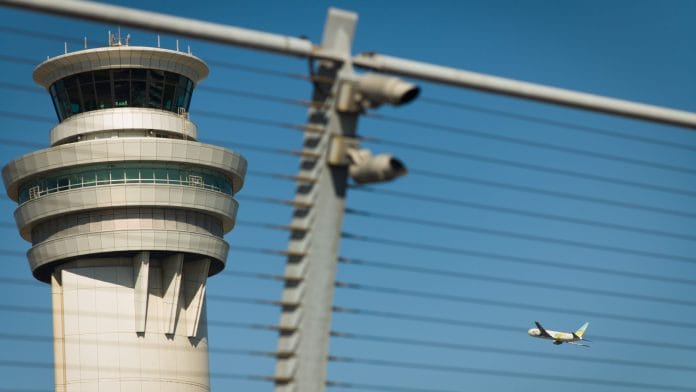



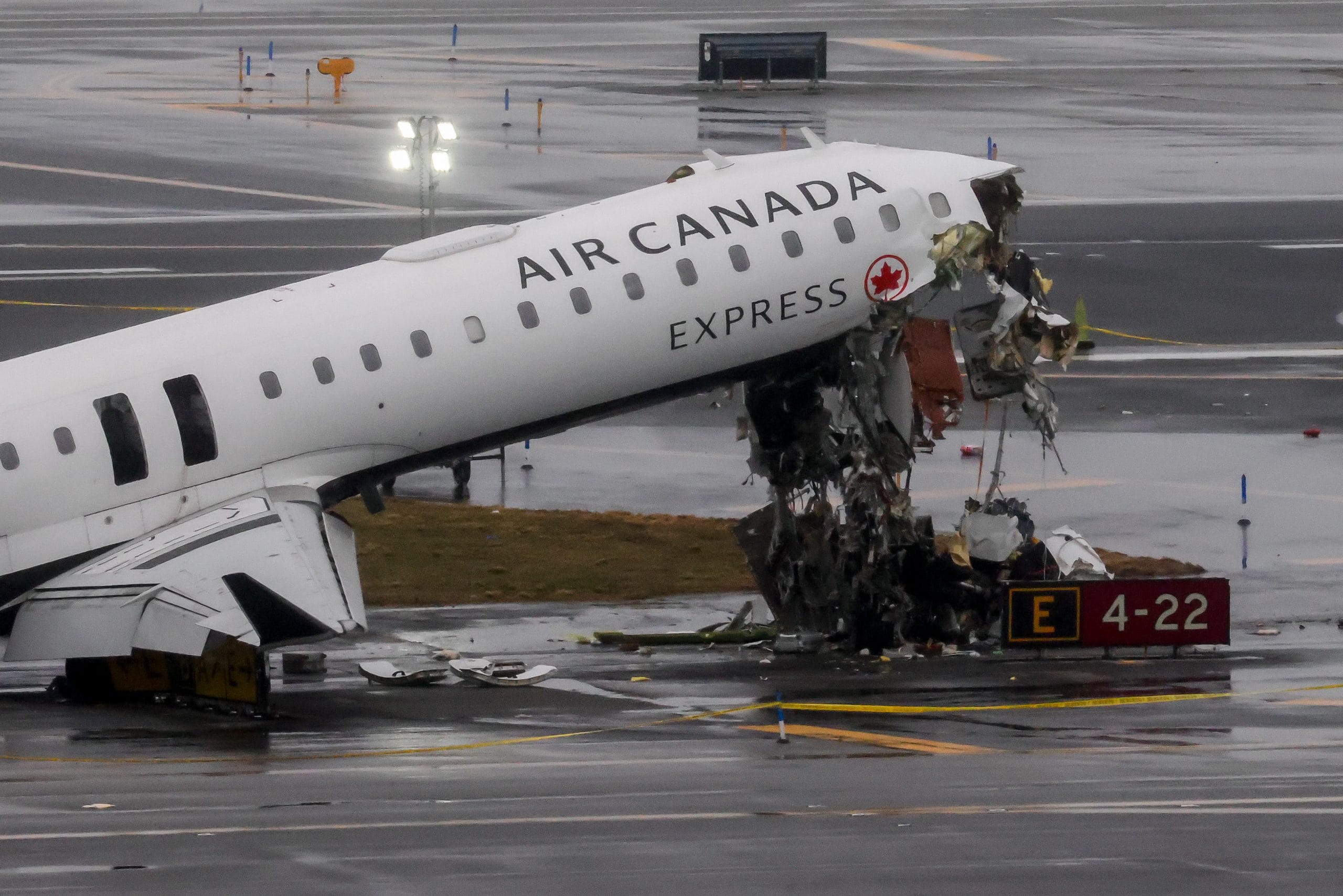
The deadly collision at New York’s LaGuardia Airport of an Air Canada Express plane and a fire truck on March 22 is raising fresh concerns about strains on the air traffic control system.
Investigators have only just begun examining the circumstances of the crash, and it is too soon to know what might have led to the runway collision that killed both of the plane’s pilots. But after a spate of accidents and near-misses, experts worry that a shortage of air traffic controllers is making flying more dangerous.
Why aren’t there enough air traffic controllers?
Air traffic controllers – whose job it is to coordinate the movements of hundreds of thousands of aircraft in the skies each day – have been in short supply for years. The problem was exacerbated by a large exodus of controllers when air travel collapsed during the Covid-19 pandemic. While demand for travel has rebounded, it’s proven difficult to re-staff airport control towers.
Global flight activity is well above levels recorded a decade ago, and demand for US and international travel is only expected to climb.
Relatively narrow age requirements have also made it difficult to replace retiring controllers. In the US, for example, those seeking a career in air traffic control must be under the age of 31 when applying and the mandatory retirement age is set at 56 to mitigate safety risks. Other jurisdictions have similar retirement rules for controller staff, for example before the age of 60 in the UK and Australia. In Europe, across the 42 countries that are members of European air traffic manager Eurocontrol, the retirement age among controllers ranges from 50 to 67.
Is it still safe to fly?
Flying still remains the safest mode of transportation, with far fewer fatalities per passenger mile than travel by car, ferry or even train.
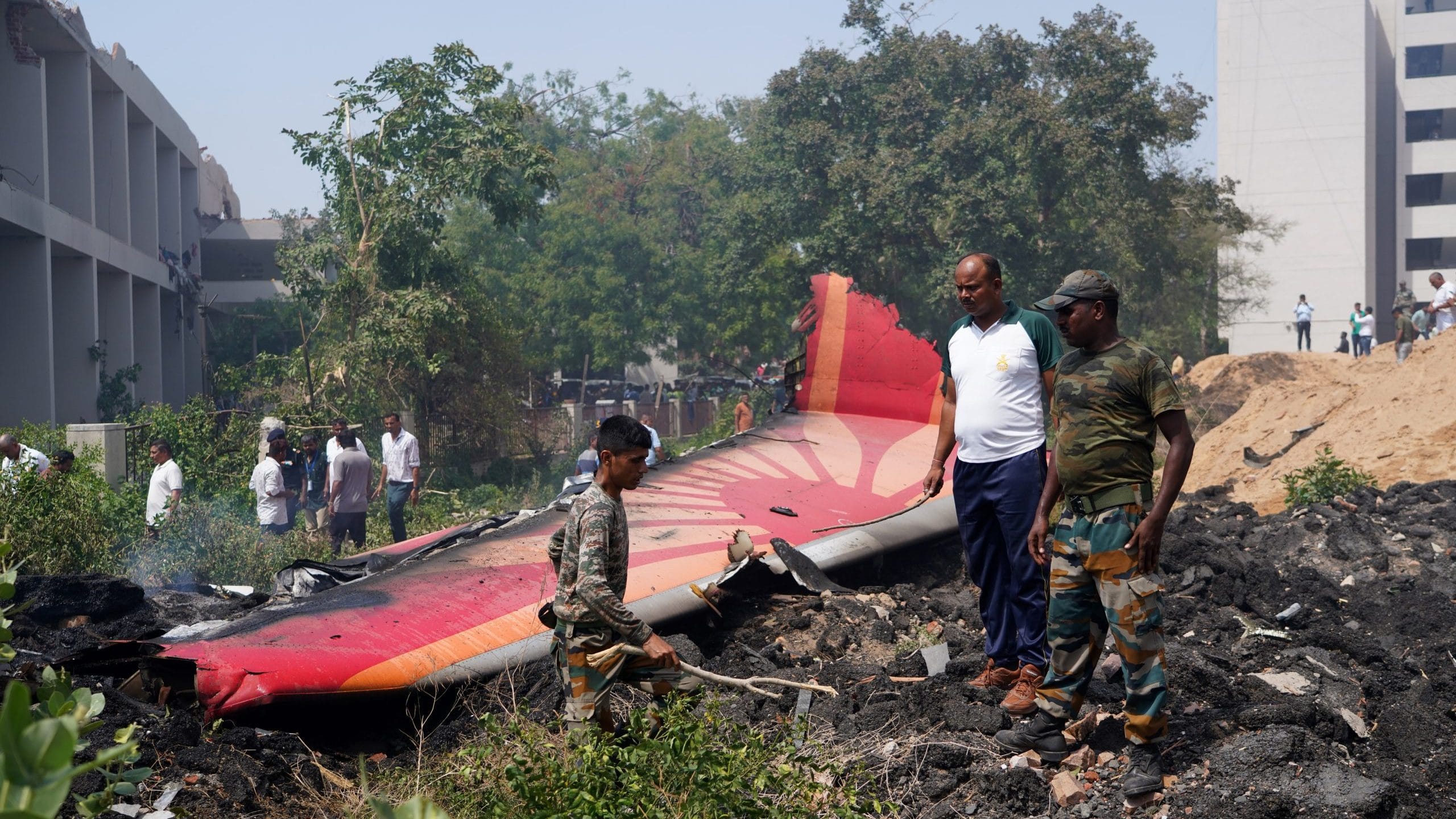
The all-accident rate in 2025 of 1.32 per million flights was an improvement over the previous year’s record, of 1.42 accidents per million flights, according to the International Air Transport Association. However, the rates for both of those years were higher than the average over the five years from 2021 to 2025 of 1.27 per million flights. What’s more, the IATA recorded 394 onboard fatalities in 2025 and 255 in 2024, compared with the five-year average of 198.
At the same time, air safety has improved significantly over the past decade.The five-year average for the years between 2011 and 2015 was 2.19 accidents per million flights.
How bad is the shortage of controllers in the US?
The US has had an air traffic controller shortage for decades – well before the Covid emergency. A 2023 report by the Federal Aviation Administration (FAA) determined that 77% of critical facilities – air traffic control towers that oversee the country’s busiest and most complex airspaces – were staffed below the agency’s 85% threshold deemed necessary for safe operations.
The FAA has tried to jumpstart hiring and training to replenish air traffic control staff lost over the pandemic, but positions haven’t been backfilled quickly enough. The US hired more than 1,800 controllers in 2024 and 2,026 in 2025. According to the US Government Accountability Office, the number of controllers employed by the FAA at the end of fiscal 2025 – 13,164 – was still 6% fewer than in 2015. Yet they’re responsible for covering 10% more flights.
What is the US doing to shore up air traffic control staffing?
In 2025, US Transportation Secretary Sean Duffy announced plans to “supercharge” the hiring of air traffic control workers by reducing the steps in the hiring process and boosting starting salaries by 30%.
Duffy said at the time that no air traffic controllers were let go during the Trump administration’s mass firings of civil servants. But the staff reductions hit the FAA, affecting hundreds of workers, including engineers, aircraft certification specialists, staff support specialists and aviation technical system specialists.
Why is it so hard to replace air traffic controllers?
It’s difficult to become an air traffic controller. In the US, fewer than 10% of applicants who meet a string of requirements are accepted into the FAA’s rigorous training program. Aside from physical and psychological testing, as well as security checks, new recruits are put through several months of initial instruction and a further two to three years of additional training — in classrooms and on the job — before being fully certified. The UK requires nine to 13 months of initial training and a further nine to 24 months for additional preparation.
Eligibility requirements such as citizenship can also whittle down prospective candidates. In the US, for example, to get a job with the FAA, an air traffic controller must have US citizenship.
Disclaimer: This report is auto generated from the Bloomberg news service. ThePrint holds no responsibility for its content.
Also read: Iran war pummels India’s already turbulent aviation sector. Your ticket fare will get hit next