








In Episode 1825 of Cut The Clutter, ThePrint Editor-in-Chief Shekhar Gupta explains why Pakistan, despite repeated periods of isolation and setbacks, continues to return to geopolitical relevance. Tracing a pattern from the Cold War alliances of SEATO and CENTO to the Soviet invasion of Afghanistan, the post-9/11 war on terror, and the recent churn in West Asia, he argues that Pakistan’s enduring strategic asset is its geography—whether as a gateway to Afghanistan earlier or now at the mouth of the Persian Gulf.
Here is the full transcript edited for clarity:
The talks are now taking place in Pakistan. I know that in some circles in India there is a lot of consternation. In some, there is cynicism and skepticism. Some say, quite rightly, that every time Pakistan gets center stage like this, it ultimately ends up paying for it, because they go for what is spectacular, but the substance—their country’s strength and comprehensive national power—is not there. They are not able to get long-term benefit from it.
However, they keep coming back into center stage. How does that happen? How has it progressed from year to year, from decade to decade? And why does Pakistan remain, despite so many setbacks?
The last 10 years were Pakistan’s period of setback—in fact, the last 15 years since 2011, when Osama bin Laden, on 2nd May 2011, was found in Abbottabad and killed there by the Americans. Since then, for almost 15 years, there has been a freeze in Pakistan’s relationship with America and, by implication, also with the West. But now they are back.
In fact, in 2018, US President Donald Trump had put out a tweet saying, “What has Pakistan given us but deceit and lies?” He said that we’ve given Pakistan $33 billion in aid and it has all gone to waste—“no more,” he said. And now he’s there calling Pakistan’s field marshal, his favourite field marshal (read, Asim Munir).
A few facts that I’m going to share with you are basically to underline the fact that Pakistan—I know that India also, at various points of time, has said that we will isolate Pakistan or we will make Pakistan irrelevant—Pakistan goes into phases of irrelevance and isolation, as it did, between 1972 and 1979. But two things happen.
One, other developments take place in the region that bring Pakistan back to relevance. And second, Pakistan never stops working at it.
Just to give you a small example: in 1971, Pakistan lost the war. More than half its country was gone by way of population. It was not liked by anybody in the world at that point, except maybe the Chinese and the Americans. Who cared for a loser? And America itself went through some instability with the last Nixon years, Watergate, and then the arrival of Jimmy Carter, who was a pacifist and did not want Pakistan to move towards nuclear weapons.
What did the Pakistanis do? Now it’s very easy to say that in 1979, the Soviets invaded Afghanistan. The Americans wanted help to set up a coalition of the mujahideen against the Soviets, and so Pakistan came in handy. It did not happen just like that. That opportunity did not fall into Pakistan’s lap.
I will share with you an article written by American strategic scholars Christine Fair and Sumit Ganguly, which reminds you of something that we should always keep in mind—and somehow in our debate it is always forgotten—that the 1979 invasion of Afghanistan did not drop from the heavens as a gift for Pakistan.
Pakistanis worked at it. They began working on the Afghan mujahideen from 1974. People who later became mujahideen leaders were given refuge from 1974 onwards. The ISI (Inter-Services Intelligence) began running operations against governments installed in Kabul. These were Soviet-friendly governments.
There were insurgencies going on against each of these governments, and these governments were very unstable. One after the other, they kept getting toppled. In some cases, leaders were also assassinated. All of that operation was being masterminded by the ISI and the Pakistanis.
All of this finally led to the Soviet invasion, because the Soviets thought that their so-called friends—or proxies—were threatened and would fall, and that the mujahideen, supported by the Pakistanis, would take over. That’s when the Soviets invaded in 1979. That was their biggest strategic error, which led to the end of the Soviet Union—and that brought the Americans in.
I’m telling you this story so we understand that Pakistan works at it.
So, two things. One: geography. What is Pakistan’s biggest strategic capital? Its biggest strategic capital is geography.
Now, if you really look up what I’ve written, you might even find that I once wrote that Pakistan had lost its biggest strategic capital—its geography. That was after the end of terrorism coming out of Afghanistan, once the Taliban took over. Former US President Joe Biden washed his hands off it, and I said Pakistan had lost its strategic leverage.
That leverage had come for decades because of what was happening in Afghanistan—first because of the presence of the Soviets there, and then because of terrorist organisations that were harboured there. That was the peak of the Af-Pak era.
The Americans knew that Pakistanis were supporting many of these groups, including the Taliban, and yet there was no way they could have fought al-Qaeda without Pakistan’s help. In 2020, once Biden withdrew, it looked like Pakistan had lost that leverage.
That leverage has not come back—but what they lost in Afghanistan has now come back because of West Asia. Pakistan is also a state next to West Asia. It is the last non-Arab or Persian country before the Persian Gulf begins. To that extent, Pakistan sits at the mouth of the Persian Gulf.
Pakistan’s strategic capital, number one, is its geography—which it has rediscovered now.
Afghanistan had been Pakistan’s strategic capital even before the Soviets invaded it. It was valuable because the Americans were interested in it. The Soviets treated Afghanistan as their buffer state and also as a potential route of expansion into Asia.
The British had developed Afghanistan as their buffer state. After they left, the Soviets tried to take control of it. That’s why the Americans thought they needed a base next to Afghanistan—starting with Peshawar—to keep an eye on the Soviets.
That’s how Pakistan’s first security alliance with the Americans came in 1954, with the Mutual Defense Assistance Agreement. Pakistan later became a member of Southeast Asia Treaty Organisation, and then Central Treaty Organisation (earlier the Baghdad Pact), alongside countries like Iran, Iraq, Turkey, and the US and the UK.
These organisations continued into the 1970s. SEATO began to weaken and effectively died in 1973, while CENTO collapsed later in the decade, around 1977–79.
The reasons were linked to broader geopolitical shifts. Differences emerged over the Vietnam War, and Pakistan became disillusioned with the US, believing that the Americans had not supported it adequately during the 1965 war with India, and again in 1971, when despite strong rhetoric, the US did not materially assist Pakistan.
To understand how these alliances evolved: the Baghdad Pact was later renamed CENTO after Iraq withdrew and moved closer to the Soviet Union. The Cold War was at its peak at the time. CENTO was eventually dissolved in 1979 after Iran pulled out following its revolution, whose slogan famously included “death to America, death to Israel.”
SEATO, on the other hand, began to disintegrate after the Vietnam War. Pakistan withdrew in 1973, France had already pulled out in 1975, and over time, the organisation lost all relevance.
Now, that earlier geographical advantage linked to Afghanistan, as I said, had effectively disappeared by 2020 and remains largely gone. In fact, Pakistan’s Afghanistan connection has, to an extent, become a liability.
However, Pakistan is also a neighbour of Iran, sharing a roughly 900-kilometre border. It sits at the mouth of the Persian Gulf. It also has a very large Muslim population—the second largest in the world, estimated at around 250 million—and the largest army in the Muslim world: a large, modern force capable of absorbing advanced technology and following its officers’ orders.
All these factors together give Pakistan unique strengths.
Anytime Pakistan feels isolated, either it does something—or something happens geopolitically—that brings it back into center stage.
This has happened again.
In 1954, Pakistan was still not under military rule. That is when the two sides, the Americans and the Pakistanis, signed the Mutual Defense Assistance Agreement. Why did that happen? That happened because the Americans wanted a base in Peshawar. From that base, they wanted to launch their spy planes over the Soviet Union to keep an eye on what was going on there.
This request was made by President Harry Truman to Liaquat Ali Khan, who was the first Pakistani leader—Prime Minister then—to visit America in 1950. That was denied by Pakistan. But in 1954, this was accepted.
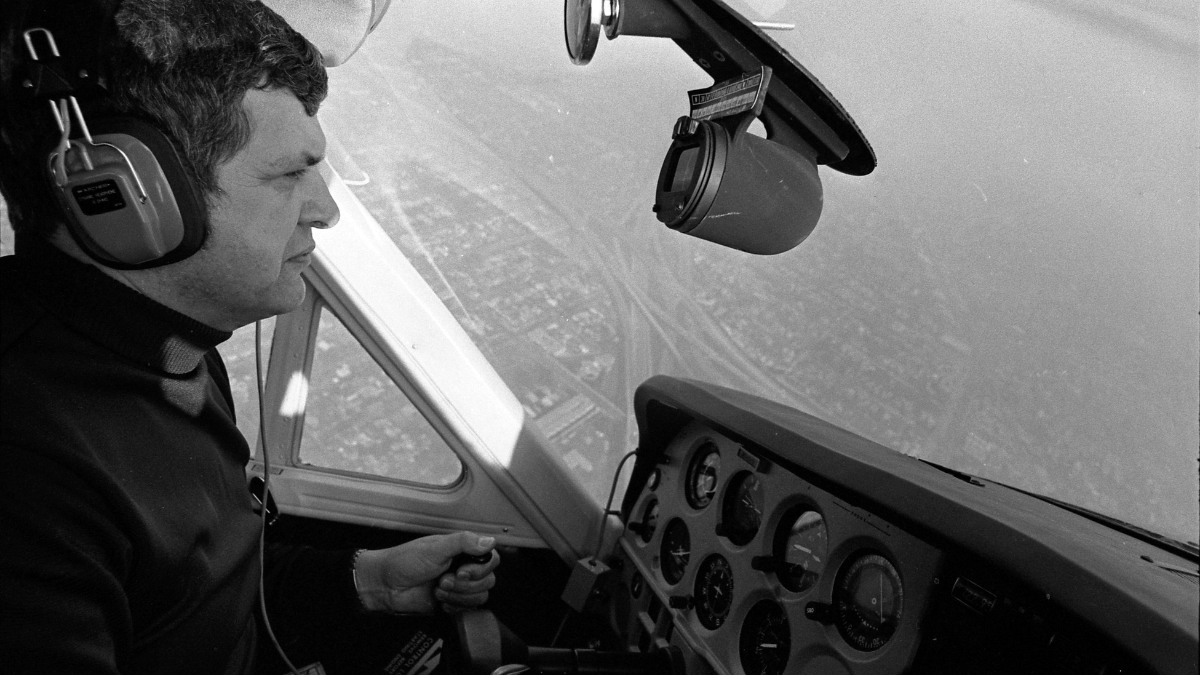
The Americans then started carrying out spy plane operations from the Peshawar air base, and it is from there that, on May 1, Francis Gary Powers took off in a U-2 spy plane and was shot down over the Soviet Union. He was taken prisoner and later, the following year—or a couple of years later, I think in 1962—he was exchanged with America in a mutual spy swap.
That was the time when the Soviets were getting really angry with the Pakistanis. It was also the time when the Pakistanis were warming up to China. It was also the period when tensions had begun rising between China and the Soviet Union. It was also the period—no coincidence—that the relationship was warming up between India and the Soviet Union.
1963 is when India signed up to buy the first MiG-21s, and that started a long period of military and strategic cooperation which continues till today.
The essential difference, however, was that in all the good phases, Pakistan was the recipient of very high amounts of American aid. When they first signed their Mutual Defense Assistance Agreement in 1954, they were allocated military assistance of $452 million.
If you just did a calculation—what was $452 million in the 1950s? Don’t put a date, don’t say 1954—let it average out, give everybody the benefit of doubt, and ask what is the value today. The value of $452 million in the 1950s today would be about $5.26 billion. It would be very serious money for defense spending today.
That is the money that the Pakistanis got, and India then had to deal with that challenge as it was rising. The pretense was that all of this was given to build a bulwark against the spread of Communism. But everybody knew where Pakistan was going to use these weapon systems.
Immediately after the first defense agreement between Pakistan and the US, training came in, because the US brought in its officers and armed forces to set up the Military Assistance Advisory Group (MAAG) in Rawalpindi. So this is a relationship that goes very far back.
However, it goes up and down, because the Americans are also cynical. They see utility in Pakistan when they need it. For example, they were not giving Pakistan any aid—Jimmy Carter had cut off everything except some humanitarian aid and continuing PL-480 food aid.
But in 1979, as the Soviets came into Afghanistan, the aid tap reopened. In fact, initially Jimmy Carter offered Pakistan $325 million by way of aid, which Zia very cheekily—contemptuously, you can say—dismissed as “peanuts.” The pun was not lost on anybody, because Jimmy Carter himself was a peanut farmer from Georgia.
This phase lasted till 1988. By 1988, the Soviets withdrew, and by 1989, it became evident that the mujahideen would take over. By 1990, the mujahideen had taken over. That’s when the Americans turned again, and suddenly remembered that Pakistan was developing a nuclear weapon.
A report came up that Pakistan was a “screwdriver turn away” from making a nuclear weapon. That is when the Americans passed what is called the Pressler Amendment. The Pressler Amendment said that the US administration has to certify every year that Pakistan had not built, or was not building, a nuclear bomb before the next installment of aid was sent out.
By 1990, that certification had stopped being given, and that is when, once again, the Pakistanis became the bad guys—also because they were no longer needed in Afghanistan.
So geography, which was Pakistan’s capital, had now ceased to be so. This carried on for a long time. In 1999, over Kargil, for example, the entire Western world—particularly the US—sided with India.
Bill Clinton then came on a visit to India. Because the Pakistanis wanted him to visit them, he went there but only stopped at the airport, gave a broadcast address without doing any public events or meeting anybody publicly, and left from the airport. He wagged his finger and said the map of the subcontinent can no longer be redrawn in blood. That effectively sanctified the Line of Control.
That was a bad era for the Pakistanis. Then things turned dramatically again with 9/11. When 9/11 happened, initially the Pakistanis tried to say the usual—that there are root causes behind such events.
Then the US Deputy Secretary of State Richard Armitage threatened to bomb Pakistan “to the Stone Age”—a familiar American phrase used earlier in Vietnam, and later by Trump in reference to Iran. Pervez Musharraf himself cited this while justifying joining the US war on terror.
Within a week of 9/11, Pakistan had become a stalwart ally of the Americans once again—thanks to geography.
So what shows this dramatic shift?
On 1 October 2001, a major bombing took place at the Jammu and Kashmir Assembly in Srinagar. A car laden with explosives was driven into the assembly building, killing 38 people. This was a Jaish-e-Mohammed operation, and later it emerged that this was a kind of rehearsal—a dry run—for the Parliament attack that took place about two months later.
What happened when this attack took place? India protested. But the Americans needed Pakistan at that point.
So what did Colin Powell, then US Secretary of State, say? How did he describe this bombing? He said there had been an attack on a “government of India facility” in Jammu and Kashmir. That is how far the Americans had tilted towards Pakistan because of their own needs.
Then the Parliament attack took place, and India began mobilising forces on the border under Operation Parakram. The Americans panicked that if India started a war, it would pull Pakistani forces away from the Afghan front—which they did not want.
So leaders like Tony Blair and others began shuttle diplomacy, moving between India and Pakistan to prevent a war, because they were more invested in the war they were fighting in Afghanistan, where Pakistan was a partner.
By 2011, with the killing of Osama bin Laden and the Americans in reasonable control of Afghanistan, they believed they no longer needed Pakistan. Once again, Pakistan was isolated and abandoned.
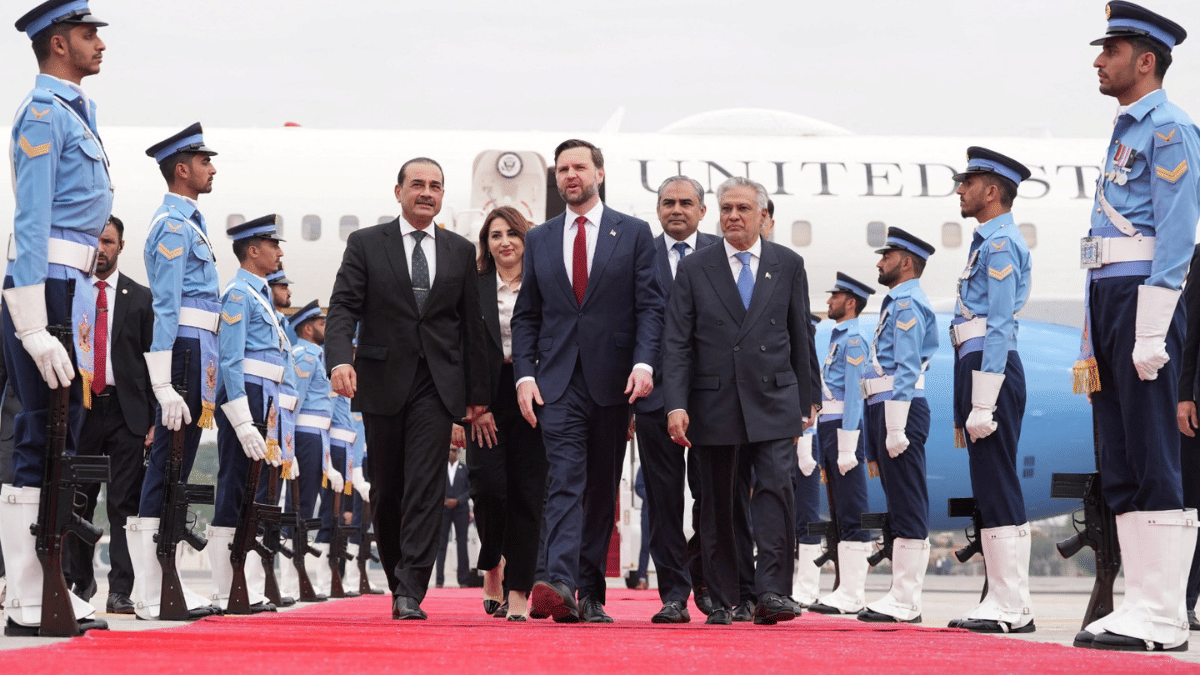
Now, the crisis in the Middle East has brought Pakistan back again. Pakistan’s geographical advantage has now gone beyond Afghanistan.
All such phases in Pakistan’s history have brought excitement and also a lot of money. But that money has mostly disappeared. It has not done much good to Pakistan’s economy, society, or national strength.
What will happen this time? I don’t know. Nobody knows. It will depend entirely on how Pakistan uses this advantage.
If they use it again to rebuild their military to prepare for another confrontation with India, that will result in yet another setback—because Pakistan is in a very fragile state right now, economically and in terms of internal cohesion.
On the other hand, if they become sensible and think that they have an opportunity—this is redemption—and use it to rebuild their nation, then they can do something with it. But for that, they will have to give up the notion of being in a permanent war with India, or the idea that one day they will fight a decisive war against India and win it.
If they can get rid of that notion, then this new phase can be of benefit to them. Otherwise, it may end up like all the others in the past.
(Edited by Tony Rai)