







By Dan Peleschuk
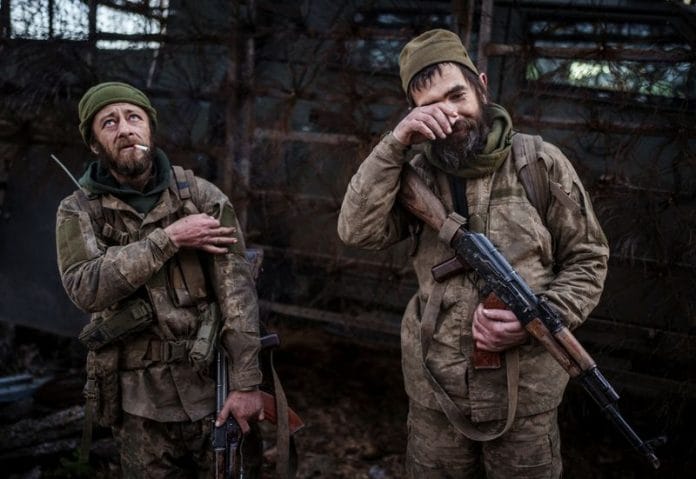
KYIV, April 30 (Reuters) – Ukraine’s top general ordered on Thursday a mandatory two-month time limit for front-line troops serving in forward positions, a week after photos of emaciated soldiers on combat duty sparked a nationwide outcry.
Oleksandr Syrskyi’s decree aims to address a key challenge for Kyiv’s outmanned military in the fifth year of the war with Russia, and comes amid frequent and often harrowing reports of Ukrainian soldiers serving for months at a time under fire.
In a statement, Syrskyi said the dominance of drones along the sprawling, 1,200-km (745-mile) front line has complicated battlefield logistics and “significantly transformed” the concept of combat operations.
“Commanders must ensure that conditions are in place for service personnel to remain at their posts for up to two months, followed by a mandatory rotation, which must take place within one month,” he said.
“Timely rotation is not only a matter of organizing service, but a matter of preserving the lives of our soldiers and the stability of defence.”
HUNGRY TROOPS STUCK IN FORWARD POSITIONS
Syrskyi’s order comes after relatives of troops from the 14th Separate Mechanized Brigade posted images of emaciated loved ones, alleging they had been left on the line for months without a steady supply of food or water.
In some cases, the troops had resorted to drinking rain water, they said.
Ukraine’s General Staff said last Friday it had fired the brigade and corps commanders over the case.
In his statement, Syrskyi said his decree included mandatory medical evaluations and the timely provision of food and ammunition for front-line troops.
The testimony from the 14th Brigade is the latest in a string of reports detailing months-long deployments of Ukrainian troops to forward positions.
A so-called “kill zone” spanning dozens of kilometers on both sides of the front has made troop rotations, resupply and evacuations exceedingly dangerous.
Speaking to Ukrainian media this week, military ombudsman Olha Reshetylova said severe logistical failures like that faced by the 14th Brigade were rare, but that long-term deployments to forward positions remain “a big problem”.
‘CHAOTIC AND ILL-CONSIDERED’ MANAGEMENT
Prominent volunteer and military activist Maria Berlinska praised Syrskyi’s order.
“This is a very good decision,” she wrote on the Telegram messaging app. “Reasonable and humane. I fully support it.”
However, it remains unclear how prepared Ukraine’s stretched forces are to implement the decree.
Ukraine’s military has suffered from a manpower shortage for most of the war, as enthusiasm for service has dwindled amid reports of poor training and support as well as heavy-handed draft officers.
Meanwhile, its forces are struggling to stop grinding battlefield advances by Russia, which is lurching forward with an offensive campaign to capture the rest of Ukraine’s eastern Donetsk region.
Taras Chmut, head of leading Ukrainian charity Come Back Alive, said the personnel shortage was largely a result of the “chaotic and ill-considered” management of the vast array of units in Ukraine’s military.
“The number of people in the army is relatively constant,” said Chmut in written comments, adding that similar decrees had been issued in the past. “The question is the effectiveness of using these people.”
He also said drones should minimise the role of the infantry and that senior commanders should not be afraid to order troops back when there is a risk of being surrounded.
(Additional reporting by Anna PruchnickaEditing by Daniel Flynn and Gareth Jones)
Disclaimer: This report is auto generated from the Reuters news service. ThePrint holds no responsibility for its content.