





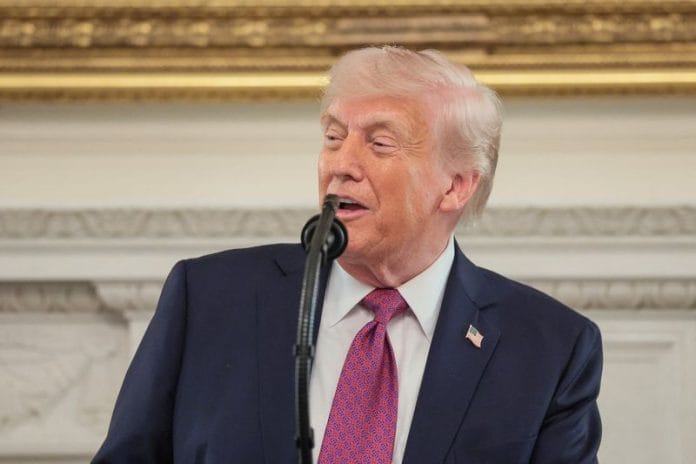


Washington: US President Donald Trump convened his national security team to discuss Iran’s proposal to end a war now in its third month and which has left thousands dead across the Middle East, as well as disrupted energy supplies.
Trump will address the matter “very soon,” White House Press Secretary Karoline Leavitt told reporters on Monday. “His red lines with respect to Iran have been made very, very clear,” she said, adding they included preventing Tehran building a nuclear weapon — something the country has long-denied wanting to do.
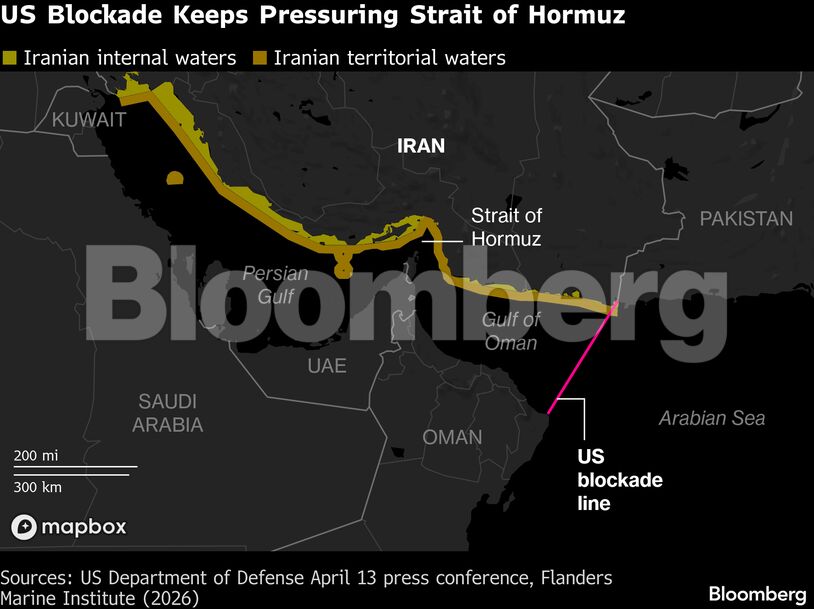
Iran has signaled it may be willing to accept an interim deal to reopen the Strait of Hormuz in exchange for Washington ending its blockade of Iranian ports, while postponing more complex negotiations over the country’s nuclear program. It is insisting on keeping some control over shipping through the strait, which Washington is unlikely to accept.
Read More: Iranian Oil Tankers Are Clustering Just Shy of US Blockade Line
The president has told his advisers he’s not satisfied with Iran’s latest suggestions, the New York Times reported, citing multiple unnamed people briefed on the discussions. While it’s unclear why, his administration has previously said any deal must include agreements to curb Iran’s nuclear activities.
The warring sides started a ceasefire around April 7 and hostilities may resume if they fail to agree to fresh talks, following a first round in Pakistan in mid-April that made little progress on a peace deal.
Iran’s offer to end the war is “better than what we thought they were going to submit,” Secretary of State Marco Rubio said to Fox News. Yet the White House has “questions about whether the person submitting it had the authority to submit,” he said, echoing previous US claims that Iran’s leaders are divided over their negotiating strategy.
The strategic Strait of Hormuz, through which a fifth of the world’s oil and liquefied natural gas flowed before the conflict began in late February, remains at a virtual standstill. Brent crude extended its advance on Tuesday, trading 3% higher to over $111 a barrel, a one-month high on a closing basis.
Foreign leaders are increasingly frustrated with the diplomatic impasse and the continued closure of the waterway, which has led to fuel rationing across much of Asia and Africa and fears of a global economic slowdown. German Chancellor Friedrich Merz said the US was being “humiliated” by Iranian leaders and he didn’t see “what strategic exit the Americans are now choosing.”
The first LNG shipment since the war began appears to have traversed the waterway to exit the Persian Gulf. The Mubaraz, which loaded a cargo from the United Arab Emirates around early March, is now passing the southern tip of India, according to ship-tracking data. It’s unclear what led to the vessel opting to make the journey.
Here’s more on the US-Iran talks and Lebanon:
- US Senator Lindsey Graham, a Trump ally, said on X he was skeptical of Iran’s proposal: “Clearly, if this offer is accurate, Iran is playing games. Mr. President, stick to your guns for the good of the nation and the world.”
- Iran’s Foreign Minister Abbas Araghchi, on a visit to Russia on Monday, told President Vladimir Putin that Tehran was committed to strengthening the partnership between their nations. Moscow is one of Tehran’s closest partners.
- The ceasefire between Israel and Hezbollah in Lebanon remains shaky, with each side accusing the other of attacks that breach the terms of the agreement. The Israeli military, on Monday afternoon, said it was striking Hezbollah infrastructure sites in the Bekaa valley and across southern Lebanon.