





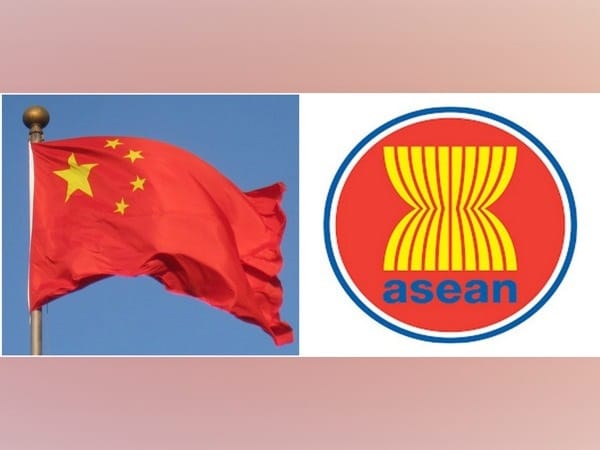



Jakarta [Indonesia], September 21 (ANI): China has not been able to strike strategic takeovers with South-East Asian nations as the countries have complimented their own development with China’s economic growth and have been able to dodge the communist nations’ debt-trap diplomacy.
Unlike Malaysia, Vietnam, Indonesia, Brunei and the Philippines, the ASEAN countries did not fall prey to Chinese loans and extended their exclusive economic zones beyond their shores, James Crickton wrote in a statement for Policy Research Group (POREG).
In short, the South-East Asian nations have shown a red card to China and its debt-trap tactics with full might.
Moreover, ASEAN has become its biggest trading block today indicating the importance of the region in geopolitical calculations.
However, in South Asia and Africa, China is a source of developmental aid and financial assistance to poor ASEAN countries.
For instance, Laos and Cambodia joined the Belt and Road Initiative and Cambodia received a little over $860 million as FDI’s from China (until 2020), POREG reported adding that unlike in South Asia and Africa, here in Southeast Asia, China has not been able to strike strategic takeovers.
Despite its enormous contribution to the regional economy, China was found to be the least trusted country in the area in a recent study of Southeast Asian elites conducted by Singapore’s ISEAS-Yusof Ishak Institute. According to the same study, the US is the second-most trusted partner, after only Japan, reported The Singapore Post.
China’s economic influence surpasses its regard for the sovereignty of Southeast Asian countries, and the boom in Chinese economic participation has coincided with expansionism, POREG reported.
Southeast Asian nations want an open and inclusive regional system that allows them to maximise their national freedoms, while China’s policy runs counter to this purpose.
This includes China’s insistence on limiting foreign (i.e. Western) military presence in the South China Sea through the negotiation of a Code of Conduct, as well as other efforts to limit one’s influence in the region.
It is difficult to woo Southeast Asian countries while endangering the ideals that support their favoured type of democracy. (ANI)
This report is auto-generated from ANI news service. ThePrint holds no responsibility for its content.