





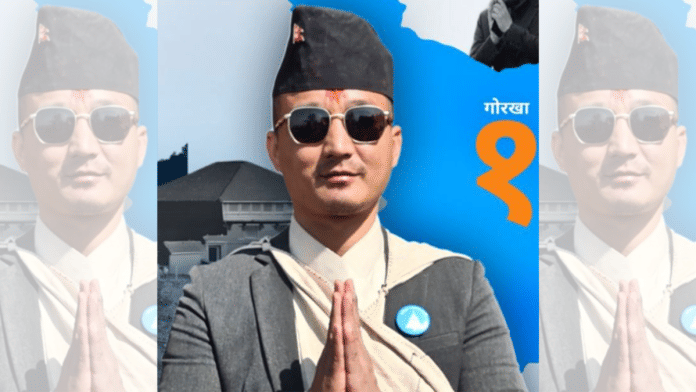

New Delhi: Nepal’s Home Minister, Sudan Gurung resigned Wednesday, citing “moral responsibility” after questions arose over his financial interests and alleged connections to a businessman under investigation for money laundering. The resignation comes less than a month after the face of Nepal’s GenZ protests was sworn in.
Prime Minister Balen Shah will take over the home ministry for now.
The former home minister announced his decision in a statement on Facebook, saying he was stepping down immediately to allow a fair and impartial inquiry.
“I have taken seriously the questions, comments and interests that have been raised from the citizen level in recent days including my share (in an insurance company),” Gurung said in a statement written in Nepali. “To me, morality is greater than position, and no power greater than public belief.”
He added that his decision intended to prevent any conflict of interest during the investigation.
“So, I have resigned from the Home Minister’s post which will be implemented from today for the purpose of having a fair investigation on the subjects related to me, and to ensure a conflict of interest is not visible while in the post and that will not affect it,” he said.
The controversy centres on Gurung’s shareholding in Star Micro Insurance Company Ltd., where he is listed as a stakeholder alongside Nepali businessman Deepak Bhatta, who is under investigation for money laundering. Gurung’s name appears at number 49 in the company’s preliminary share register, with an investment of Nepalese Rs 2.5 million. The insurer, licenced in 2022, has yet to launch an initial public offering and includes firms associated with Bhatta among its investors.
Bhatta was arrested in Kathmandu on 2 April on money laundering charges after facing scrutiny for allegedly “leveraging political and bureaucratic connections to secure lucrative government contracts, operating with perceived impunity under multiple administrations”, according to the Organised Crime and Corruption Reporting Project.
Questions were also raised about whether Gurung had mentioned these holdings in his official asset declaration. He denied any omission, stating that all his stock market investments, worth more than Nepalese Rs 20 million, are fully listed on the Council of Ministers’ website.
He said his stakes in Star Micro Insurance and Liberty Micro Life were included under the same declared category as his other shareholdings. “Someone who intends to hide assets does not openly declare over Nepalese Rs 20 million in investments,” he wrote in an earlier Facebook post.
Despite his statement, political pressure intensified. Major opposition parties, including the Nepali Congress, CPN-UML and the Shram Sanskriti Party, formally called for his resignation and demanded an independent investigation. Gurung also met Rabi Lamichhane, head of the Rastriya Swatantra Party, to address concerns within his own party.
Gurung, who had led the home ministry since March, framed his resignation as part of a broader response to growing public demands for accountability, particularly from GenZ.
“The Gen Z movement demanding good governance, transparency and accountability in the country has also given the same message. Public lives should be clean, leadership should be responsible,” he said.
He also invoked the political legacy of the current administration, led by Prime Minister Balen Shah, noting that “if anyone questions the government built with the blood and sacrifice of my 46 brothers and sisters, the answer is morality”.
Gurung’s departure marks the second ministerial exit under Shah’s government in less than a month since a new cabinet was formed. On 9 April, Shah sacked then minister for Labour, Employment and Social Security, Deepak Kumar Sah after his party, the Rastriya Swatantra Party, accused him of violating its code of conduct.
The party’s disciplinary panel found that Sah had misused his office to appoint his wife, Junu Shrestha, to a position on the Health Insurance Board, prompting his removal following a formal recommendation by party chairman Rabi Lamichhane, The Kathmandu Post reported.
Health minister Nisha Mehta has also received a formal warning by the prime minister for not fulfilling her ministerial duties.
(Edited by Viny Mishra)