





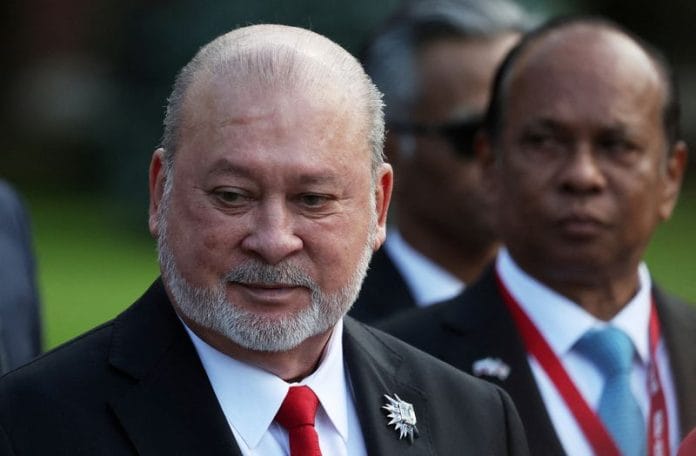


KUALA LUMPUR, April 23 (Reuters) – Malaysia’s King Sultan Ibrahim said on Thursday that he will select the next head of the country’s anti-graft body, with the agency’s current chief under growing pressure to resign over misconduct allegations.
Azam Baki, chief commissioner of the Malaysian Anti-Corruption Commission (MACC), has faced sustained calls to step down following media reports in February accusing him and other senior officials at the agency of misconduct and breaches of public service rules. Azam and the MACC have described the allegations as “baseless”.
The scandal has deepened rifts within Prime Minister Anwar Ibrahim’s administration, with some key allies questioning the premier’s commitment to tackling graft.
The government has investigated some of the allegations against Azam but has so far declined to make the findings public, pending related probes by police and other authorities. Azam’s contract with the MACC is due to end in May, according to media reports.
Sultan Ibrahim said there was no need for the appointment to be politicised, adding that the chief’s role was important to ensure the agency’s effectiveness in combating corruption, misappropriations and abuse of power, according to a statement from the royal press office.
“I will determine who will be the best candidate to lead the MACC from now on,” he said.
Anwar’s office and the MACC did not immediately respond to requests for comment on the king’s decree. According to the constitution, the king can appoint heads of key government agencies on the advice of the prime minister.
Malaysia practices a unique rotational form of monarchy, in which the heads of the country’s nine royal families take turns to be king for a five-year reign.
The monarchy plays a largely ceremonial role and is traditionally seen as above politics. But it has become more influential in recent years due to prolonged political instability during which the king has wielded rarely used discretionary powers.
(Reporting by Ashley Tang and Rozanna Latiff; Editing by David Stanway)
Disclaimer: This report is auto generated from the Reuters news service. ThePrint holds no responsibility for its content.