





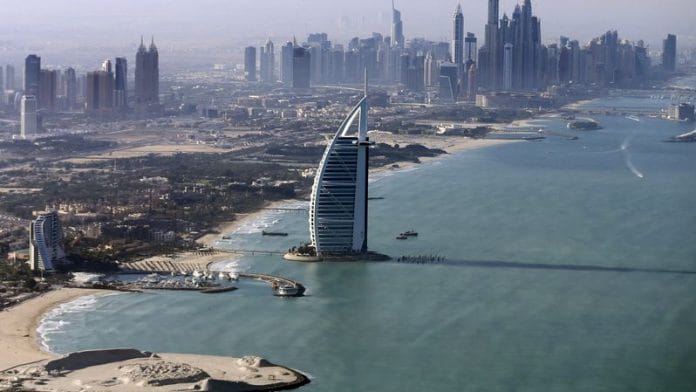



On a trip to Dubai two years ago to review luxury hotels, I found myself at a beach-club brunch surrounded by people with British accents. Groups were debating the merits of different corners of the Clapham neighborhood. If not for the sunshine and the skyline, I could have been home in London.
That’s by design. For more than two decades, Dubai has sold itself to Brits as a shinier alternative to Spain: winter sun without the drizzle — and without income tax. From the 1999 debut of the iconic sail-shaped Burj Al Arab hotel to the world’s largest man-made island, the Palm Jumeirah, the emirate carefully engineered an image of glamour, safety and ease.
That image is now being tested by the conflict in the Middle East, as war between Iran and the US and Israel has disrupted travel, tourism and global trade across the Persian Gulf. But until recently, the strategy had worked very well.
Listen to the Here’s Why podcast on , or .
Brits now represent Dubai’s third-largest tourism market and its largest European expat community, with roughly a quarter of a million UK nationals living in the United Arab Emirates. The population of the UAE is more than 11 million; Dubai, as its biggest emirate, has around 4 million. Data from Sotheby’s International Realty shows that in 2024, Brits accounted for approximately 15% of all foreign real estate transactions in Dubai, making them the second-largest group of buyers and key drivers in the sector. (Indians are the first.) There are more Brits in Dubai than in Oxford, Sotheby’s points out.
No income tax is a big attraction but not the only draw. A 40-year-old advertising executive from north London, who asked not to be named due to concerns about political sensitivity, says he relocated to Dubai in 2019 for the weather and a more relaxed lifestyle, along with the financial incentives. Last week, he temporarily left the emirate, citing regional tensions and the risk of Iranian drone attacks affecting his 1-year-old daughter. He says he plans to return to Dubai once the situation stabilizes.
“The UAE is my home now,” he says. “It’s where I live with my wife and child, and I still feel like it’s the safest place to be,” he notes, speaking about the long-term outlook. In London, petty crime is a far more immediate concern, he adds.
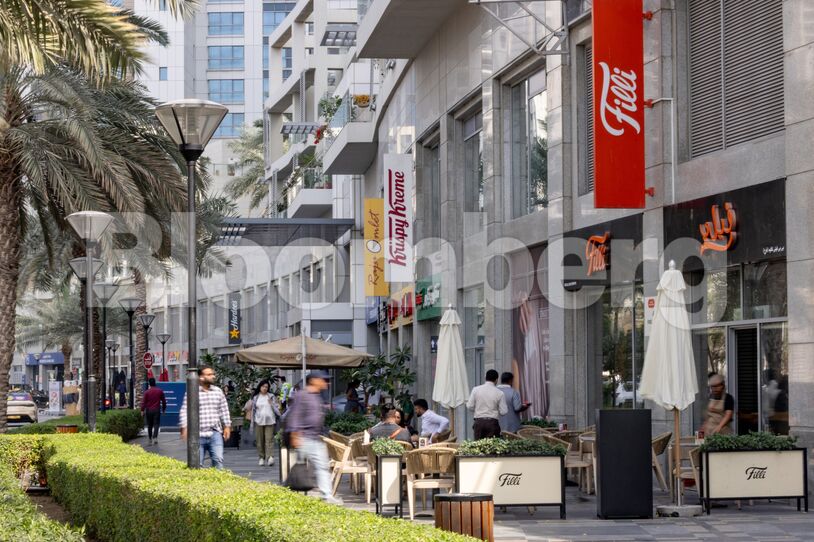
Dubai’s appeal to British citizens is also broadly about ease of life. English is widely spoken. British schools are plentiful. Traditional Sunday roasts are served in hotel restaurants. And British grocery chains like Marks & Spencer and Waitrose stock familiar brands. Legal reforms in recent years have further softened the edges: Since 2020, cohabitation for unmarried couples is no longer criminalized.
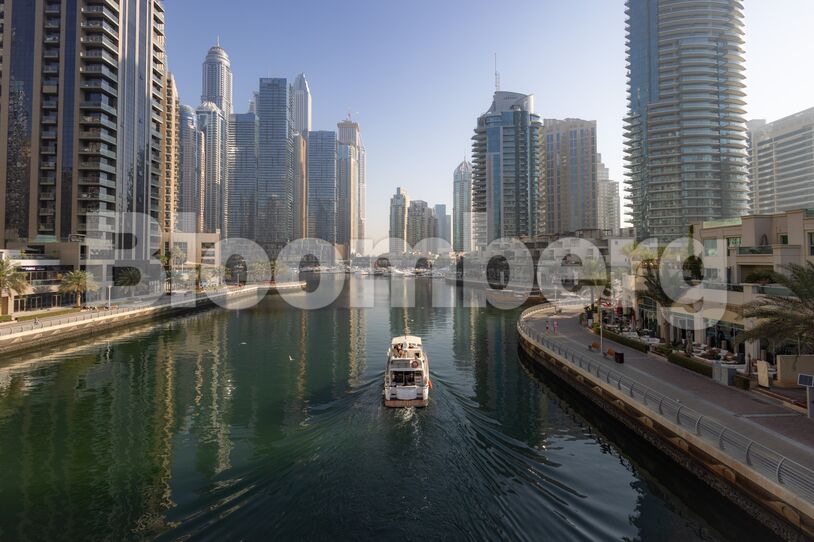
Dubai has become especially attractive in the post-Brexit era, as high earners and entrepreneurs reassess their relationships with the UK. Frozen tax thresholds are pushing millions of UK workers into higher tax bands. Dubai has been offering a business-friendly environment and a luxury lifestyle that’s lured Brits to come in significant numbers. It’s not without controversy; members of Parliament like Ed Davey have criticized people they’ve labeled “Dubai tax exiles,” who’ve opted out of the UK’s fiscal system.
The British presence in the UAE is larger than other Western markets. Some 40,000 Americans lived in Dubai in 2025, versus 240,000 Brits. (Crucially, Americans have tax obligations wherever they go.) Other European communities are far smaller. Estimates put German and Italian populations in the UAE at roughly 15,000 and 18,000, respectively.
For Michael Stephens, a senior associate fellow at the Royal United Services Institute think tank, the shift has been decades in the making. Stephens spent time growing up in Dubai in the 1980s, when his father worked in the oil and gas industry, and he’s watched the place transform from a quiet, small city on the edges of the desert to a hub of global wealth and a prime tourist destination.
“It came to be known as the place to make money for Brits if you were a bit adventurous,” he says. Then, “the authorities made a conscious decision to build the kind of facilities that would attract people,” he adds, pointing to the Burj Al Arab — often described as a “seven-star” hotel — and the now-famous 2005 tennis match between Roger Federer and Andre Agassi staged on its rooftop helipad.
Over time, Dubai’s image shifted from frontier outpost to global playground. “It became seen as a glamorous place to go, in the same way Hong Kong was for Brits in the 1990s,” Stephens says. “The tourism business became supercharged.”
That growth has been underpinned by long-term planning, Stephens says. As officials sought to diversify the economy beyond oil, tourism became central. The UAE’s 2031 tourism strategy aims to attract 40 million hotel guests annually, backed by some 100 billion dirhams ($27 billion) in investment. The authorities have said that Dubai remains stable and that “ensuring the safety and wellbeing of citizens, residents and visitors remains the UAE’s top priority.”
Landmark openings such as Atlantis the Royal — costing $1.2 billion and launched in 2023 with a Beyoncé performance — have cemented Dubai’s reputation for spectacle. New properties like the Jumeirah Marsa Al Arab continue to open at a rapid pace, each promising to outdo the last in scale and extravagance. The emirate has dominated the luxury-housing market globally too, with villas and branded residences getting snapped up. According to recent data from broker Knight Frank, Dubai set an annual record with 500 individual sales over $10 million in 2025, just over three times London’s tally.
Yet luxury alone doesn’t explain the British influx. Affordability for visitors has played a quiet but important role, says Nadine Itani, senior lecturer in air transport management at the University of Surrey. Travel to Dubai has become easier over time, she says, because of the UAE’s open-skies policy, which allows airlines to operate with few restrictions.
“Emirates expanded capacity to remain competitive, which helped reduce ticket prices,” Itani says. The city’s geography has also worked in its favor: Dubai sits within eight hours’ flying time of roughly two-thirds of the world’s population, making it a natural transit hub linking Europe to Asia, Africa and Australasia.
For British travelers, the flight time — about seven hours — places Dubai just within reach of a long weekend and closer than warm-weather destinations such as Miami or the Caribbean. Europe is much closer, but Mallorca can’t guarantee sunshine in January.
Paul Charles, founder of travel consultancy the PC Agency, has watched Dubai grow as a tourism destination over the past few decades. Formerly communications director for Virgin Atlantic and an adviser to founder Richard Branson, he was deeply involved in the launch of the airline’s first London-Dubai route 20 years ago.
“At the time, Dubai was quite Marmite,” he says, using the British shorthand for something divisive. “But the research showed attitudes were changing. People were starting to see it as a viable alternative to Spain, Greece or the Caribbean.”
Perceptions shifted quickly, he says, and the feedback from flyers was largely positive. “Passengers rated it highly and kept going back,” Charles says. “It’s been an extraordinary case study in how you can build a destination almost from scratch.”
The question now is how resilient it will prove to be. The current geopolitical backdrop introduces a layer of uncertainty that Dubai has largely avoided during its rise, as the city has staked its reputation on safety and stability.
Dubai International Airport, the world’s busiest global air transit hub, has weathered a series of incidents during the recent Middle East conflict. On Monday, the airport’s fuel tank was hit, which forced the facility to close temporarily. On Tuesday, airspace across the UAE was shut for several hours. British Airways says it’s pulling flights to and from Dubai until at least June.
For British residents in particular, the stakes are high: Many have property, businesses and long-term plans tied to the emirate. Charles believes demand will recover quickly if tensions ease and Dubai can reclaim its crown as a safe place for travel. He adds that there are too many expats with friends and family who want to visit that will drive tourism.
“The essence of Dubai remains very safe,” Charles says. “Aside from the war.”